Student 3D Prints Eyes

[Ondřej Vocílka] is a student at the Brno University of Technology in the Czech Republic.  In addition, the 23-year-old lost his vision in his left eye. While attending a lecture on 3D printing, he wondered if he could 3D print an ophthalmic prosthesis — an artificial eye. Turns out, he could. If you don’t speak Czech, you’ll need to call on a translation service like we did.

Unlike conventional glass or plastic eyes, it is trivial to change parameters like color when 3D printing the prosthetic. This is especially important with the iris and the finished product takes about 90 minutes to print. There is additional time required to coat the product with an acrylic layer to mimic the gloss of a natural eye.

Continue reading “Student 3D Prints Eyes”

This IS Your Grandfather’s Radio

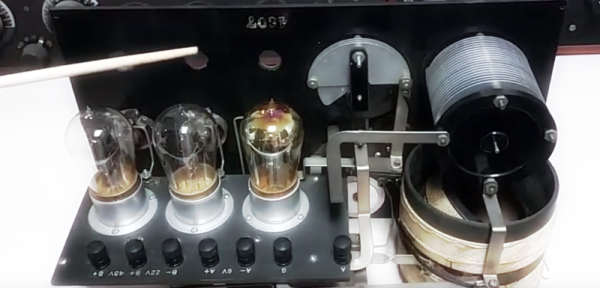
Tube radios have a certain charm. Waiting for them to warm up, that glow of the filaments in a dark room. Tubes ruled radio for many decades. [Uniservo] posted a video about the history and technology behind the 1920’s era Clapp-Eastham C-3 radio. This is a three-tube regenerative receiver and was advanced for its day.

If you are worried he won’t open it up, don’t despair. Around the ten minute mark, your patience will be rewarded. Inside are three big tubes full of getter and bus bars instead of wires. Add to that the furniture-quality case, and this is a grand old radio.

Continue reading “This IS Your Grandfather’s Radio”

Hovercraft Of The Future

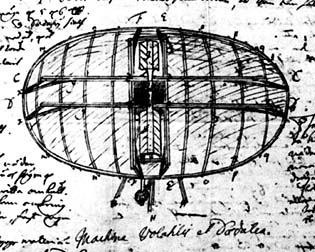
We think of hovercraft as a modern conveyance. After all, any vision of the future usually includes hovercraft or flying cars along with all the other things we imagine in the future. So when do you think the hovercraft first appeared? The 1960s? The 1950s? Maybe it was a World War II development from the 1940s? Turns out, a human-powered hovercraft was dreamed up (but not built) in 1716 by [Emanuel Swedenborg]. You can see a sketch from his notebook below. OK, that’s not fair, though. Imagining it and building one are two different things.

[Swedenborg] realized a human couldn’t keep up the work to put his craft on an air cushion for any length of time. Throughout the 1800s, though, engineers kept thinking about the problem. Around 1870, [Sir John Thornycroft] built several test models of ship’s hulls that could trap air to reduce drag — an idea called air lubrication, that had been kicked around since 1865. However, with no practical internal combustion engine to power it, [Thornycroft’s] patents didn’t come to much. In America, around 1876 [John Ward] proposed a lightweight platform using rotary fans for lift but used wheels to get forward motion. Others built on the idea, but they still lacked the engines to make it completely practical.

But even 1940 is way too late for a working hovercraft. [Dagobert Müller] managed that in 1915. With five engines, the craft was like a wing that generated lift in motion. It was a warship with weapons and a top speed of around 32 knots, although it never saw actual combat. Because of its physical limitations it could only operate over water, unlike more modern craft.

Continue reading “Hovercraft Of The Future”

A 6502 With A Custom Language

The 6502 has a long history with hackers. The Apple computer (the one with no keyboard or even case) had a 6502. So did the Kim-1. [Dolo’s] version is a bit more refined, though. He started it a few years ago in response to one of our contests, but he’s been making improvements to it ever since. In particular, the custom programming language, Dflat, has many improvements lately, including true functions and high-resolution drawing.

The hardware has a CPU running at over 2.5 MHz, 44K of RAM, 16K of PROM, and 16K of video RAM. There’s plenty of I/O, including a keyboard, sound, and joysticks. An SD card provides mass storage and it all goes in a hacked BBC Micro case. You can see an overview video, below.

Continue reading “A 6502 With A Custom Language”

Photograph Of Single Atom Captured With A Plain Old Camera

The Engineering and Physical Sciences Research Council awarded a remarkable photograph its overall prize in science photography. The subject of the photograph? A single atom visible to the naked eye. Well, perhaps not exactly the naked eye, but without a microscope. In the picture above (click here to enlarge), the atom is that pale blue dot between the two needle-like structures.

You probably learned in school that you couldn’t see a single atom, and that’s usually true. But [David Nadlinger] from the University of Oxford, trapped a positively charged strontium atom in an ion trap and then irradiated it with a blue-violet laser. The atom absorbs and reemits the light, and a camera can pick up the light, creating a one-of-a-kind photograph. The camera was a Canon 5D Mk II with a 50mm f/1.8 lens — a nice camera, but nothing too exotic.

The ion trap keeps the single atom balanced between two small needle points about 2 millimeters apart. [Nadlinger] did some math that convinced him the photograph could be possible and made it a reality on a Sunday afternoon. The pale dot isn’t especially spectacular by itself, but when you realize that it is the visual effect of a single atom, it is mind-blowing. Turns out, the lab has taken some similar photographs in the past. They don’t remember who took it, but they have a picture of 9 calcium-43 ions trapped, that you can seen below. The ions are 10 microns apart and at an effective temperature of 0.001 degrees Kelvin.

Other winning photographs included patterns on a soap bubble, an EEG headset in use, and microbubbles used to deliver drugs. There’s also an underwater robot, a machine for molecular beam epitaxy that looks like a James Bond villain’s torture device, and lattices made with selective laser melting 3D printing.

If you want to look at atoms from the comfort of your own home, maybe you should build an STM. You might even try NIST’s improved atom probe while you are at it. Just remember you can’t trust atoms. They make up everything.

Photo credit: David Nadlinger

World’s Stupidest Solid State Disk Drive Hack

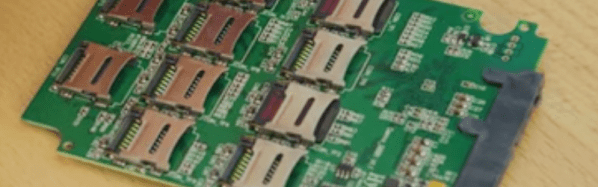
The title might seem a little harsh, but it is a direct quote from the video by [Linus Tech Tips] that you can see below. He picked up a board that is a RAID 0 controller for up to ten SD cards so you can use them as a conventional SATA SSD. Of course, the channel’s tag line is “impractical solutions for improbable problems” but even by his own admission, this is pretty impractical.

It is odd for us to scoff at any kind of hack, but honestly, it is hard to see the value to this, other than it is amusing to think some factory turned these boards out hoping to make a profit. Besides being amusing, though, it is also a good exercise in design trades. For example, when you design a car, you want it to be safe, but you can’t make the body out of four-inch thick steel because of cost, weight, and fuel consumption. So you balance these concerns by making tradeoffs.

Continue reading “World’s Stupidest Solid State Disk Drive Hack”

Getting Started With STM8

There are so many different CPUs today and often the hardest thing about using any of them is getting started and gathering the right software tools. If you’ve ever eyed up the very inexpensive STM8 processor, you’ll want to check out [Shane Burrell’s] video (see below) about how to get started with the STM8.

The STM8 isn’t a 32-bit processor — you could probably guess that from the name. [Shane] uses SDCC (small device C compiler) to target the little chip. He also shows how he manages a fairly substantial piece of code and how he controls the build process.

Continue reading “Getting Started With STM8”