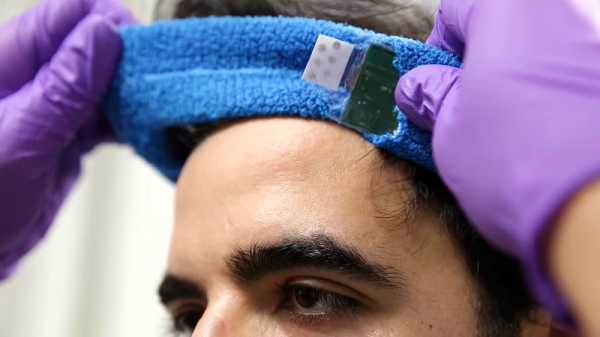
If you’ve ever known anyone who has to monitor their blood glucose level, you know it is annoying to have to prick your finger with a lancet to draw blood for each measurement. A new sweatband that incorporates flexible electronics can measure glucose–as well as sodium, potassium, and lactate–from your sweat, without a painful pin prick.
Author: Al Williams4606 Articles
$5 VGA For Raspberry Pi
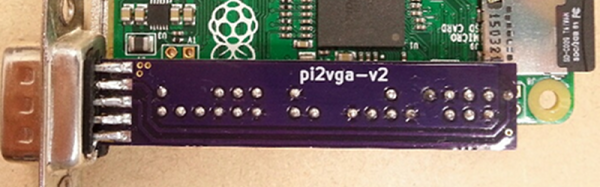
Hackaday.io user [mincepi] wanted a VGA output on his Raspberry Pi Zero. His quest led him to design a PCB that mates with a VGA monitor and the Pi board and–according to his estimates–costs about $3.62 each (although to get that price, you have to build three).
Mini Quadcopter Becomes Paper Airplane
Several of us got Cheerson CX-10 mini quadcopters last year. We even bought some more to hand out as Christmas gifts. If you haven’t seen them, they are diminutive little flyers about the size of an English muffin. Thee’s no denying they are fun to fly around the house, and they do annoy the dogs.
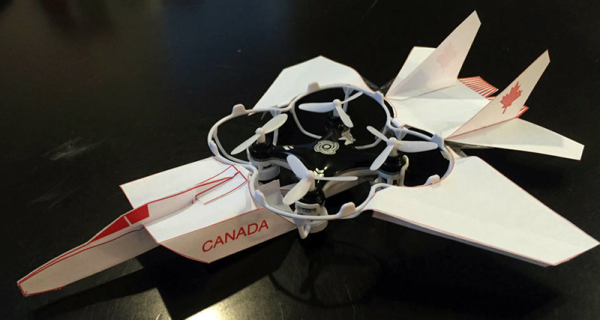
However, like all cute toys, you eventually get bored just buzzing the dogs and cats. [JustforFun Media TK] decided that his needed a facelift, so he converted it into a paper airplane. This isn’t the paper airplane you folded up in school, either. This is a slick-looking jet aircraft.
MDF Omniwheel Uses No Metal Or Plastic
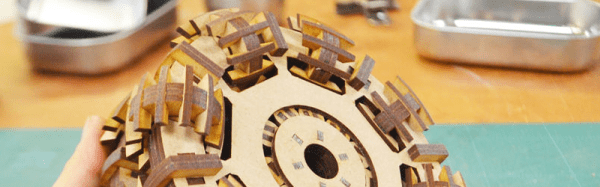
What’s better than a caster? An omniwheel. These wheels are like a big wheel with little wheels at different angles that can roll in any direction. [Sonodera] built an omniwheel out of laser cut MDF. MDF–or Medium Density Fiberboard–makes up all the parts of the wheel. There’s no plastic or metal at all.
[Sonodera’s] wheel is more of a passive design like a caster. It would be possible to drive the wheel through the center in two directions, but the right-angle rollers are passive.
We’ve seen several robots with omniwheels before. In fact, this tripod-inspired robot also has passive rollers and the three-legged design takes advantage of them (the so-called Kiwi drive). Some schemes combine multi-directional wheels with conventional wheels (usually the standard wheels are in the center). There are other multi-directional wheel designs out there, including the Mecanum wheel. You can see a video of the MDF wheel in action, below.
Mind-Controlled Prosthetic Arm
Losing a limb often means getting fitted for a prosthetic. Although there have been some scientific and engineering advances (compare a pirate’s peg leg to “blade runner” Oscar Pistorius’ legs), they still are just inert attachments to your body. Researchers at Johns Hopkins hope to change all that. In the Journal of Neural Engineering, they announced a proof of concept design that allowed a person to control prosthetic fingers using mind control.
Tiny USB Morse Code Beacon
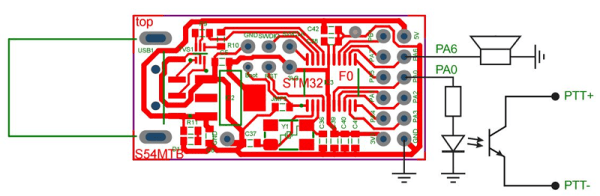
It is reasonably easy to make a microcontroller spit out some Morse code. What makes [pavlin’s] take on this project interesting is that it resides on a tiny USB board with an ARM processor. The design for the board is available with single-sided artwork suitable for production using simple methods like toner transfer.
The STM device has a built-in USB bootloader. It can also act as a serial port, which makes the project very simple. The only external parts are a speaker and an optoisolator. The program provides a command line interface over the serial port that you can use to program the message and set other options like speed and the delay between messages. The code is available on GitHub.
You might argue that a beacon shouldn’t need a USB port, and we’ve seen an alternative that fits the bill. If you want a much larger Arduino-based keyer, we’ve seen those, too.

Musical Shades
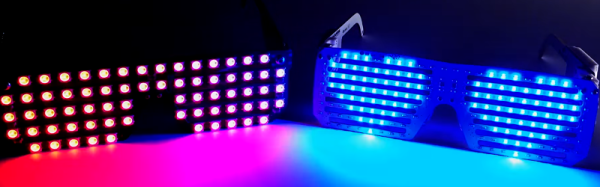
There are only so many blinking light patterns you can create with a microcontroller before you get bored. [Garrett] apparently felt that way and decided to build a music-driven LED display on some LED shades. The system has three main elements: a microphone, a preamp, and a 7-band spectrum analyzer chip. You can see the results in the video below.