FAXing In 1843

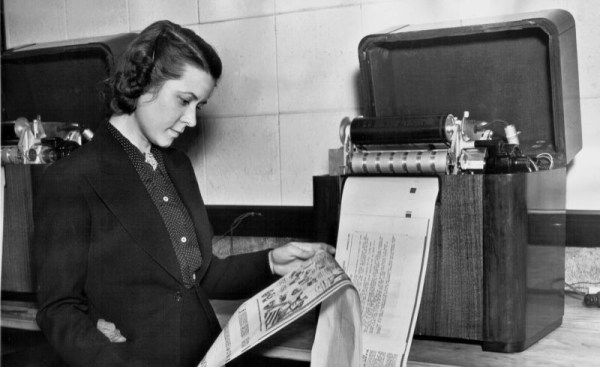
By 2016, it is evident the FAX machine has peaked. Sure, you still see a few. There are even services that will let you send and receive FAXes via Internet–which could mean no FAX machine was involved at all. But looking back, you have to wonder where it all started. Most people had never seen a FAX machine until the late 1960s or early 1970s. It was 1980 before there was a standard. Some, like hams and weather service employees, were using them even earlier. But would it surprise you to know that the first experimental FAX machine appeared in 1843?

Wait a minute. Bell didn’t even build a telephone until 1875 (the patent issued in 1876). Turns out the first FAX machines didn’t work with a phone. They worked over a telegraph wire.
Continue reading “FAXing In 1843” →

Brain Waves Can Answer Spock’s (and VR’s) Toughest Question

In Star Trek IV: The Voyage Home, the usually unflappable Spock found himself stumped by one question: How do you feel? If researchers at the University of Memphis and IBM are correct, computers by Spock’s era might not have to ask. They’d know.

[Pouya Bashivan] and his colleagues used a relatively inexpensive EEG headset and machine learning techniques to determine if, with limited hardware, the computer could derive a subject’s mental state. This has several potential applications including adapting virtual reality avatars to match the user’s mood. A more practical application might be an alarm that alerts a drowsy driver.

Continue reading “Brain Waves Can Answer Spock’s (and VR’s) Toughest Question” →

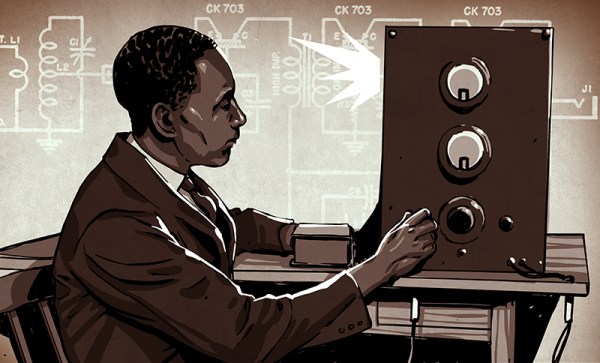
Do You Know Rufus Turner?

It is hard to be remembered in the electronics business. Edison gets a lot of credit, as does Westinghouse and Tesla. In the radio era, many people know Marconi and de Forest (although fewer remember them every year), but less know about Armstrong or Maxwell. In the solid-state age, we tend to remember people like Shockley (even though there were others) and maybe Esaki.

If you knew most or all of those names without looking them up, you are up on your electronics history. But do you know the name Rufus Turner?
Continue reading “Do You Know Rufus Turner?” →

Hacking Candle Extinguishing

Anyone can put out a candle by blowing on it. According to [Physics Girl], that method is old hat. She made an educational video that shows five different ways to put out a candle using–what else–physics.

You might not need alternate ways to put out a candle, but if you are looking to engage students in STEM (Science, Technology, Engineering, and Math), this video along with others from [Physics Girl] might spark interest.

Continue reading “Hacking Candle Extinguishing” →

Suddenly, 4G Feels Slow

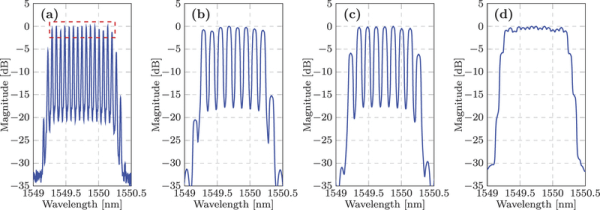
Researchers at University College London successfully transferred data over an optical transmission system at a rate of 1.125 Tb/s. That’s over ten times as fast as typical commercial optical systems, and thousands of times faster than the standard broadband connection. The study appeared in Scientific Reports and takes advantage of encoding techniques usually seen in wireless systems.

The prototype system uses fifteen channels on different wavelengths. Each channel used 256QAM encoding (the same as you see on cable modems, among other things). A single receiver recovers all of the channels together. The technology isn’t commercially available yet. It is worth noting that the experiment used a transmitter and receiver very close to each other. Future tests will examine how the system performs when there are hundreds or thousands of feet of optical fiber between them.

Continue reading “Suddenly, 4G Feels Slow” →

Ridiculously Automated Dorm Room

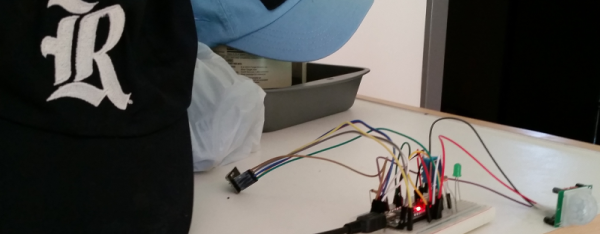
Take three NRF24L0+ radios, two Arduino Nanos, and a Raspberry Pi. Add a bored student and a dorm room at Rice University. What you get is the RRAD: Rice Ridiculously Automated Dorm. [Jordan Poles] built a modular system inspired by BRAD (the Berkeley Ridiculously Automated Dorm).

RRAD has three types of nodes:

  • Actuation nodes – Allows external actuators like relays or solenoids
  • Sensory nodes – Reports data from sensors (light, temperature, motion)
  • Hub nodes – Hosts control panel, records data, provides external data interfaces

Continue reading “Ridiculously Automated Dorm Room” →

Cover Your Glass: A Lesson In Design Trades

Penn and Teller once had a show about “What is the best?” Engineers know that’s not a complete question. Think about a car. What makes the “best” car? It depends on why you want a car. For a race car driver, it might be that speed is the most important factor. A mom might value safety. Someone who commutes four hours a day might like a car that’s comfortable. A teenager wants something affordable.

If you think about it, though, it is even more complicated than that. For example, just about everyone wants a car that is safe. Reliability is pretty important, too. So the reality is, most people want a car that has multiple attributes. Worse still, they sometimes conflict; making one better will make some other ones worse. Mom wants a safe car, but not one that takes half a day to drive to the corner market. Nor does she want to pay a half million dollars for a safe car.

Continue reading “Cover Your Glass: A Lesson In Design Trades” →