China Plans Its Own Megaconstellation To Challenge Starlink

Satellite internet used to be a woeful thing. Early networks relied on satellites in geostationary orbits, with high latency and minimal bandwidth keeping user demand low. That was until Starlink came along, and provided high-speed, low-latency internet access using a fleet of thousands of satellites in Low Earth orbit.

Starlink has already ruffled feathers due to concerns around light pollution and space junk in particular. Now, it appears that China may be readying its own competing constellation to avoid being crowded out of low orbits by the increasingly-popular service.

Continue reading “China Plans Its Own Megaconstellation To Challenge Starlink”

A Pico-Based ZX Spectrum Emulator

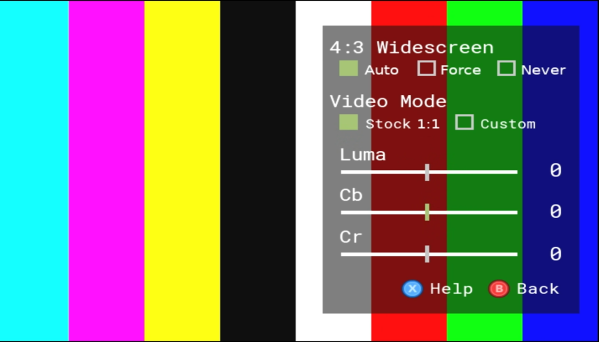
The ZX Spectrum was a popular computer of the 8-bit era. Now, it’s possible to emulate this machine on a microcontroller so cheap that it’s literally been given away on the front cover of magazines. Yes, we’re talking about the Pico ZX Spectrum project.

The project consists of all the necessary code to emulate a ZX Spectrum upon the hardware of the RP2040 microcontroller that makes up the Raspberry Pi Pico. The community has then taken this code and run with it, using it as the basis for all manner of different ZX Spectrum builds. If so desired, you can go barebones and use the Pico to run a ZX Spectrum off a breadboard with HDMI video output. Alternatively, you can build something like the PicoZX from [Bobricius]. The handheld computer features a PCB-based housing, along with an LCD and an integrated keyboard. Other configurations support features like USB keyboards, VGA outputs, and working sound output.

It’s great to see a classic 8-bit computer reimagined in all kinds of new tribute form factors. The Spectrum was always beloved for its neat all-in-one design, and there are several modern remixes that riff on that theme. The fact that they can all be powered by a cheap single-board microcontroller is all the more astounding. Video after the break.

Continue reading “A Pico-Based ZX Spectrum Emulator”

FPGA Breakout Board For DIP Package Shenanigans

FPGAs are supremely flexible and powerful devices. However, they usually come in QFP or BGA packages that are altogether difficult for hobbyists to play with. The DIP-FPGA breakout board aims to solve that problem by using a carrier PCB to put an advanced chip in a friendlier form factor.

The board itself fits a DIP-20 form factor when soldered up with regular-pitch pin headers. It features a  MachXO2-1200HC FPGA from Lattice Semiconductor. That’s the same chip as used on similar the TinyFPGA A2. With 18 GPIO, a DIP-20 layout is just about enough pins to take care of business. It’s intended specifically for use on breadboards or via regular IC sockets. There’s also a six-pin programming port laid out on the board that you can use with pogo pins or header connectors as you desire.

If you want to do some fancy signal stuff in an easy-to-prototype form factor, this could be the setup for you. If you want to buy one ready-made, they’re available on Tindie for the curious. In the meantime, consider whether this beefy FPGA Arduino concept could also propel your next project to greater heights.

DingoQuadruped Is A Cheap Canine-Like Robot

Robot humanoids are cool, but also a bit hard to make work as they only have two legs to stand on. Four-legged robots can be a bit more approachable. The Dingo Quadruped aims to be just such an open-source platform for teaching and experimentation purposes.

The robot is based on the Stanford Pupper, a robot platform we’ve discussed previously. It bears a design not dissimilar from the popular Spot robot from Boston Dynamics. Where Spot costs tens of thousands of dollars, though, Dingo is far cheaper, intended for cheap production by students and researchers for less than $1,500.

The robot weighs around 3 kg, and is approximately the size of a shoebox. Control over the robot is via a wireless game controller. Each leg uses three high-torque servo motors, which are elegantly placed to reduce the inertia of the leg itself. A Raspberry Pi runs the show, with an Arduino Nano also onboard for interfacing analog sensors or additional hardware. The chassis itself has a highly modular design, with a focus on making it easy to add additional hardware.

If you want to get started experimenting with quadruped robots, the Dingo might just be the perfect platform for you. Video after the break.

Continue reading “DingoQuadruped Is A Cheap Canine-Like Robot”

New Wearable Detects Imminent Vocal Fatigue

“The show must go on,” so they say. These days, whether you’re an opera singer, a teacher, or just someone with a lot of video meetings, you rely on your voice to work. But what if your voice is under threat? Work it too hard, or for too long, and you might find that it suddenly lets you down.

Researchers from Northwestern University have developed a new technology to protect against this happenstance. It’s the first wearable device that monitors vocal usage and calls for time out before damage occurs. The research has been published in the Proceedings of the National Academy of Sciences.

Continue reading “New Wearable Detects Imminent Vocal Fatigue”

BIOS POST Card Built Using Raspberry Pi Pico

A computer’s BIOS includes basic diagnostic tools for troubleshooting issues. Often, we rely on the familiar beeps from the POST system for this reason. However, error codes are also available via hardware “POST Cards” that were particularly popular in the 1990s. [Mr. Green] has now built a POST card using readily-available modern hardware.

[Mr. Green] built the device to help troubleshoot an x86 based firewall appliance that was having trouble. Like many x86 systems, it featured a Low Pin Count (LPC) bus which can be used to capture POST troubleshooting codes. By hooking up a Raspberry Pi Pico to the LPC bus on the firewall’s motherboard, it was possible to get it to display the POST error codes on some LEDs. This is of great use in the absence of a conventional PC speaker to sound the error out with beeps.

The build can be used for POST-based troubleshooting on any x86 system with an LPC bus. Files are on Github for those eager to replicate the build. We’ve seen similar work before, too. Video after the break.

Continue reading “BIOS POST Card Built Using Raspberry Pi Pico”

Arduino-Powered Missile System Uses Ultrasound To Aim

In the real world, missile systems use advanced radars, infrared sensors, and other hardware to track and prosecute their targets. [Raspduino Uno] on YouTube has instead used ultrasound for targeting for an altogether simpler desktop fire control solution.

This fun build uses a common off-the-shelf USB “missile launcher” that fires foam darts. To supply targeting data for the launcher, an Arduino Uno uses an ultrasonic sensor pair mounted atop a servo. As the servo rotates, the returns from the ultrasonic sensor are plotted on a screen run by a Raspberry Pi. If an object is detected in the 180-degree field of view of the sweeping sensor, a missile is fired using the dart launcher.

It’s a relatively simple build, but nonetheless would serve as a useful classroom demonstration of radar-like targeting techniques to a young audience. Real military hardware remains altogether more sophisticated. Video after the break.

Continue reading “Arduino-Powered Missile System Uses Ultrasound To Aim”