Bone Vibration Brings Typing Into VR

Virtual reality is becoming more of a thing, now that we have high quality headsets and the computing power to generate attractive environments. Many VR systems use controllers held in mid air, or camera-based systems that track limbs and hands for interaction. However, productivity scenarios often require prolonged interactions over a long period of time, which typically necessitates working at surfaces that allow the body to rest intermittently. To help facilitate this, a group of researchers at ETH Zurich developed TapID, including a preprint paper (PDF) that will be presented at IEEE VR 2021 later this month.

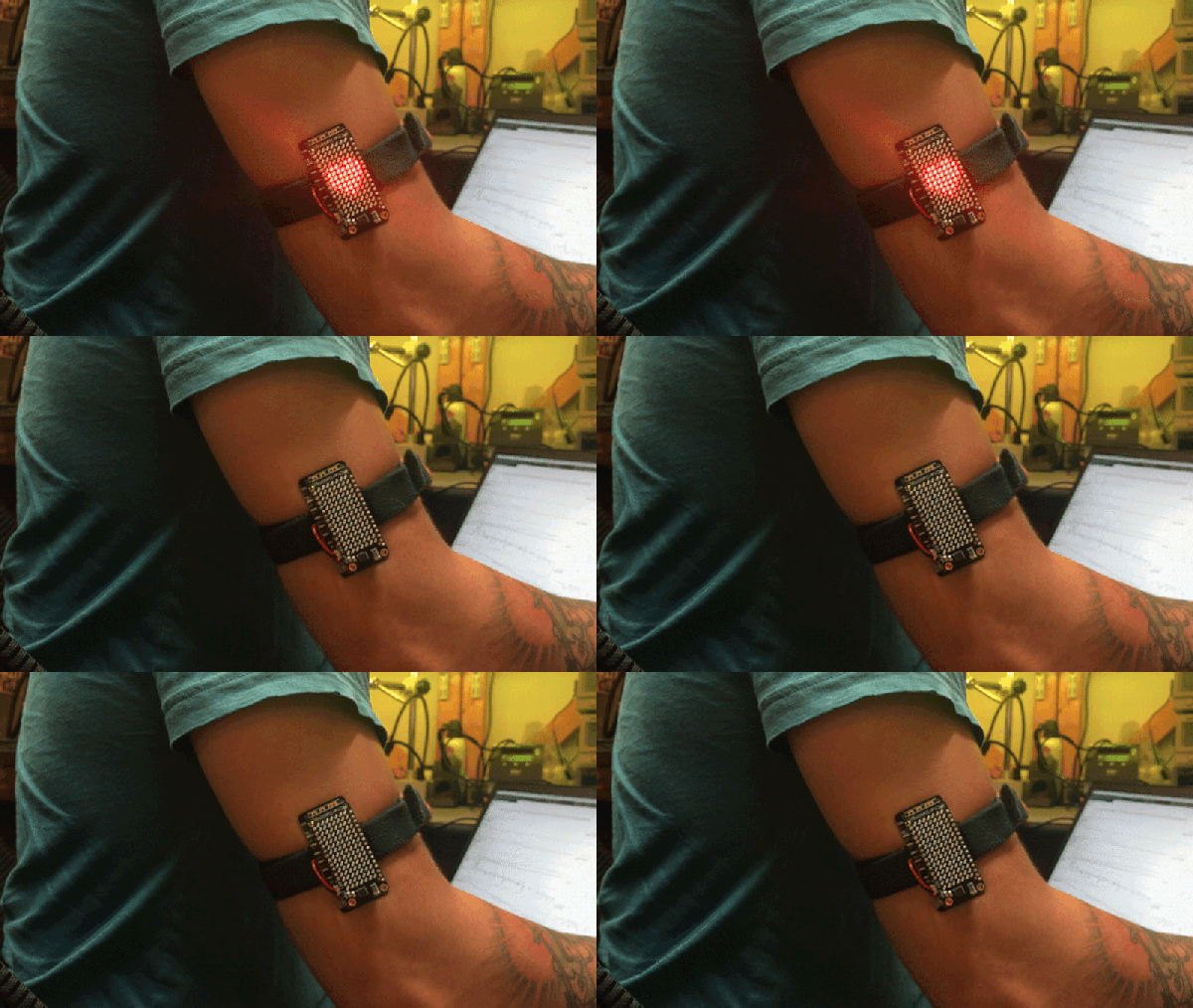
TapID consists of a wristband that carries two motion sensors, with one worn on each wrist. This allows TapID to detect taps from each of the user’s fingers individually, thanks to a machine learning algorithm that analyses the unique vibrations through your skeletal system. This is demonstrated as being useful for VR environments, where the user can type into a virtual keyboard, or interact with virtual objects on a surface, using their fingers as they would in the real world. This is a sensor fusion with the features of modern VR headsets that include hand tracking. The TapID wristbands deliver granularity and detection of small motions that is not nearly as accurate through headset-mounted senors and camera-based detection.

Test hardware includes 4 accelerometers. Two on flexible PCBs are the sensing hardware used by the system, the other two on the rigid PCB are used as a baseline during testing but do not contribute to the tap detection.

We’re not entirely convinced of the utility of sitting down in a virtual environment to type at a fake keyboard when monitors and real keyboards are more tactile and cheaper. However, having a device that can accurately determine individual finger interactions is sure to have applications in VR. And whether or not the demonstrated use cases are viable, the technology does indeed work.

It’s exciting to see the wrist-band form factor. It brings to mind the possibility of improving tap interactions in smart watches for non-VR uses. We envision chorded keyboard type gestures that detect which fingers are tapping but don’t need positional accuracy.

Those experimenting in VR interfaces may find it useful to reverse engineer what’s already out on the market, as we’ve featured before. Or, you can simply build your own! Video after the break.

Continue reading “Bone Vibration Brings Typing Into VR”

Mini Hygrometer Packs E-Paper Display

Historically, display technologies have always been power thirsty things. In the past, CRTs and incandescent bulbs sucked down electrons like they were free beer. Eventually, LEDs and LCDs came along and lowered this significantly, but the king of low power display technologies remains ePaper and eInk displays. Only requiring power when refreshing the display, they can be left off indefinitely, drawing little to no current. This is great for low-power builds such as [Andrew Lamchenko’s] miniature hygrometer. (Video, embedded below.)

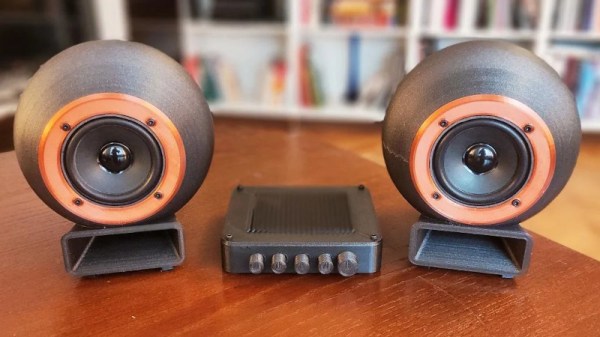
The build runs on an nRF52811 microcontroller, hooked up to a 1.02″ ePaper display sourced for just $7. A SHT20 temperature and humidity sensor is then queried to sample the ambient conditions, and the results displayed on the screen. The benefit of this is that the device can be powered from a coin cell, and set to update at infrequent intervals – say, once per hour. It can then be checked by the user without having to turn on.

The low-power design means it would be the perfect device for leaving in a guitar case or humidor for months at a time. As a bonus, it’s also capable of Smart Home integration thanks to the Bluetooth capabilities onboard. It would likely be trivial to upgrade this into a tweeting humidor, the likes of which we haven’t seen since 2009!

Continue reading “Mini Hygrometer Packs E-Paper Display”

Design Solutions For The Heat Crisis In Cities Around The World

It was 1999 when Smash Mouth dropped the smash hit All Star, stating “The ice we skate is getting pretty thin, the water’s getting warm so you might as well swim.” Since then, global temperatures have continued to rise, with no end in sight. Political will has been unable to make any grand changes, and the world remains on track to blow through the suggested hard limits set by scientists.

As a result, heatwaves have become more frequent, and of greater intensity, putting many vulnerable people at risk and causing thousands of deaths each year. This problem is worse in cities, where buildings and roads absorb more heat from the sun than natural landscapes do. This is referred to as the heat island effect, with cities often being several degrees warmer than surrounding natural areas. It’s significant enough that experts are worried some cities could become uninhabitable within decades. Obviously, that’s highly inconvenient for those currently living in said cities. How bad is the problem, and what can be done?

Continue reading “Design Solutions For The Heat Crisis In Cities Around The World”

Jet Powered Go Kart Built With RC Gear

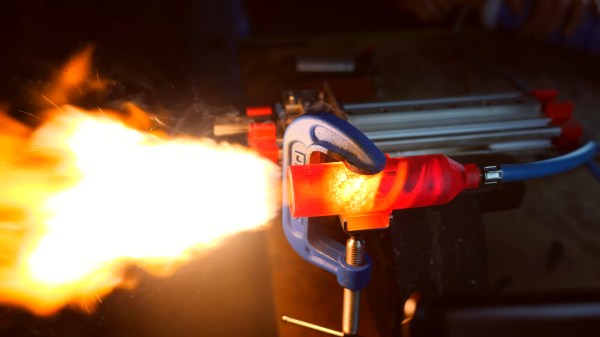
Turbine cars never quite came to be, despite many experiments in the 20th century. Despite their high power output for their size, they’re just not well suited to land transport applications; even the M1A1 tank has been much maligned for its turbine power plant. That didn’t stop [Warped Perception] for throwing a jet on the back of a kart though, and it looks like a whole lot of fun. (Video, embedded below.)

The build starts with a garden variety gokart, with the piston engine and all associated running gear stripped off in haste. The RC-sized turbo jet is then mounted on an elegant aluminium bracket, neatly welded on to the back of the car. It’s hooked up with its electronic controller, with throttle controlled by an RC transmitter. It’s not ideal trying to steer one-handed with another on the stick, but these are the sacrifices made when parts don’t arrive in time.

Early testing revealed issues with air ingestion into the fuel line over bumps, but overall performance was impressive. Future plans involve a top speed run which we can’t wait to see. Of course, if it’s not outrageous enough for your taste, consider [Colin Furze’s] pulsejet build.

Continue reading “Jet Powered Go Kart Built With RC Gear”

Networked Nightlights Glow Together

Nightlights are a great way to calm children who may be afraid of the dark, as well as to avoid stubbing your toe on furniture in the hallway. However, in this day and age of connected everything, they can do so much more. [Andy] came up with a great way to do just that, creating an advanced networked solution to suit his needs.

[Andy’s] nightlight serves not just in the usual fashion, but also as an indicator for his children. Depending on the time of day, the colour changes, indicating whether it’s time for bed, or also, if it’s too early to get out of bed in the morning and start watching cartoons. Each nightlight around the house runs on an ESP8266, which lights up using a set of WS2812B LEDs. The ESP8266 decides on colour values based on commands from a basic webserver running on a Raspberry Pi, updated every minute. This gives [Andy] the flexibility to make changes in one place, that then automatically roll out across the Nightlight Network (TM).

It’s a fun way of teaching the kids not to ruin a good Saturday sleep in, as well as serving as a fun colourful nightlight, too. Of course, luxury smart nightlights are becoming a thing, as this teardown of a Bluetooth unit shows. If you’ve built your own, be sure to drop us a line!

Building An LED Etch-A-Sketch

The Etch-A-Sketch was a toy that demanded mastery. Some grew capable of creating masterful artworks, while others struggled to do more than a jumbled mess of angry, angular lines. The inherent limitations of being able to only draw a singular, connected line are all part of the fun, of course, and [gatoninja236] recreated that in a modern, LED form.

The build uses a Raspberry Pi to run the show, with a 64×64 LED matrix hooked up to the GPIO pins serving as a display. Two encoders are used to recreate the famous Etch-A-Sketch interface, hooked up to an Arduino Nano that then communicates encoder data to the Pi over I2C, due to the limited GPIOs available. There’s also an MPU6050 accelerometer board, used to enable the intuitive shake-to-clear functionality.

The final result is a fun LED toy that, unlike a real Etch-A-Sketch, you can play in the dark. We’ve seen other sneaky hacks on the classic toy before, too – like this Samsung TV cleverly hidden in a lookalike shell. Video after the break. Continue reading “Building An LED Etch-A-Sketch”

Drone Boat Sails Seattle

Thanks to the availability of cheap, powerful autopilot modules, building small autonomous vehicles is now well within the reach of the average maker. [rctestflight] has long been an enthusiast working in this space, and has been attempting long range autonomous missions on the lakes of Washington for some time now. His latest attempt proved to be a great success. (Video, embedded below.)

The build follows on from earlier attempts to do a 13 km mission with an airboat, itself chosen to avoid problems in early testing with seaweed becoming wrapped around propellers. For this attempt, [Daniel] chose to build a custom boat hull out of fiberglass, and combine both underwater propellers and a fan as well. The aim was to provide plenty of thrust, while also aiming for redundancy. As a bonus, the fan swivels with the boat’s rudder, helping provide greater turn authority.

After much tuning of the ArduPilot control system, the aptly-named SS Banana Slug was ready for its long range mission. Despite some early concerns about low battery voltages due to the cold, the boat completed its long 13 km haul across the lake for a total mission length of over three hours. Later efficiency calculations suggests that the boat’s onboard batteries could potentially handle missions over 100 km before running out.

It goes to show that, even with an off-the-shelf autopilot and mapping solution, there’s still a huge amount of engineering that goes into any successful long-range mission, whether land, sea or air.

Continue reading “Drone Boat Sails Seattle”