An LED Heartbeat Display You Can Wear On Your Sleeve

There are a few different ways to take a person’s pulse, with varying utility depending on the categories said patient fits in to. [Nitin Nair]’s method doesn’t really have a medical application, but it’s certainly a neat example of what you can do with modern sensors. 

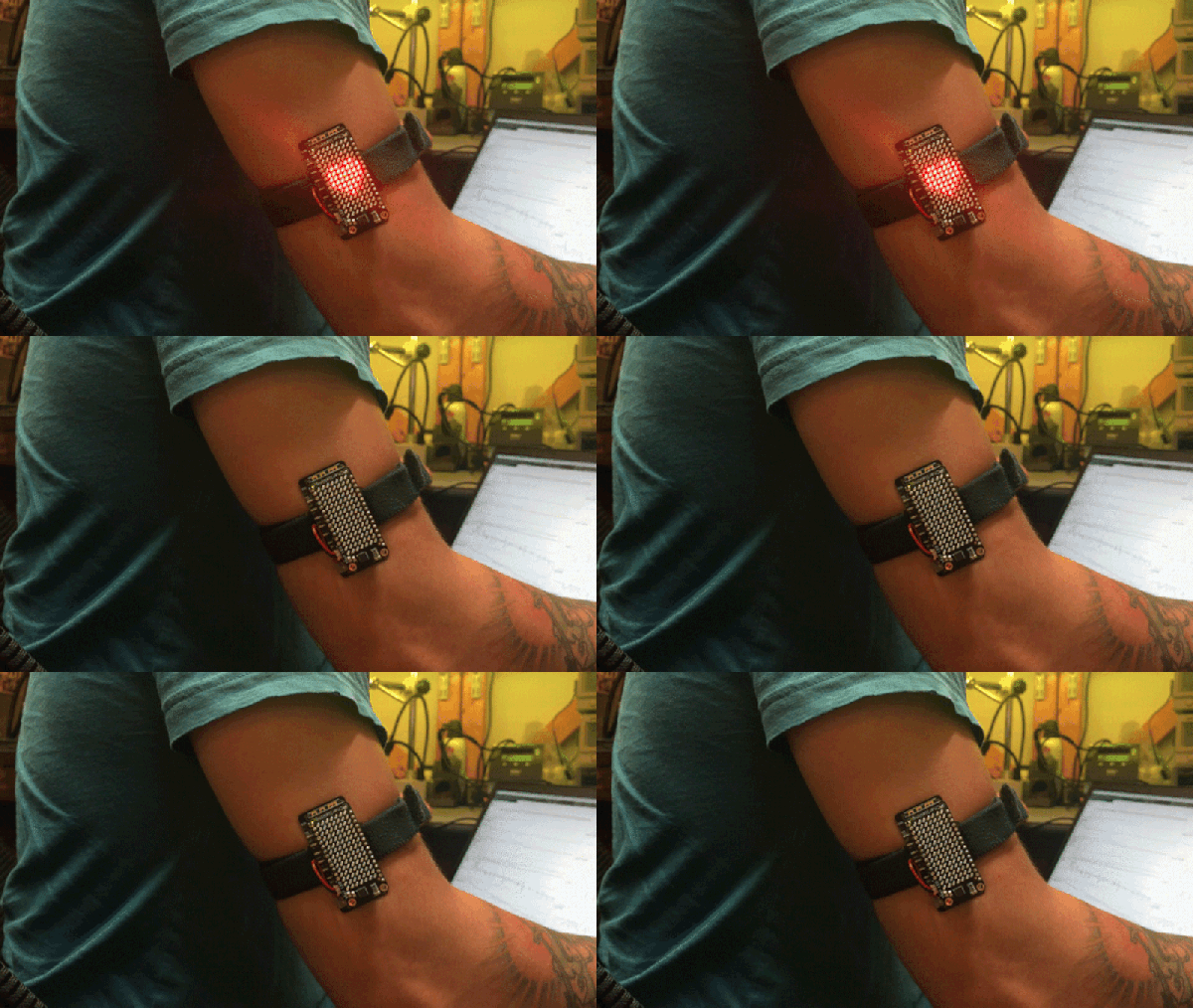
The build combines an EmotiBit sensor platform with an Adafruit Feather and accompanying Charlieplexed LED module. The EmotiBit packs a PPG, or photoplethysmogram sensor, otherwise known as a pulse oximeter, which uses optical methods to detect changes in blood volume beneath the skin. From this data, a pulse rate can be derived, and the LEDs flashed with a heart graphic in concert with the rhythm of the wearer’s heart. The benefit of the PPG in the EmotiBit is that it can be worn on the wearer’s arm, or other location with suitable vascularization. This allows the wearer to place the sensor on the arm, and thus wear their heart on their sleeve.

It’s a cool concept, and we’d love to see it neatly packaged with a smoothly animated fade as a sports accessory. It’d be an easy way to signal how fast your heart rate recovers on a run with friends – the device could brag about your fitness for you. Alternatively, if pulse oximetry isn’t enough for you, go ahead and build an ECG instead!

Homemade EDM Machine Moves From Prototype To Production

Of all the methods of making big pieces of metal into smaller pieces of metal, perhaps none is more interesting than electrical discharge machining. EDM is also notoriously fussy, what with having to control an arc discharge while precisely positioning the tool relative to the workpiece. Still, some home gamers give it a whirl, and we love to share their successes, like this work-in-progress EDM machine. (Video, embedded below.)

We’ve linked [Andy]’s first videos below the break, and we’d expect there will be a few more before all is said and done. But really, for being fairly early in the project, [Andy] has made a lot of progress. EDM is basically using an electric arc to remove material from a workpiece, but as anyone who has unintentionally performed EDM on, say, a screwdriver by shorting it across the terminals in a live outlet box, the process needs to be controlled to be useful.

Part 1 shows the start of the build using an old tap burning machine, a 60-volt power supply, and a simple pulse generator. This was enough to experiment with the basics of both the mechanical control of electrode positioning, and the electrical aspects of getting a sustained, useful discharge. Part 2 continues with refinements that led very quickly to the first useful parts, machined quickly and cleanly from thin stock using a custom tool. We’ll admit to being impressed — many EDM builds either never get to the point of making simple holes, or stop when progressing beyond that initial success proves daunting. Of course, when [Andy] drops the fact that he made the buttons for the control panel on his homemade injection molding machine, one gets the feeling that anything is possible.

We’re looking forward to more on this build. We’ve seen a few EDM builds before, but none with this much potential.

Continue reading “Homemade EDM Machine Moves From Prototype To Production”

Mice Develop Inside An Artificial Womb

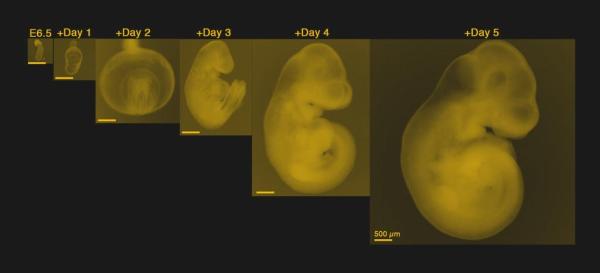
Well, it looks like those fetus fields from The Matrix (1999) just became a little bit more plausible. Although people-growing is probably a long way off, mice can now mostly develop inside an artificial uterus (try private window if you hit a paywall) thanks to a breakthrough in developmental biology. So far, the mice can only be kept alive halfway through gestation. There’s a point at which the nutrient formula provided to them isn’t enough, and they need a blood supply to continue growing. That’s the next goal. For now, let’s talk about that mechanical womb setup.

Carousel of Care

The mechanical womb was developed to better understand how various factors such as gene mutations, nutrients, and environmental conditions affect murine fetuses in development. Why do miscarriages occur, and why do fertilized eggs fail to implant in the first place? How exactly does an egg explode into 40 trillion cells when things do work out? This see-through uterus ought to reveal a few more of nature’s gestational secrets.

Continue reading “Mice Develop Inside An Artificial Womb”

Hackaday Podcast 116: Three DIY Lab Instruments, Two Tickers, And A MicroCar

Hackaday editors Elliot Williams and Mike Szczys select our favorite hardware hacks of the past week. This episode is packed with DIY lab instruments, including a laser microscope, a Raspberry Pi spectrometer, and a stepper motor tester that can tell you what’s going on all the way down to the microsteps. We wax poetic about what modular hardware really means, fall in love with a couple of stock-ticker robots, and chat with special guest Tom Nardi about his experience at the VCF Swap Meet.


Take a look at the links below if you want to follow along, and as always, tell us what you think about this episode in the comments!

Direct download (~55 MB)

Places to follow Hackaday podcasts:

Continue reading “Hackaday Podcast 116: Three DIY Lab Instruments, Two Tickers, And A MicroCar”

Airports Are Now AirBNBs For Honeybees

In the summer of 2012, honeybees swarmed the Pittsburgh airport, probably because the conditions are favorable there. Like many airports, the tarmac is surrounded by wild, wide-open fields that exist to contain the cacophony. And a couple of nearby creeks are dotted with plenty of forage-worthy wildflowers.

Free honey? Wúnderbar!

Now, nearly a decade later, the airport is home to 110 colonies that house around 4 million honeybees. And they aren’t alone. Several other US airports are getting in on the apiary action, including O’Hare, Sea-Tac, and Minneapolis-St. Paul.

The relationship between honeybees and airports is a symbiotic one — the honey the bees produce is a litmus test for air pollution levels around the airport, which must fall within regulations. German airports have employed bees as ‘bio-detectives’ for over twenty years, and they give the honey away for free inside the terminal. It’s okay, though — analysis reveals that the hydrocarbon and heavy metal levels in the airport honey aren’t any higher than honey from non-industrial bees.

Given that honeybees pollinate around $15 billion in crops annually in the US alone, it’s a wonder that we aren’t doing everything possible to fight colony collapse disorder and other problems around the world. This mysterious issue has grown in the last few years, and 2020 saw highest death toll since 2016. Colony collapse disorder aside, plenty of problems persist for our fuzzy friends — pests, pesticides, pathogens, and poor nutrition.

What’s the deal with bees, anyway? How do they fly? Because they aren’t supposed to fly.

This Week In Security: Dan Kaminsky, Banned From Kernel Development, Ransomware, And The Pentagon’s IPv4 Addresses

This week we’re starting off with a somber note, as Dan Kaminsky passed at only 42, of diabetic ketoacidosis. Dan made a name for himself by noticing a weakness in DNS response verification that could allow attackers to poison a target DNS resolver’s cache. A theoretical attack was known, where spoofed DNS responses could collide with requests, but Time-To-Live values meant that DNS requests only go out once per eight hours or so. The breakthrough was realizing that the TTL limitation could be bypassed by requesting bogus subdomains, and aiming the spoofed responses at those requests. This simple technique transformed a theoretical attack that would take 87 years to a very real 10 second attack. Check out the period video after the break, where Dan talked about his efforts in getting the problem fixed.
Continue reading “This Week In Security: Dan Kaminsky, Banned From Kernel Development, Ransomware, And The Pentagon’s IPv4 Addresses”

Looks Like A Pi Zero, Is Actually An ESP32 Development Board

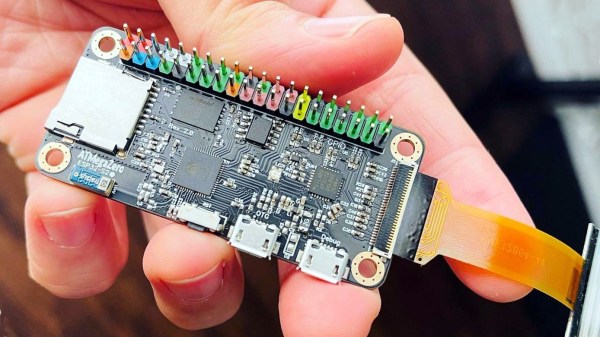
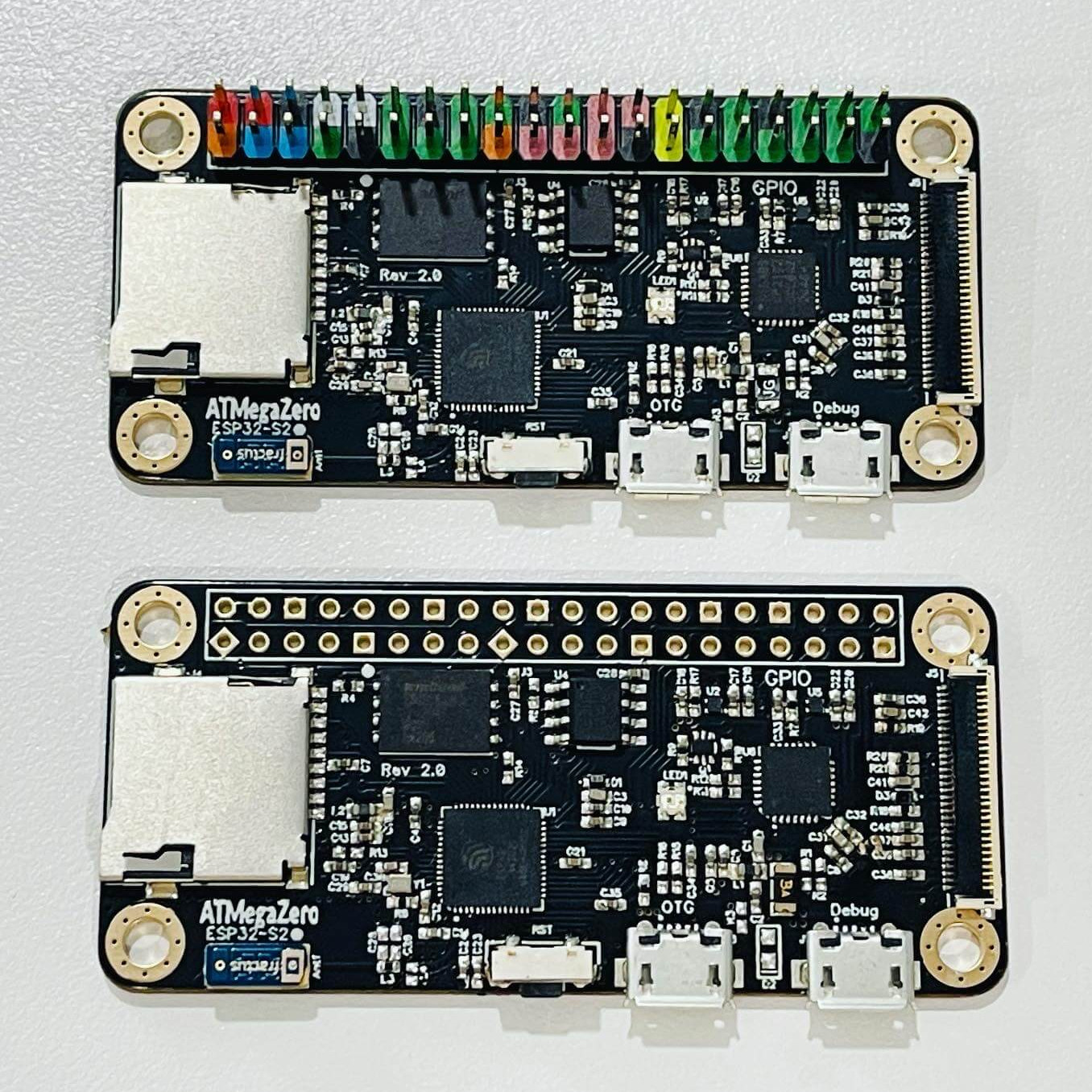
ATMegaZero ESP32- S2, showing optional color-coded 40-pin header (top)

The ATMegaZero ESP32-S2 is currently being funded with a campaign on GroupGets, and it’s a microcontroller board modeled after the Raspberry Pi Zero’s form factor. That means instead of the embedded Linux system most of us know and love, it’s an ESP32-based development board with the same shape and 40-pin GPIO header as the Pi Zero. As a bonus, it has some neat features like a connector for inexpensive SSD1306 and SH1106-based OLED displays.

Being able to use existing accessories can go a long way towards easing a project’s creation, and leveraging that is one of the reasons for sharing the Pi Zero form factor. Ease of use is also one of the goals, so the boards will ship with CircuitPython (derived from MicroPython), and can also be used with the Arduino IDE.

If a microcontroller board using the Pi Zero form factor looks a bit familiar, you might be remembering the original ATMegaZero which was based on the Atmel ATMega32U4, but to get wireless communications one needed to attach a separate ESP8266 module. This newer board keeps the ATMegaZero name and footprint, but now uses the Espressif ESP32-S2 to provide all the necessary functions.

CircuitPython has been a feature in a wide variety of projects and hacks we’ve seen here at Hackaday, and it’s a fine way to make a microcontroller board easy to use right out of the box.