Testing Brushless Motors With A Little Help From The ESC

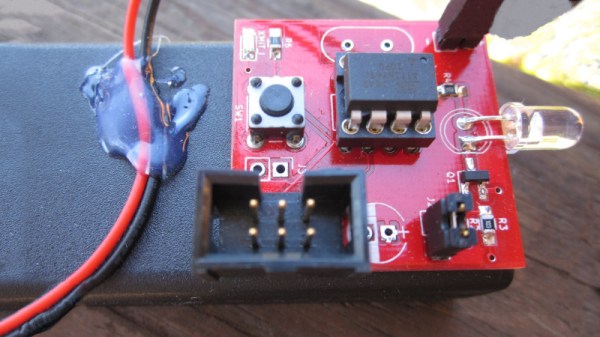
These days, brushless motors are the go-to for applications requiring high power in a compact package. It’s possible to buy motors in all manner of different configurations off the shelf, and the range available is only getting better. However, sometimes getting something truly optimal requires a bit of customization. With motors, this can involve swapping magnets or hand-winding coils. In these cases, it can be useful to test the modified motor to determine its performance. [JyeSmith]’s ESC tester is capable of just that.

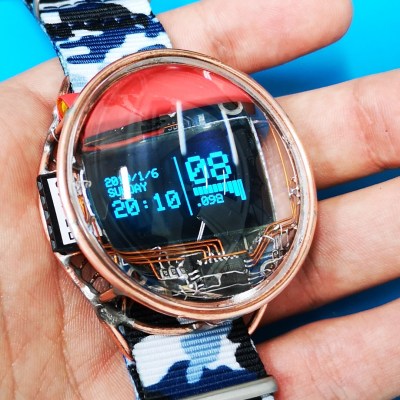
Fundamentally, the ESC tester is a simple piece of hardware. It uses a microcontroller to speak the Dshot protocol. This protocol is typically used to communicate between multi-rotor flight controllers and ESCs. In this case, the Dshot telemetry is instead displayed on a small OLED screen. This enables the user to read off KV values, as well as other useful data such as current draw and RPM. This can help quantify the effects of any modifications made to a motor, as well as prove useful for learning about parts of spurious origins.

It’s a device that should prove useful to those trying to eke out every last drop of performance from their multi-rotor builds. We expect to see more similar projects emerge as drone racing continues to increase in popularity. If you’re still trying to learn the theory behind the technology, you can always build your own brushless motor. Video after the break.

[Thanks to Keegan for the tip!]

Continue reading “Testing Brushless Motors With A Little Help From The ESC”

Reverse Engineering Cyclic Redundancy Codes

Cyclic redundancy codes (CRC) are a type of checksum commonly used to detect errors in data transmission. For instance, every Ethernet packet that brought you the web page you’re reading now carried with it a frame check sequence that was calculated using a CRC algorithm. Any corrupted packets that failed the check were discarded, and the missing data was detected and re-sent by higher-level protocols. While Ethernet uses a particularly common CRC, there are many, many different possibilities. When you’re reverse-engineering a protocol that contains a CRC, although it’s not intended as a security mechanism, it can throw a wrench in your plans. Luckily, if you know the right tool, you can figure it out from just a few sample messages.

A case in point was discussed recently on the hackaday.io Hack Chat, where [Thomas Flayols] came for help reverse engineering the protocol for some RFID tags used for race timing. Let’s have a look at the CRC, how it is commonly used, and how you can reverse-engineer a protocol that includes one, using [Thomas’] application as an example.

Continue reading “Reverse Engineering Cyclic Redundancy Codes”

The Digital Polaroid SX-70

What do you do if you own an iconic and unusual camera from decades past? Do you love it and cherish it, buy small quantities of its expensive remanufactured film and take arty photographs? Or do you rip it apart and remake it as a modern-day digital camera in a retro enclosure? If you’re [Joshua Gross], you do the latter.

The Polaroid SX-70 is an iconic emblem of 1970s consumer technology chic. A true design classic, it’s a single-lens reflex design using a Polaroid instant film cartridge, and its party trick is that it’s a folding camera which collapses down to roughly the size of a pack of 1970s cigars. It was an expensive luxury camera when it was launched in 1972, and today it commands high prices as a collector’s item.

[Joshua]’s build is therefore likely to cause weeping and wailing and gnashing of teeth among vintage camera enthusiasts, but what exactly has he done? In the first instance, he’s performed a teardown of the SX-70 which should be of interest to many readers in itself. He’s removed the mirror and lens, mounted a Raspberry Pi camera behind the lens mount, and a small LCD monitor where the mirror would be.

A new plastic lens in the original lens housing completes the optics, and the electronics come courtesy of a Pi Zero, battery, and USB hub in the space where the Polaroid film cartridge would otherwise be. Some new graphics and a fresh leather cover complete the  build, giving what we’d say is a very tidy electronic Polaroid. On the software side there is a filter to correct for fisheye distortion, and the final photos have a slightly Lomographic quality from the plastic lens.

We like what he’s created with his SX-70 even if we can’t help wincing that he did it to an SX-70 in the first place. Maybe it’s less controversial when someone gives the Pi treatment to a more mundane Polaroid camera.

LED Matrix Becomes Fun Tetris Clock

Sometimes a project is borne simply out of the fact that some interesting parts have been left sitting around too long. Of course, this is as good a reason to build as any other, and can often lead to some interesting results. [Jorj Bauer]’s Tetris Display is one such project.

The project started because [Jorj] had an 8 x 32 WS2812 LED array laying about, and it was high time it got turned into something cool. The resulting display has several features, making it a welcome piece around the home. It can act as a clock, with automatic compensation for daylight savings and brightness control depending on the time of day. It can also serve as a text scroller, and of course, the party piece – it can play Tetris. It all runs on an ESP-01, with a second device acting as a remote to control the game.

Rather than simply being another LED matrix project, [Jorj] put a little flair into things. A font was developed that allowed the time to be displayed in a pixel font composed entirely of Tetris pieces (or tetrominos). This allows the time to be displayed by pieces dropping from the top of the display. The Tetris implementation is solid, too – implementing the proper Super Rotation System that professionals would expect.

[Jorj] reports that this build was inspired by an earlier Tetris Clock featured in these very pages. It’s a tidy piece that we’re sure is a great addition to the mantlepiece. Video after the break. Continue reading “LED Matrix Becomes Fun Tetris Clock”

Smart Bike Helmet Is Wireless

If you ride a bike, you probably share the road with a lot of cars. Unfortunately, they don’t always share the road very well with you. [Mech Tools] took a helmet, a few Arduinos, and some wireless transceivers and made headgear that shows when you stop and also shows turn signals. We were a little surprised, though, that the bike in question looks like a motorcycle. In most countries, motorcycle helmets meet strict safety standards and modifying them is probably not a good idea. However, it wasn’t exactly clear how the extra gear attached to the helmet, so it is hard to say if the project is very practical or not.

In particular, it looks as though the first version had the electronics just stuck to the outside of the helmet. The final one had things mounted internally and almost certainly had cuts or holes made for the lights. We aren’t sure which of those would be more likely to be a problem in the case of an accident.

Continue reading “Smart Bike Helmet Is Wireless”

PackProbe Reports Laptop Battery Health

The 18650 cell has become a ubiquitous standard in the lithium battery world. From power drills to early Tesla vehicles, these compact cells power all manner of portable devices. A particularly common use is in laptop batteries, where they’re often built into a pack using the Smart Battery System. This creates a smart battery that can communicate and report on its own status. PackProbe is a software tool built to communicate with these batteries, and you might just find it comes in handy.

The code runs on the WiFi-enabled Arduino Yún by default, but can be easily modified to suit other Arduino platforms. Communicating over SMBus using the Arduino’s I2C hardware, it’s capable of working with the vast majority of laptop batteries out there which comply with the Smart Battery System. With that standard being minted in 1994, it’s spread far and wide these days.

It’s a great way to harvest not only the specifications and manufacturing details of your laptop battery pack, but also to check on the health of the battery. This can give a clear idea over whether the battery is still usable, as well as whether the cells are worth harvesting for those in the recycling business.

You’re not limited to just the Arduino, though. There’s a similar tool available for the ESP8266, too.

Trick Shot Bot Flings Balls Into Wine Glass Every Time

We’ve heard of beer pong, but we’re not sure we’ve heard of wine pong. And certainly never wine pong automated with a ping pong ball throwing robot like this one.

There’s not a huge amount of detail available in the video below, and no build log per se. But [Electron Dust] has a few shots in the video that explain what’s going on, as well as a brief description in a reddit thread about the device. The idea is to spin a ball up to a steady speed and release it the same way every time. The rig itself is made of wood and spun by plain brushed DC motors – [Electron Dust] explains that he chose them over PWM servos to simplify things and eliminate uncertainty in the release point. The ball is retained by a pair of arms, each controlled by a pair of hobby servos. An Arduino spins along with everything else and counts 50 revolutions before triggering the servos to retract and release the ball. A glass positioned at the landing spot captures the ball perfectly once everything is dialed in.

Here’s hoping that build details end up on his blog soon, as they did for this audio-feedback juggling machine. And while we certainly like this project, it might be cool if it could aim the ball into the glass. Or it could always reposition the target on the fly.

Continue reading “Trick Shot Bot Flings Balls Into Wine Glass Every Time”