Certification For Open Source Hardware Announced

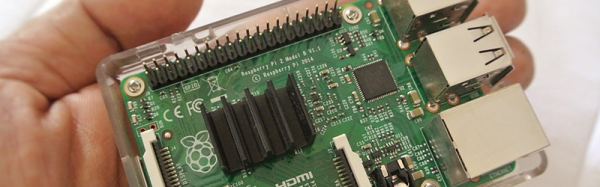
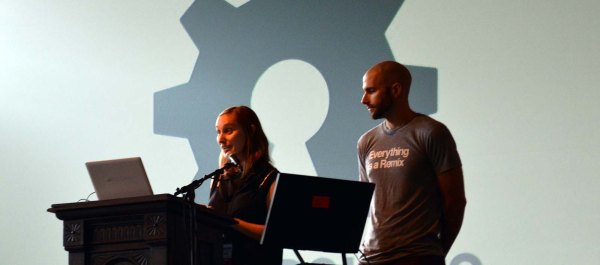
Today at the Open Hardware Summit in Portland, Alicia Gibb and Michael Weinberg of the Open Source Hardware Association (OSHWA) launched the Open Source Hardware Certification program. It’s live, and you can certify your own hardware as Open Hardware right now.

What Is Open Source Hardware?

Open Source Hardware can’t be defined without first discussing open source software. At its very core, open source software is just a copyright hack, enabled by a worldwide universal computer network. The rise of open source software is tied to the increasing ease of distributing said software, either through BBSes, Usenet, and the web. Likewise, Open Source Hardware is tied to the ease of distributing, modifying, and building hardware.

In the 1980s, there were no services that could deliver a custom circuit board to anywhere on the planet for a dollar per square inch. When open software began, CNC machines were expensive tools, now you can build a very good machine for just a week’s wages. We are currently living at the dawn of Open Source Hardware, enabled by the creation of Open Source design tools that have themselves been used to create physical tools. Inexpensive 3D printers, open source oscilloscopes, circuit board plotters, and the entire hackerspace movement are as revolutionary as the Internet. These devices and the Internet are the foundations for Open Hardware and software, respectively.  The objections to why hardware is incompatible with Open Source no longer apply and small-scale manufacturing techniques are only going to get better.

Continue reading “Certification For Open Source Hardware Announced”

Party Drone Comes Up Roses

[Nicomedia] (a team of two) built a payload for their drone with two distinct purposes: to allow it to drop things like rose petals and to fire off fireworks. Honestly, while it is a cool idea, we are a little worried that dropping things from a height might not be a good idea (although rose petals are probably OK) and lighting off fireworks from a drone didn’t seem like a good idea at all. If you want to reproduce this, you probably need to make sure either of these things are legal in your part of the planet.

In the video below, you can see the effect. A servo tied to the drone’s controller opens the box to release the payload. In this case, the team didn’t have a spare channel so they used a separate controller, but if you had a spare channel on the flight controller, that would probably be better.

Continue reading “Party Drone Comes Up Roses”

Orka Controls The (Pi) World

If you deploy a lot of Raspberry Pi computers, you might find it inconvenient to log into each one to perform different tasks. Orka, an open source project by [Karthik K], is a server that runs on a desktop PC (Windows, Linux, or Mac) and can control multiple Orka clients (that can run on a Pi, or a desktop PC). We understand that [Karthik K] is looking for Mac testers, by the way.

From the server, you can execute commands and create tasks. You can also receive notification when a client PC reaches a threshold (for example, over temperature or too much CPU or RAM usage). You can open a shell on a client and do other operations.

Continue reading “Orka Controls The (Pi) World”

BuildTak, PEI, And Early Adopter Syndrome

I’m guessing most of the members of the Hackaday community are what most people would consider early adopters. Sure, there’s variation among us, but compared to the general population we probably all qualify. I’ve spent many years being an early adopter. I owned a computer, a TiVO, a digital camera, a 3D printer, a drone, and many other gadgets before they became well known. I’ve avoided the self-balancing conveyance craze (I’ll stick with my motorcycle).

Of course, you know if you are an early adopter, you will overpay. New has a premium, after all. But there is another price: you often have the first, but not the optimum. My first digital camera took 3.5 inch floppies. My TiVO has an analog tuner.

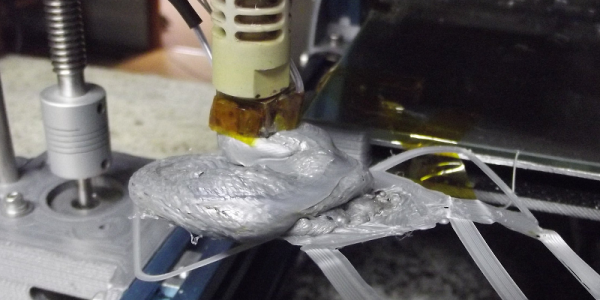
I was reminded of this last week. A number of years ago, I built a 3D printer. A lot of printers back then didn’t have heated build plates, so printing ABS required rafts and ABS juice and frustration. I made sure to get a heated bed and, like most people in those days, I had a glass print surface covered in Kapton.

That works pretty well with ABS, but it isn’t perfect. Aqua Net hair spray makes it stick better, but large flat prints still take a little work. With a little practice, it isn’t bad. I eventually switched to an aluminum bed and didn’t have to level the head quite as often, but it didn’t really make things any better, just more repeatable.

The years pass and other gadgets beckon. I use the printer about like I use a drill press. I don’t use it every day, but when you need it it is handy. I have to admit, I’ve been getting partial to PLA since it doesn’t warp. But PLA in the hot Houston sun isn’t always a good mix, so I still print a fair amount of ABS.

The other day I noticed a product called BuildTak. I also heard some people are printing on PEI sheets. I decided to try the BuildTak. Wow! What a difference.

Continue reading “BuildTak, PEI, And Early Adopter Syndrome”

Blue LED Streetlights Keeping You Awake?

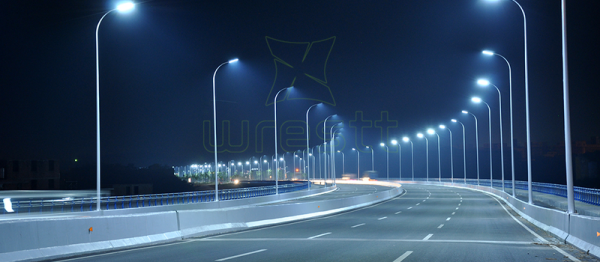
If you’ve played around with “white” LEDs, you already know that there’s no such thing. There’s warm white and cool white and any numbers of whites in-between. And when white LEDs were new, the bluer “cool white” variety were significantly more prevalent.

Enough US states have swapped out their old street lights with LEDs that it may be having a measurable effect on people and on the animals around us. This is the claim in a recent position paper by the American Medical Association’s Council on Science and Public Health. (Report as PDF.)

Science strongly suggests that heavy doses of light can keep people from falling asleep, and that brighter LED streetlamps may be making the problem worse. The AMA report goes a step further, and pins extra blame on the color of the light. Blue light apparently suppresses the production of melatonin which helps you sleep at night. And it’s not just humans whose circadian rhythms are getting messed up — the effects are seen throughout the animal kingdom.

Continue reading “Blue LED Streetlights Keeping You Awake?”

Retrotechtacular: Head Start On Tomorrow

In the 1950s and 1960s, the prospects for a future powered by nuclear energy were bright. There had been accidents at nuclear reactors, but they had not penetrated the public consciousness, or had conveniently happened far away. This was the age of “Too cheap to meter“, and The Jetsons, in which a future driven by technologies as yet undreamed of would free mankind from its problems. Names like Three Mile Island, Chernobyl, and Fukushima were unheard of, and it seemed that nuclear reactors would become the miracle power source for the second half of the twentieth century and beyond.

The first generation of nuclear power stations were thus accompanied by extremely optimistic public relations and news coverage. At the opening of the world’s first industrial-scale nuclear power station at Calder Hall, UK in 1956, the [Queen] gave a speech in which she praised it as for the common good of the community, and on the other side of the Atlantic the American nuclear industry commissioned slick public relations films to promote their work. Such a film is the subject of this piece, and though unlike the British they could not muster a monarch, had they but known it at the time they did employ the services of a President.

The Big Rock Point nuclear power plant was completed in 1962 on the shores of Lake Michigan. Its owners, Consumers Power Company, were proud of their new facility, and commissioned a short film about it. The reactor had been supplied by General Electric, and fronting the film was General Electric’s established spokesman and host of their General Electric Theater TV show, the Hollywood actor and future President [Ronald Reagan].

The film below the break starts by explaining nuclear power as a new heat source powering a conventional steam-driven generator, and stresses the safety aspect of reactor control rods. We are then treated to a fascinating view of the assembly of an early-1960s nuclear reactor, starting with the arrival of the pressure vessel and showing the assemblies within it that held the fuel and control rods. Fuel rods are shown at their factory in California, and being loaded onto a truck to be shipped across the continent, seemingly without the massive security that would nowadays accompany such an undertaking. The rods are loaded and the reactor is started, as [Reagan] puts it: “The atom has been put to work, on schedule”.

Continue reading “Retrotechtacular: Head Start On Tomorrow”

Treadmill To Belt Grinder Conversion Worked Out

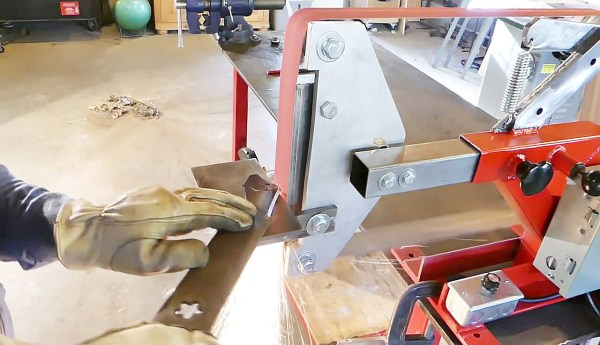
[Mike] had a bunch of disused fitness machines lying around. Being a skilled welder, he decided to take them apart and put them back together in the shape of a belt grinder.

In particular, [Mike] is reusing the height-adjustment guide rail of an old workout bench to build the adjustable frame that holds the sanding belt. A powerful DC motor including a flywheel was scavenged from one treadmill, the speed controller came from another. [Mike] won’t miss the workout bench: Once you’re welding a piece of steel tube dead-center on a flywheel, as happened for the grinder’s drive wheel, you may call yourself a man (or woman) of steel.

The finished frame received a nice paint job, a little switching cabinet, proper running wheels and, of course, a sanding belt. Despite all recycling efforts, about 80 bucks went into the project, which is still a good deal for a rock-solid, variable-speed belt grinder.

Apparently, disused fitness devices make an ideal framework to build your own tools: Strong metal frames, plentiful adjustment guides, and strong treadmill motors. Let us know how you put old steel to good use in the comments and enjoy [Mike’s] build documentation video below!

Continue reading “Treadmill To Belt Grinder Conversion Worked Out”