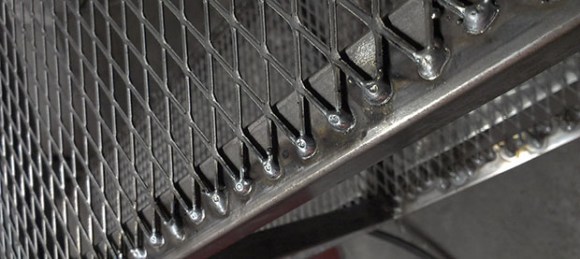
I don’t know if you’d consider this handmade. I don’t know if you’d consider this skilled. I do know you should stop thinking about those things and just watch this stunning video. Molten metal, grungy environments, and hard work are presented here in a fascinating look at how ships are built in Volgograd.
Building A Treadle Powered Lathe
[Chris] found inspiration in an antique flywheel he found. He decided he was going to construct something with it and began rounding up parts. The flywheel, along with some old sewing machine parts becomes a treadle powered lathe.
There’s something so very cathartic about seeing all the wood chiseled and sawed away. That pile of sawdust just means you’re getting things done!
How Does That Ship Get Into The Bottle?
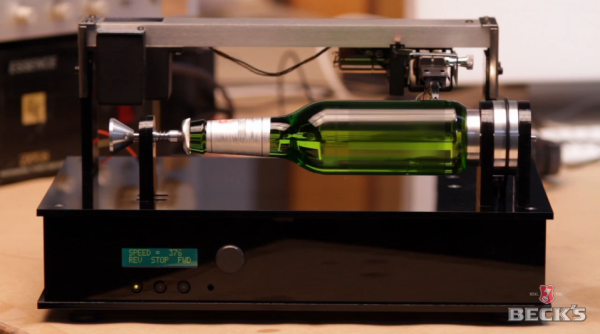
Meet [Ray Gascoigne]. He’s a ship builder. Well, he builds ships in bottles. He’s been doing it for years and years and years and you can see it in his hands. The details are fantastic on the ships, but I really love hearing about the tools. He talks about how much things have changed over the years from having to build your own specialized tiny drill bits from broken needles to being able to just walk right down to the store and buy some.
The part that I found most interesting is this video, as amazingly beautiful as it is, never shows the insertion and erection of a full ship.
GoPro Panning Time-lapse With Ikea Egg Timer

[Sebastian Schuster’s] weekend project was to turn his GoPro camera into a panning time-lapse rig. You’ll notice it’s in a waterproof case as his demo for the hack was an outdoor session and the weather’s not the best right now. He put this together quickly, easily, and on-the-cheap thanks to the Ikea egg timer and a 3D printed camera mount.
An egg timer is a popular choice for panning hacks. Any type that includes a dial that spins on the horizontal axis will do. The Ikea Stam egg timer has that raised handle which is easily gripped by the 3D printed part. You can get a hold of the design files through a web service which is new to us. [Sebastian] used Tinkercad for the design, and shared it in his project post linked above.
This is just one more tool in his collection of camera hacks. A couple years back we looked at a motorized pan and tilt platform he built.
Continue reading “GoPro Panning Time-lapse With Ikea Egg Timer”
Hand Crafting A Tuba
Brass, beaten and molded can be a thing of beauty. Watch as this craftsman puts together a very nice looking tuba. The tools of the trade in this case are somewhat automated, with that mechanical hammer, but it looks like much of this is still done by hand.
Automated Aquarium Fertilizer Doser

If you are using live plants in your aquarium you must remember to fertilize them at regular intervals. Being a bit forgetful, [Deven] automated the process by building this auto-doser.
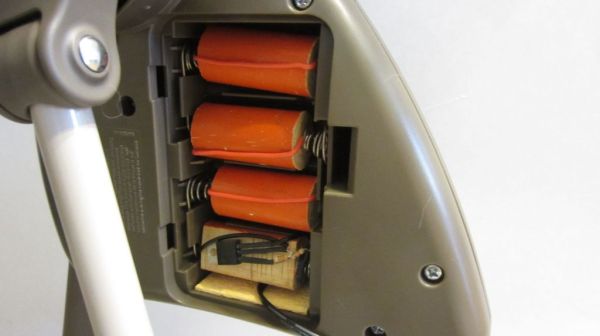
There are three different chemicals which are dispensed by the system. They are stored in the drink bottles seen above. Each has a plastic tube which runs up to the dosing motors mounted on the black box. [Deven] sourced the motors from eBay. They are designed for this type of application.
Inside the black box is the Arduino that handles timing and switches the motors. The control circuitry is protected using one MOSFET for each. To keep the fish safe the outflow is directed right into the aquarium pump so that the concentrated chemicals are quickly dispersed through the entire tank.
Now that he’s made it this far he might as well add the ability to feed the fish and control the lighting.
Hackaday Retro Edition Roundup

The Hackaday retro edition hasn’t been updated in a while, and for that I am very sorry. Still, digging through my email reveals quite a lot of very cool retro computers that were able to load the retro edition over the Internet, and it would be a terrible shame to let these awesome submissions die in my inbox. Without further adieu, here are the best retro computers that have been sent in over the last few months:
[Scott] got his Mac SE to load up the retro edition. This was a chore; after getting a serial connection from his SE to the outside world, [Scott] realized he didn’t have a browser on his retro mac. 800k drives are a pain, it seems. He eventually got everything running in a terminal session, and the retro edition loaded beautifully.
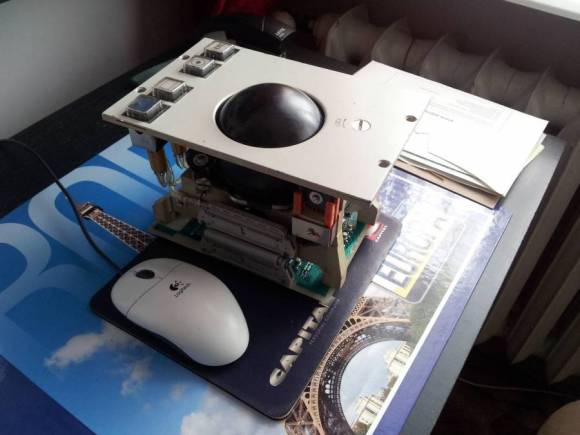
How about another Mac? This one is [Raymond]’s Mac II, the first not-all-in-one Macintosh. NuBus Ethernet card, Netscape 2.02, and 26 years of history behind this machine.
Here’s a weird one: it’s a Siemens interactive display originally used for a building management display. It has a 10 inch touch screen display at 640×480 resolution and runs Windows CE 5.0. After fiddling with some files, [Nick] managed to get the networking running on this machine and tried to load Google. Anyone who has played around with the class of machines we seen for retro submissions knows what happened next (nothing), but luckily [Nick] remembered Hackaday has a retro site. The rest is history.
[Kyle] has a really cool box on his hands. It’s a Compaq 486SX overclocked from 25MHz to 33MHz. 20 Megabytes of RAM, network card, and a Soundblaster 16 make this computer from 1993 a very respectable box for old DOS gaming. It can also browse the web with Arachne.
Finally, [cnlohr], the guy who made his own electron microscope never mind, he’s still awesome and can manufacture glass PCBs at home, found an old green screen CRT while cleaning out a friend’s place. He hooked it up to one of his glass PCB AVR microcontroller things and did the usual text terminal fare; ASCII Star Wars with telnet and using lynx to load up the retro site. It’s only a 48-column display, but the retro edition is surprisingly readable. Very cool.