An Awesome, Futuristic, All-in-one Robot Chassis

bot

No matter how many advances in electronics we find, we’re constantly surprised at the lack of progress in robot chassis. Sure, it should be a simple task to make a capable robot that looks cool, but aside from the Veter project team, no one else seems to be advancing the state of robot mechanics.

We’ve seen robotic chassis and hardware from the Veter team before, and this new version brings a whole lot more to the table. While the camera. GPS, compass, and ultrasonic sensors are the same from the previous build, there’s a whole lot more software inspired by [Sebastian Thrun]’s autonomous car class to make this build a little more capable.

While the Veter team is using a Beagleboard for their on-board computer, it should be possible to change the hardware over to a more economical Raspberry Pi. Even then, it won’t be a cheap build, but we doubt you’ll find a better robotics platform for less.


Pulse Jet Snowmobile, Or, What Swedes Do During Hibernation

Sweden is coming out of the depths of a cold, dark winter. What better time, then, to enjoy the last few weeks of frigid temperatures, short days, and frozen lakes and rivers? That’s what Orsa Speed Weekend is all about; tearing across a frozen lake by any means necessary, including jet powered snowmobiles.

This pulse jet comes from the fruitful minds at Svarthalet Racing (Google Translation) who have put an amazing amount of work into their fuel-injected pulse jet snowmobile during these last cold winter months. They’ve even gone so far as to do some analysis regarding how much horsepower their snowmobile has. Surprisingly, it’s not much more horsepower than a small car, but that’s due to the hilarious inefficiency of pulse jets compared to more conventional engines.

This isn’t the first time we’ve seen jet powered snowmobiles build for Orsa Speed Weekend. We’ll just hope this year a few more videos will show up in our tip line.

Brake Light Backpack Overpowered With LED Pixels

led-motorcycle-backpack

Here’s another Flora Arduino based project from [Becky Stern]. It’s a backpack with brake lights and turn signals for use when motorcycling, but it should work just as well for bicyclists. From this view the project looks pretty normal, but things get downright crazy when she decided to use the WS2801 pixels for the LEDs. Sure they take all the work out of driving an array of LEDs, and they offer full color and dimming levels. But when you see the bulk of cabling and PCBs this adds to the project (shown in the video after the break) we think you’ll agree that this was an interesting choice.

That issue aside the project is a lot of fun. The system doesn’t patch into the motorcycle’s electronics. Instead, it uses an accelerometer to detect when the brakes are applied and light the LEDs according. The turn signals are switched with an RF remote control that can be mounted on the handlebars.

Anyone looking to hack outerwear with electronics can learn form the fabrication techniques used here. [Becky] details how to make holes in the bag and sew parts to them, as well as using Sugru to waterproof vulnerable components.

Continue reading “Brake Light Backpack Overpowered With LED Pixels”

FAA GPS Data Formatted For Your Use

faa-gps-data-formatted-with-vb

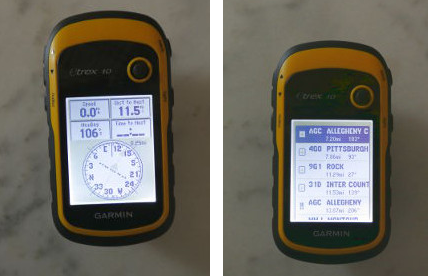
[Michael] posted up-to-date GPS data sets in the GPX format.  These data sets are an alternative to paid updates. Since GPX is a published standard which uses an XML style formatting for location data [Michael’s] time was spent getting the original sets and finding a way to translate them for his Garmin EXTREX GPS.

The original data comes from — hang on, this is a mouthful — the US Federal Aviation Administration’s Facility Aeronautical Data Distribution System (FADDS). He had to apply for permission to download it and to use it in producing a custom GPS build. He grabbed the Airport waypoints and navaid sets, then studied accompanying files detailing the data structure before writing his own Visual Basic 2010 program to spit out the GPX files. He says he wanted to make them available in the spirit of the Open Hardware/Software movement. This may be most interesting for pilots (the kind that put Nooks on the dashboard, not the kind who watch the aircraft from the ground), but we’re sure there’s a myriad of uses for non-pilots alike.

Raspberry Pi As A Plug-in Hash Harvester

plug-in-hash-harvesting

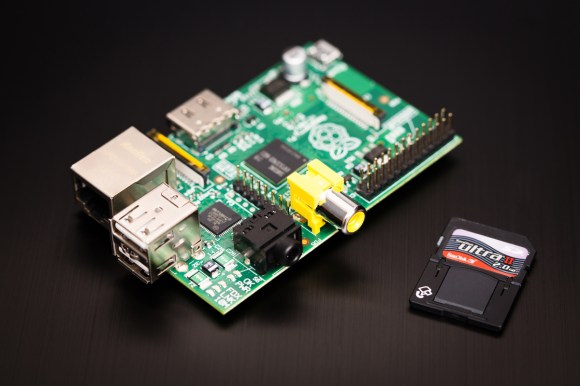
Plug in the power and Ethernet and this Raspberry Pi board will automatically collect Windows hashes from computers on the network. With a couple of RPi boards on hand [Travis] was searching for more hacks to try with them. This made a great little test to see how the board performs with the well established attack.

To start he booted into the standard Raspbian distribution. From there he loads the Metasploit framework which brings most of the necessary tools into play. It uses the Web Proxy Auto-Discovery Protocol (WPAD)  to request hashes from any Windows machines listening on the network. Some version of the OS respond with LM hashes, others don’t. The importance of this and the particulars of using rainbow tables to crack the hashes is explained in this article on the subject.

We wouldn’t mind having a little hardware hack that adds a couple of LEDs to the GPIO header so you know when the RPi is done collecting the data.

Your Own Head-mounted Display For Under Two Bills

CIMG1078

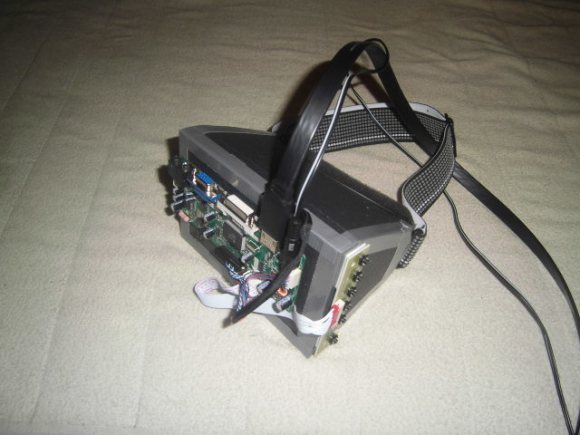
[D S] wanted his own head-mounted display. What you see here is just his mockup, but somewhere along the way he realized it’s closer to a finished build than just being a stating point. Not only does it work well for gaming, it came in at under $200 all in. You think your girlfriend makes fun of you now for wearing that big microphone headset while playing? Just wait until she gets a load of these!

We’ve embedded an image gallery after the break as well as the description he sent us with his email. The display itself is a 7″ LCD module from eBay that boasts a hair better than 720P resolution: 1280×800. He’s using a pair of ski goggles to strap the display to his noggin. The enclosure is made out of foam board which should help keep the weight down. Inside there’s a Fresnel lens but after reading his description of how he measured the focal length we’re still not 100% clear on how he figured out where to mount it.

Though it may be missing the 3d of the rift,a quick mod could fix that and he’ll be well on his way through the journey to building his own Holodeck.

Continue reading “Your Own Head-mounted Display For Under Two Bills”

3D Scanner Made In A Day

diy-3d-scanner

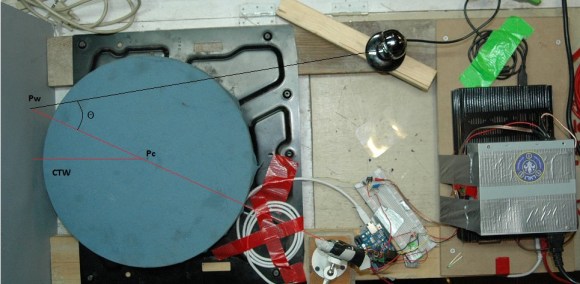
The LVL1 Hackerspace held a hackathon back in June and this is one of the projects that was created in that 24-hour period. It’s a 3D scanner made from leftover parts. The image gives you an idea of the math used in the image processing. It shows the angular relations between the laser diode, the subject being scanned, and the webcam doing the scanning.

The webcam is of rather low quality and one way to quickly improve the output would be to replace it with a better one. But because the rules said they had to use only materials from the parts bin it worked out just fine. The other issue that came into play was the there were no LCD monitors available for use in the project. Because of that they decided to make the device controllable over the network. On the right you can see a power supply taped to the top of a car computer. It connects to the laser (pulled out of a barcode scanner which produces a line of red light) and the turntable. A Python script does all of the image processing, assembling each slice of the scan into both an animated GIF and an OBJ file.

[Thanks Nathan]