Backplane And Mainboard For A 6502 Computer

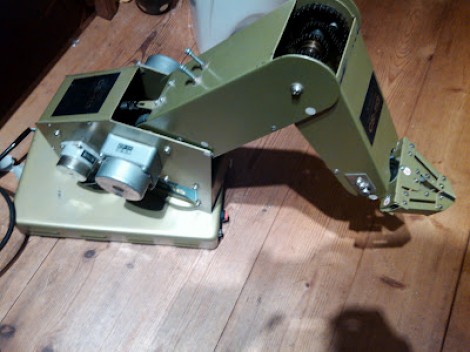
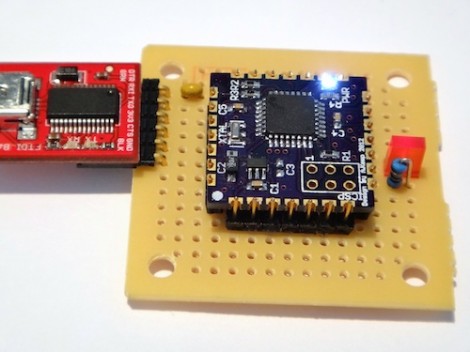
[Quinn Dunki] has been busy through the holidays giving her 6502 processor-based computer a place to live. The most recent part of the project (which she calls Veronica) involved designing and etching a mainboard for the device. In the picture above it’s the vertical board which is right at home in the backplane [Quinn] also designed.

The project is really gaining momentum now. You may remember that it started off as a rather motley arrangement of what we’d guess is every breadboard she owns. From there some nifty hex switches gave [Quinn] a way to program the data bus on the device. Many would have stopped with these successes, but the continuation of the project makes the hardware robust enough to be around for a while. The single-sided boards are playing nicely together, and the next step is to redesign the ROM emulator to use chips for storage. [Quinn] alludes to a side project in which she plans to build her own EEPROM programmer to help with getting code into the experimental computer.

Easy Camera Tracking With A Quadrocopter

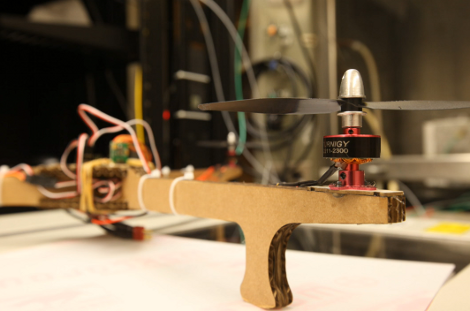
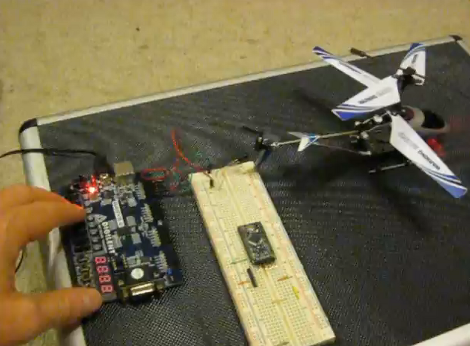
[DJ Sures] has been pulling all-nighters lately to get his AR Drone Parrot build off the ground. Now that it’s up and flying around, he managed to get it to follow objects around the room using on board cameras.

For the build, [DJ Sures] used the AR Drone ‘flying video game’ quadrocopter. This toy has two on board cameras that can viewed over wifi. All that’s needed is some interesting software to make things fun. The camera tracking of EZ-Builder software was brought into the mix so the AR Drone can be controlled via object or speech recognition, wiimotes, tablets, or terminals.

[DJ Sures] has come up with some slightly terrifying awesome builds like a Bluetooth Teddy Ruxpin, realistic Wall-E, and an awesome Omnibot 2000 refurb. This is his first flying hack, and the first to fully exploit the camera tracking of the EZ-Builder software. Check out [Sures]’ copter following him around a room after the break.

Continue reading “Easy Camera Tracking With A Quadrocopter”

Securing Your Keurig With RFID

keurig-hacking

[Andrew Robinson] and his co-workers are lucky enough to have a Keurig coffee maker in their office, though they have a hard time keeping track of who owes what to the community coffee fund. Since K-Cups are more expensive than bulk coffee, [Andrew] decided that they needed a better way to log everyone’s drinking habits in order to know who needs to cough up the most cash at the end of the month.

He started by tearing down the Keurig B40, making note of the various PCBs inside while identifying the best way to go about hacking the device. The coffee maker is controlled by a PIC, and rather than try to re-engineer things from the bottom up, he left the core of the machine intact and focused on the control panel instead.

He disconnected all of the unit’s buttons from the control board, routing them through an Arduino before reconnecting them to the machine. This essentially rendered the machine inoperable unless triggered by the Arduino, giving [Andrew] control over the brewing process. He wired in an RFID reader from SparkFun, then got busy coding his security/inventory system. Now, when someone wants coffee, they merely need to swipe their office access card over the machine, which enables the use of its control panel.

As you can see in the video below the system seems to work well. If we were to offer some constructive criticism, we would suggest ditching the laptop and rolling the RFID reading/verification into the Arduino instead – other than that, we think it’s great.

Continue reading “Securing Your Keurig With RFID”

Laser Shooting Gallery Made From Scrap

When he’s not being completely awesome hosting a radio show on electronic music, [Gaston Klares] is busy in his workshop coming up with some awesome stuff. One of his most recent builds is a laser gun shooting gallery that brings a classic carnival game to his back yard. (Google translate link)

The laser gun itself is made up of 95% recycled components. The purpose of the laser gun is pretty simple – just make a sound effect and fire a laser downrange when the trigger is pulled. The shooting gallery is where all the fun happens. Five dog food cans are lined up at the far end of the range. There’s a small hole in each can and a phototransistor inside each can that activates the ‘fall over’ mechanism. When all the cans are knocked down, a windshield wiper motor puts all the cans upright again.

Thanks to [Kris] for sending this one in. Check out the shooting gallery in action after the break.

Continue reading “Laser Shooting Gallery Made From Scrap”

Voting Is Open For The Buildlounge Laser Cutter Contest

A few months ago, Buildlounge and Full Spectrum Laser started a contest to win a 40 Watt laser cutter. The only requirement? Submit a project that uses light in some way. The deadline is now over and voting is open, right on the buildlounge.com page.

First place gets a 40 Watt laser cutter provided by Full Spectrum Laser. Second place is a neat green laser courtesy of Wicked Lasers, and Third place is an EL wire starter kit  from Adafruit.

There’s a lot of really awesome projects that were submitted for this contest. The laser terminal looks really cool, as does the friggin huge LED wall and choreographed light show. We would be remiss if we neglected to mention that there’s a home-made x-ray machine in the running, and of course there’s the mathematical precision of fellow Hack a Day-er [Jack]’s solar clock that isn’t a sundial.

The guys at Buildlounge got a lot of submissions for this project, so head on over and vote for your favorite. The winners will be announced next week, Friday, the 13th of January.

Portable Electronic Drum Kit Made From Plastic Bowls

portable-drum-kit

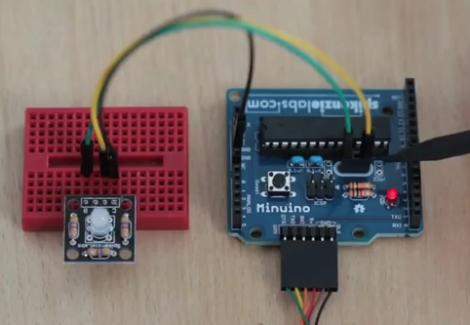
[Ian Cole’s] son is learning to play the drums on an electronic drum set, and he wanted a way to continue practicing during his frequent visits to his grandparents’ house. [Ian] had picked up a Spikenzielabs “Drum Kit Kit All-Inclusive” (DKKAI) earlier this summer, and set out to build an easily transportable drum set.

The DKKAI comes with an ATmega168-based board and a set of piezos that can be used to register hits. It was up to [Ian] to provide the rest of the kit, so he set off to IKEA in search of cheap, durable drum heads. He returned with a handful of 1/2 Liter plastic bowls, which he mounted on a PVC pipe drum stand.

The piezos were mounted on thin aluminum discs, which were in turn glued to the back side of the bowl lids. The piezos were wired to the DKKAI kit via the PVC tubing, with the signals ultimately fed into an iPad running Garage Band. [Ian] says that his portable drum set works quite well, and although there are some things that require changing, his son is very happy with his new practice set.

Check out the video below to see the portable drum kit in action.

Continue reading “Portable Electronic Drum Kit Made From Plastic Bowls”

Neural Networks Control A Toy Car

After taking the Stanford Machine Learning class offered over the Internet last year, [David Singleton] thought he could build something really cool. We have to admit that he nailed it with his neural network controlled car. There’s not much to the build; it’s just an Android phone, an Arduino and a toy car. The machine learning part of this build really makes it special.

A neural network takes a whole bunch of inputs and represents them as a node in a network. Each node in [Davids]’s input layer corresponds to a pixel retrieved from his phone’s camera. All the inputs of the input layer are connected to 64 nodes in the ‘hidden layer’. The nodes in the hidden layer are connected to the four output nodes, namely left, right, forward and reverse.

After training the network and weighting all the connections, [David] got a toy car to drive around a track. Weird, but it works. All the code is up on github, so feel free to take a look behind the inner machinations of a neural net. Of course, you could check out the video of [David]’s car in action after the break.

EDIT: We originally credited [icebrain] as the author. Our bad, and we hope [David] doesn’t hate us now.

Continue reading “Neural Networks Control A Toy Car”