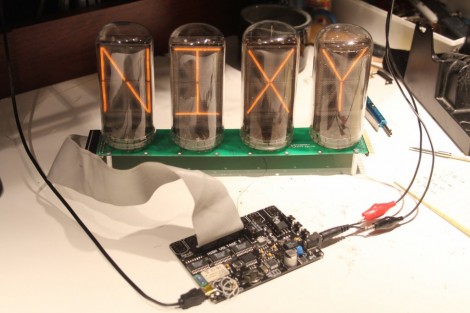
Bluetooth Nixie Driver Lets You Go Almost-wireless

[Bob Coggeshall] has a nice Nixie tube driver board coming down the pipes. It’s not quite ready yet but you can see by the image above, it offers something that isn’t always easy to find; control for B7971 tubes which can display the full spectrum of alpha-numeric characters. This board is not limited to just one type of tube and it can be chained together with other boards to create longer displays. But perhaps the best development is the addition of a Bluetooth module. [Bob] has incorporated a Roving Networks RN-41 Bluetooth module which takes care of all aspects of the wireless protocol. This way the display is not tethered to a computer, or limited to data stored on a chip. We can’t really say that it’s wireless though, as we’d assume a set of these big tubes would rip through batteries pretty quickly. Keep an eye on this project, it will be open source once the bugs are worked out and [Bob] will also sell fully assembled and tested boards for those who choose not to roll their own.

We wonder if it would be easy to pair this with your phone and use it to display incoming call information?
Timed Shot-glass Won’t Let You Stop Drinking

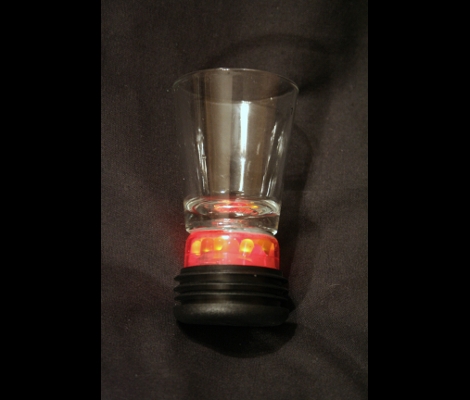
[Drewbagd] was inspired by the 555 timer contest and decided to make this his very first electronics project. It’s an accessory for a drinking game called the Power Hour. The game (if you could call it that) consists of contestants drinking one shot of beer every minute for one hour. [Drewbagd] points out that timing the shots can be an issue and so he decided to augment each shot glass with its own timer.

He added a base that consists of a ring of LEDs surrounding a 555 timer and the cap and resistors. This causes the timer to oscillate from illuminated for a few seconds (drink) to dark for one minute (refill). He calls it the Powered Power Hour. The video after the break shows off the functionality, and it hints at a bright future for [Drewbagd] as an infomercial Emcee.

He’s got a supporting post that detail the electronics and outline some of the prototyping issues. We were happy to hear that when he got stuck he found help over on Hackaday’s forums. Thank you to all who participate in the community by sharing their knowledge.

Continue reading “Timed Shot-glass Won’t Let You Stop Drinking”

Automated Window Curtain Hits The Road

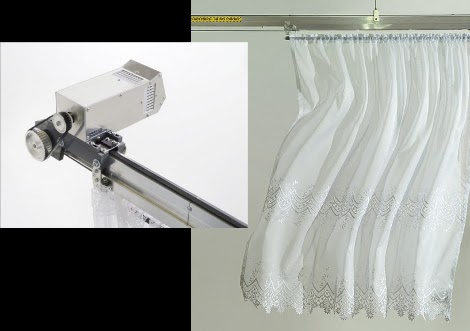
[Niklas Roy] upgraded his privacy curtain and is taking it on the road. Regular readers will remember the first version that resided in his shop window and used video processing in conjunction with a motor to keep the small bit of curtain in front of any passersby. We’ve embedded the original demo video after the break and it’s not to be missed.

But now he’s decided to make some upgrades to the system because it’s going to be shown as an art display. He looked around for a motor upgrade but found that the best motor at the most reasonable price could be pulled from a Makita power drill. The track itself is modular, making the installation scalable up to ten meters in total length. He even built a clean-looking laptop dock that handles the video processing end of things. But there’s something here for you as well. He’s released all of his source code, schematics, board design, and even the SketchUp files for the motor mounts and other parts. Dig out that old power drill and build one of your own.

Continue reading “Automated Window Curtain Hits The Road”

Let There Be Cake – And Video Games In One Package

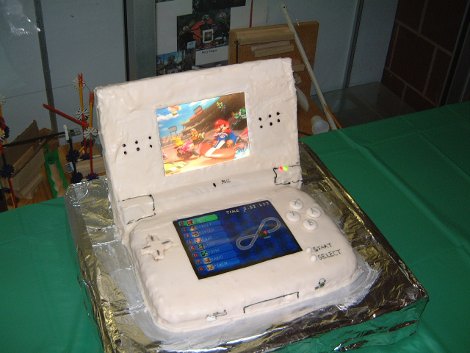
Encourage your kids to play with their food by making a cake that looks like a toy. The Nintendo DS lookalike houses some electronics to spruce up the presentation. The upper panel is cardboard covered in frosting to tie it in with the edible lower sections. That cardboard panel hides a couple of LEDs that blink thanks to a blinking Christmas light bulb in series with the diodes. There is also an LCD screen backlight in the form of to CCFL bulbs. The screen is just a still image but that’s okay, you can’t expect an actual video screen to be built into this. Take a look at the clip after the break to see the internals.

We’ve looked in on a few other cake hacks in the past. If you missed them before now’s your chance to revisit the gantry-based frosting dispenser and the turn-table frosting injector with silver-orb detailing. These are some sweet hacks!

Continue reading “Let There Be Cake – And Video Games In One Package”

Super Winch Makes Sledding 100% More Fun

sledding_winch

As every kid quickly finds out, sledding in the winter is awesome until you have to trudge back up to the top of the hill. If your sledding run is reasonably short, this isn’t a problem, but if you sled on huge hills like [Josh], you need to figure something out.

He had a go kart motor sitting around, so he figured he might as well put it to good use as a sledding winch. The winch runs a continual loop of over 1000 feet of rope, and is able to pull 3 adults up a 30 degree incline fairly easily. They say that necessity is the mother of innovation, but at some point you have to ask, “Does sledding really require an 8 HP motor and a continuously variable transmission?” The answer, of course is a resounding “Yes!”

Not only does this winch allow [Josh] and his friends to get back to real business of sledding in a hurry, it actually makes sledding fun in both directions.

Keep reading to see a video of the winch in action, and be sure to check out some other fun uses for winches we have featured in the past.

[via Neatorama]

Continue reading “Super Winch Makes Sledding 100% More Fun”

iphone_universal_ir_dongle

IPhone-based Universal IR Remote

If you have a reasonable home theater setup in your living room, odds are you have up to half a dozen remotes sitting around. Short of trying to get your cable receiver’s remote to control everything or laying down some cash for a Harmony remote, what’s a hacker to do?

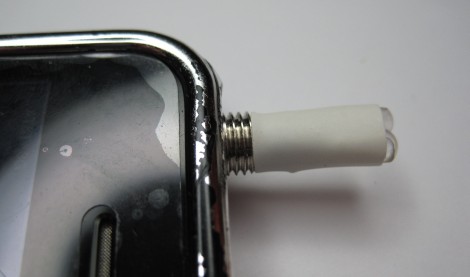
[Andrey] decided he wanted to use his iPhone as a universal IR remote, but he didn’t want to pay very much to do so. Instead of buying a dongle at the store, he soldered some IR LEDs to an old headphone plug, creating a mini IR dongle to control his equipment. After studying IR signaling a bit, he got to work encoding IR remote commands into wav files using Python. The files are then played on his iPhone, allowing him to submit certain commands to his TV set.

Unfortunately, the process of manually converting IR codes to audio files doesn’t quite seem like the most efficient way of doing things. There are other IR dongles currently on the market that utilize the headphone jack, most of which provide pretty robust software for free. These might make a good alternative to manually creating audio files for each IR command. We honestly haven’t seen any teardowns of these retail IR dongles posted online, but it would be interesting to see how they compare to what [Andrey] has put together.

Walking Motion Analysis Using Wii Remotes

WiiGait is not a political scandal, it’s a project that records motion data while walking. [Bilal Chishti] and [Zassa Kavuma] are strapping a Wii remote onto each leg and recording the sensor data while making video of the walker at the same time. The two are using an Ubuntu box to pull the sensor data from the Bluetooth-enabled devices and utilizing its built-in webcam for the video. They graph the data for each axis and we’re sure that syncing up data anomalies with the video is just a matter of matching timestamps.

So what good is this? The creators are keeping us in the dark about an end-goal for collected data; this may just be for the experience of using the hardware. But we could see it having uses in making distance runners more efficient, or teaching that bipedal robot how to balance.

Continue reading “Walking Motion Analysis Using Wii Remotes”