Versaloon Can Program Hardware From Several Manufacturers

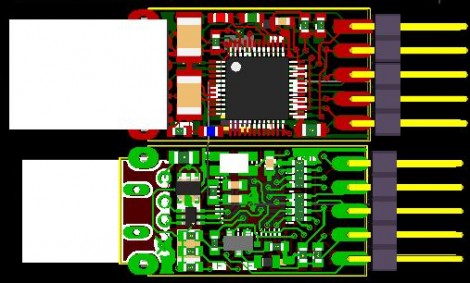
Versaloon is an open source, USB connected project, that centers around an STM32 processor and provides a standard JTAG pinout. Above you see the Nano version which has a 10-pin JTAG connector, but there is also a 20-pin option on the Handy model. Great, another JTAG programmer. Well this can do a bit more than that. With a bit of help from the software it has been turned into a programmer for ten different types of hardware. Obviously this should be able to program anything that works with the JTAG protocol, but the script adapts it to work as an In System (or In Circuit) Programmer too. So far the list of programming targets includes STM32, LPC1000, LPC900, STM8, AR8, MSP430, and a few others.

We had some trouble finding an actual picture of this hardware. If you’ve got one, snap a picture and leave a link to it in the comments along with your thoughts on the device.

[Thanks Geekabit]
A Hacker’s Marginal Security Helps Return Stolen Computer

Gather round and hear the story of how a hacker outsmarts a criminal. [Zoz] was robbed and they got his desktop computer. Gone, right? Nope. Because of a peculiar combination of his computer’s configuration, and the stupidity of the criminal, he got it back. He shares the tale during his Defcon 18 talk (PDF), the video is embedded after the break.

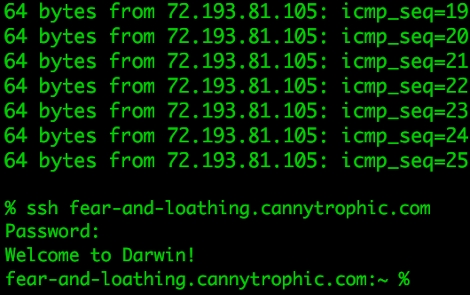
[Zoz’s] first bit of luck came because he had set up the machine to use a dynamic DNS service, updated via a script. Since the criminal didn’t wipe the hard drive he was able to find the machine online. From there he discovered that he could SSH into it, and even use VNC to eavesdrop on the new owner. This, along with a keylogger he installed, got him all the information he needed; the guy’s name, birth date, login and password information for websites, and most importantly his street address. He passed along this juicy data to police and they managed to recover the system.

Continue reading “A Hacker’s Marginal Security Helps Return Stolen Computer” →

Crash Course In HTML Manipulation From A Shell Script

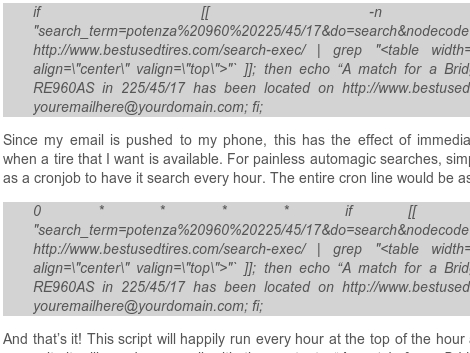
Automating something involving data from the Internet can be confusing when it comes to pages generated by user input. For instance, let’s say you want to scrape data from a page that loads after using a search box. [Andrew Peng] posted a quick and dirty example to help you write your own scripts. The example he used checks stock on one of the websites he frequents. His process outlines finding the link that all searches are submitted to, establishing the method used to send the search string, and grabbing the resulting data. He parses it and sends off an email if it finds what he’s looking for. But this could be used for a lot of things, and it shouldn’t be a problem to make it alert you in any way you can imagine. Maybe we’ll use this to add some functionality to our rat.

Kodak ZX3 Teardown And Tetris

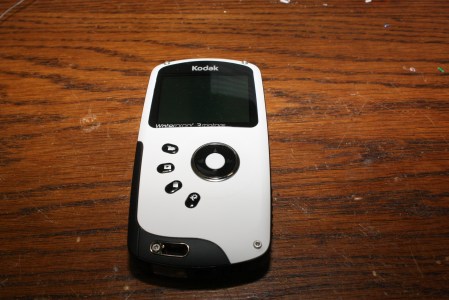
[Sprite_TM] was given a Kodak ZX3 to play with by a forum he moderates.  The Kodak ZX3 is a waterproof HD camcorder in a cell phone / mp3 player form factor. After opening up the camcorder, he did some poking around with a scope and was able to locate a serial port on the board. It quickly became apparent that the system uses a proprietary kernel called PrKernelV4 rather than an open source alternative. Not letting the proprietary kernel get him down, he exploited the system by simply modifying a file called “autoexec.ash” on the sd card. He now has a Tetris clone easily launched from a previously unused menu icon. See it in action after the break.

Continue reading “Kodak ZX3 Teardown And Tetris” →

Reading NAND Flash Chips Without Removing Them

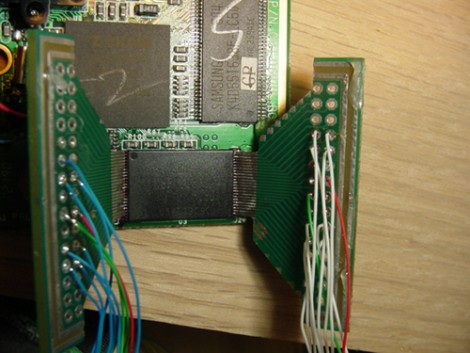
Here’s an interesting method of reading data off of a NAND flash chip. Often we see these chips desoldered in order to read and write data, but not this time. This method uses hacked adapters to match the pin pitch of the various chips. Above you see parts of a breakout board cut down to use as wedges. These are drag soldered to the pins of the chip, then the appropriate breakout pins were connected to a Smartmedia card reader, which can read NAND chips. There is also an example showing the flexible connector cable for a DVD rom used as the adapter to solder to a smaller chip. We still looks pretty tricky, but it might be less labor intensive than relocating the flash chip like we saw on that Sega Game Gear hack, as long as you only need to read or write the data once.

[Thanks Laurdy]

‘Tis The Season To Decorate Bags With EL Wire

We hope you’ve already got parts on hand for your holiday projects because shipping might be a little slow at this time of year. But if you’ve got a bag and some unused EL wire here’s a one-day project you should try. Make yourself a Tron-inspired shoulder bag, or backpack.

On the right, [PT] is doing fantastic job of modeling with his electroluminescent offering. This is another Adafruit offering that holds your hand each step of the way from designing, to sewing, to wiring it up. This will go great with that glowing unitard he’s been working on.

[Alan Yates] has also done a spectacular job with his Tron backpack seen on the left. He picked up his EL wire on clearance at a place called “big-W” after Christmas last year. They were selling 3 meter segments (each with their own inverter) for just $3. We’re happy he got a deal and even more pleased that he found a use for it.

[Thanks Drone]

Gaming On An IBM XT Using An NES Controller

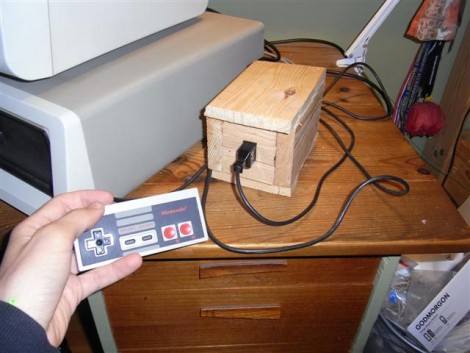
[Frode] felt that using the keyboard for gaming on his old IBM XT computer was simply too noisy. He came up with a much quieter way to game by building an XT adapter for an original NES controller. If you haven’t explored the communication protocol used by the NES peripherals this is a great way to learn. Inside you’ll find a CMOS shift register that captures button states when it receives a latch signal. With that in mind [Frode] came up with a circuit to gather the bits from the controller, and generate input commands using the XT keyboard protocol without using a microcontroller. All of this is explained in the demo after the break.

Most of the NES controller hacks we see permanently alter the hardware. It’s nice to see one used without cracking it open.

Continue reading “Gaming On An IBM XT Using An NES Controller” →