Zinc Sulfide Glow Power At Home

Further solidifying her mad-scientist persona, [Jeri Ellsworth] is making glow powder with household chemicals. When we saw the title of the video we though it would be fun to try it ourselves, but the first few minutes scared that out of us.

To gather the raw materials she puts some pennies in a bench motor and files them into powder. From there it’s trial and error with different cleaners and tools to create just the right dangerous reaction to get the chemical properties she’s looking for.

Check out her experiments after the break. And if you find you’re wanting more, go back and take a look at her EL wire fabrication process.
Continue reading “Zinc Sulfide Glow Power At Home”

Chiptune Instrument From NES

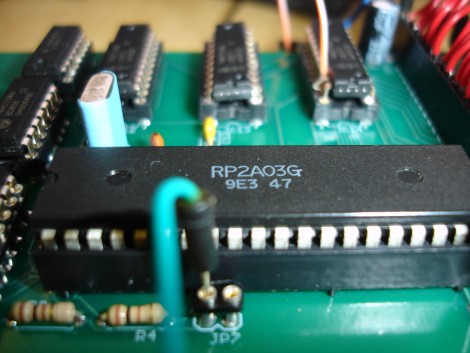
[Jarek Lupinski] wanted an instrument that would let him play chiptunes live, without a need for pre-programming a cartridge for playback during a concert. His preferred hardware is an original Nintendo Entertainment System because of its familiar nostalgic sound. After picking up a lot of 5 broken NES units he set out to build a midi-compliant device.

The five NES units he bought had nothing wrong with them other than the 70-pin cartridge connector. He fixed them all, then de-populated the board on one and tried to build out a circuit on a breadboard. After much trial and error, forum searching, and conversations with others who were familiar with the hardware he got the circuit working. He’s posted a schematic and had a board fabricated which takes the transplanted chips and transforms them into an instrument. Check out the test notes being played by an Arduino Mega after the break.

Continue reading “Chiptune Instrument From NES”

Spinning POV Clock Done Oh-so-right

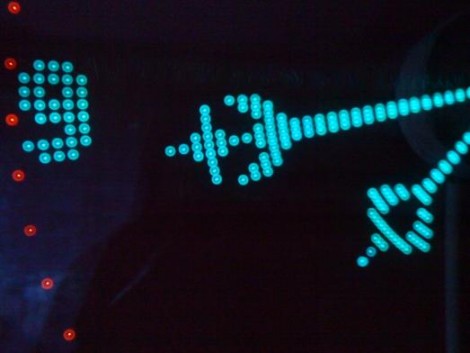
[Kizo] built an extraordinary persistence of vision clock. The design uses a PC cooling fan to spin the propeller-like PCB. As it goes around, a hall effect sensor synchronizes the illumination of the LEDs to draw the display. Power for the rotating electronics is transferred wirelessly via a transformer on the base and coil on the spinning board. The final version uses an ATmega324 microcontroller running at 20 MHz and has an IR receiver for changing the settings. The 3000 lines of code bring a lot of bells and whistles, including a menu system with a huge amount of settings from tweaking the clock display, to font selection for scrolling messages. Take a look at the demo after the break. The double-sided board looks like it’s pretty difficult to etch at home, but as you can see from the forum post (translated), [Kizo] did a great job on this build from start to finish. Continue reading “Spinning POV Clock Done Oh-so-right”

Decoding MP3 In Python

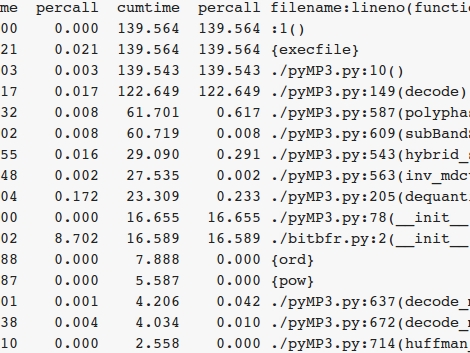
We all listen to them, but do you know how the compression for an MP3 file actually works? [Portalfire] wanted to find out, while honing his Python skills at the same time. He’s been working on an MP3 decoder in the Python language. So far he’s had some success, with the first working decoder clocking in at just 34 times slower than real-time. But since then a bit of optimization improved that to 10 times slower.

Sure, it’s not a usable module yet but his goal of learning the algorithms has been reached. A combination of reading about the standard and looking at code from other projects made that possible. In the future he plans to try the same thing with the H.264 codec.

DIY Night Vision Monocle

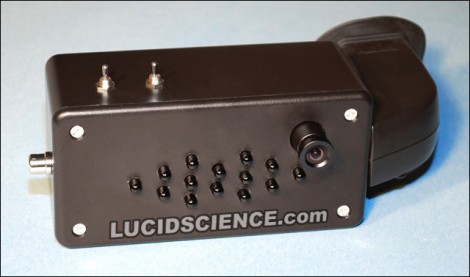
This interesting mashup shows it’s easy to make your own night vision goggles. It makes use of just a few parts; the viewfinder from an old camcorder, a low-light security camera module, and a collection of infrared LEDs.

The low-light camera is capable of detecting infrared light, which is invisible to our eyes. If you shine the right IR LEDs on an object, they will cast enough light for the camera to clearly view the objects around you. The camcorder viewfinder is nothing more than a compact way to display what the camera sees. This would be easy to accomplish with a wearable display. It is also beneficial to have a large IR light source so you may consider modifying that giant LED flashlight you’ve been meaning to build so that it operates in the infrared wavelengths.

This project comes from the same source as the Laser Microphone we looked in on last month. Just like that one, there’s plenty of extra information about this build. There’s suggestions for choosing and focusing a light source. This includes using lasers as the source, and binoculars for long-range viewing.

R/C PPM Hacked

[Thomas Pfeifer] has taken the PPM signal produced by model aircraft wireless controllers, and with an ATMega8, converted the signal to act as a USB joystick. Which means you can now use a standard R/C remote control to fly model aircrafts on your computer. Of course now with PPM decoded you could also use the signal to control any electronic device. Like your mower, iPod, and we’ve even seen remote controlled pellet guns. Catch a video of [Thomas] flying a simulated quadrotor helicopter after the jump.

[Thanks Max]

Continue reading “R/C PPM Hacked”

Android Apps Using Processing

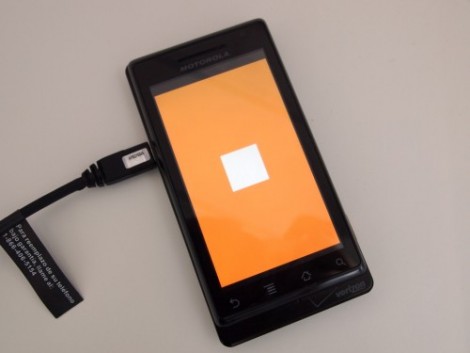
Processsing has come to Android. [Jer] posted a guide to setting up the software and coding your first Processing app for Android. The module which supports Google’s mobile operating system is not yet part of the stable Processing release but it works and is available to download and use. It provides support for Android version 2.1 and newer, playing nicely with the SDK to emulate your sketches during development. The Hello World app seen above uses just a few lines of code to draw a white box on an orange background. After you’ve installed and tested the tools you’ll be developing in no time.

This makes a great addition to your Android development tool bag.

[Thanks Tech B]