Hackaday Links: October 10, 2010

Old timey pics with a new timey camera
Update: We’ve already looked at this one… see the full article for all the details.

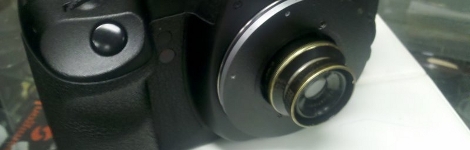
One way to get old-looking photographs is to use a vintage camera. Then again you can just connect a 1908 lens to a modern dslr with great results. [Thanks MS3FGX]

Cheap iPad mounting bracket
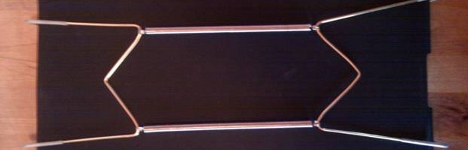
Need a way to hang your iPad but don’t want to spend some bucks? [Tumbleweed] used a $3 plate hanger to do the trick.

Hand engraving

You can get free laser engraving when you buy an iPhone but it won’t look as good as this does. [Viljo Marrandi] spent eight hours on this, but most of the time was spent resharpening tools dulled by the tough metal.

Let time prevent your computer from going idle

Want to keep your screen saver from running? No need to change settings, software, or use special hardware. Just set your mouse on an analog watch and let the moving hands jiggle it around. [Thanks Lovro]


Add-on Panel Brings Automated Vents Flaps To A PC

[SXRguyinMA] built a replacement top bezel for his computer case. He wanted to add vents that would automatically open or close based on the cooling needs of the computer. With some careful measurements he modeled the parts in Sketchup and sent out for them to be cut from styrene with a water jet cutter. The parts came back looking great and the assembly of the shutters went swimmingly. The bezel also includes a lighted screen for temperature information, as well as the front USB ports, headphone and mic jacks, etc. Hidden underneath is an Arduino board and servo motor. The Arduino polls the temperature and drives the servo to adjust the fins accordingly. There’s even a supercap in the circuit that will close the vents when the PC powers down or when power is unexpectedly lost. See it in action after the break.

Continue reading “Add-on Panel Brings Automated Vents Flaps To A PC” →

New A4 Jailbreak Debacle Puts The Brakes On For IPad

If you’ve been waiting in the wings for the next Jailbreak to be release you should know there’s been a bit of a speed bump. [ChronicDevTeam], which has been working on an exploit for A4-based iOS devices called SHAtter, tweeted last Thursday that the fully tested, untethered, and unpatchable package knows as greenpois0n would be released today. But on Friday [Geohot], who you may remember from the PlayStation 3 Hypervisor exploit, rolled out his own mostly untested and admittedly beta jailbreak called limera1n.

So where does that leave the situation? Because [geohot] used a different exploit, the [ChronicDevTeam] decided not to release greenp0ison. If they did, it would give Apple a chance to block two different exploits. Instead they are working feverishly to incorporate, test, and repackage using the same exploit as limera1n.

If you don’t want to wait, jailbreak now, but you risk problems with an unstable exploit method that is only available for Windows.

[via @ChronicDevTeam]

Human Theremin, One Step Closer To Cyborgs (not Really)

Oh [Humberto], what will you think up next? A human Theremin you say, and it’s for Halloween? Certanly this will blow last years creepy capacitance sensing jack-o-lantern out of the water right? Eh, not really, but still cool none-the-less. By using pairs of IR LEDs and IR photo-transistors, [Humberto] makes a simplistic distance sensor. Then its just a matter of converting that light value into sound, which is accomplished by using some very clever PWM square wave hacking to make a triangle wave. Also, [Humberto] goes over the process of using fast integers to represent slow floating point numbers. While none of the project is really a new concept, it certainly is put into an easy perspective so anyone can try their hand at it. All well worth the read, or you can catch a video after the jump.

Continue reading “Human Theremin, One Step Closer To Cyborgs (not Really)” →

Yashica Electro Shutter Mod

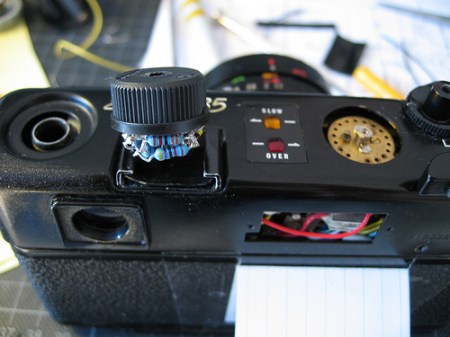
We saw this picture on Flickr this morning and started getting really curious. The caption says that [Steffanhh1] modified the Yashica Electro Shutter camera to be fully manual. We’re not camera experts so we had to do a little research to see what was going on here. The Yashika Electro got its name due to how the shutter speed is controlled. You have two little LEDs that light up depending on which direction you need to turn the dial (based on ambient light?). [Steffanhh1] really wanted full control, so they hacked in a dial with a knot of resistors under it. The first test photographs are downloading developing, so we’ll have to wait to see the results.

Using An Arduino Or Seeeduino For Its FTDI Chip

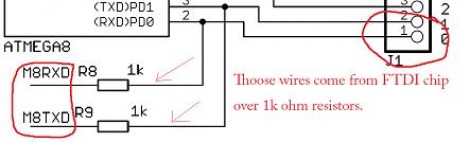
We think of the Arduino as a rapid prototyping tool but we never thought of it as an FTDI breakout board before. [Ihsan Kehribar] wrote a quick post to show how it’s done. You’ll find an FTDI chip on Arduino boards that have a USB connector. It’s used to handle the USB communications on one side, and TTL serial communications on the other. The serial pins from the chip are mapped to the UART on the AVR chip, and in turn they appear on the pin headers for easy connections. Just load up a really simple sketch(available from Ihsan’s post) to make sure the processor doesn’t get in the way and you’ve got yourself an FTDI breakout board. If you happen to have a Seeeduino there’s even more functionality as the board has a selector switch that allows you to choose between 5V and 3.3V levels.

This doesn’t hold true to the newest generation of Arduino, as those board have replaced the FTDI chip with an ATmega8U2. That’s basically and ATmega8 with native USB handling… fancy.

[Thanks Marcus]

Pulling Data From The IM-ME Spectrum Analyzer

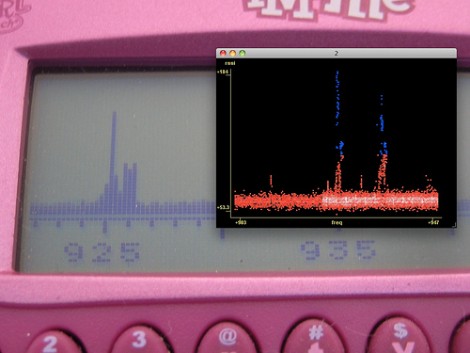
A small, cheap spectrum analyzer with an LCD can be a fun thing to play with. But to be truly usefully you need access to raw data, and lots of it. [Travis Goodspeed] set out to make that possible by pulling data with a GoodFET and a Python script.

He started with [Michael Ossmann’s] IM-ME spectrum analyzer, which uses a CC1110 chip. The two of them are giving a lecture at Toorcon 12 (called Real Men Carry Pink Pagers) and this will be used as a demonstration device. After studying the datasheet he found the starting RAM address and did some further work to deciphered how the data is stored in it. From there it was a matter of working out the timing for grabbing the data, and coding a method for storing it. Now he’s looking for brave souls to help him trailblaze with this newly-discovered tool. It seems that if you know what you are doing, and have abundant patience, you can use this for a bit of old-fashioned reverse engineering.