Binary Reversing Comic

b300

Last month, in preparation for Defcon 17, the qualifiers were held for capture the flag, one of Defcon’s most well known events. One participant, [mongii], did a writeup on how to solve problem B300. The challenge was to find the decryption key used by a program that had several twists that hindered debugging. After grappling with self-modifying code and junk instructions, the team was finally able to find the answer. This win helped Sapheads place in the top 10.  Over at xchng.info, they are collecting solutions to the other problems. Sadly, they’re not all in comic form.

Building A Snorricam

[youtube=http://www.youtube.com/watch?v=CoZOe3gOkco]

With digital cameras getting cheaper and higher quality, we find ourselves more capable of using them to make videos. A Snorricam can be a very useful tool if you like the effect it produces. This specific design allows for adjustment of the height and angle of the camera allowing for even more possibillities. As you can see in the video after the break, it seems to work pretty well. It might be nice to add some kind of vibration absorbtion though. Anyone got any ideas on that?

Continue reading “Building A Snorricam” →

Homemade Regenerative Tube Radio

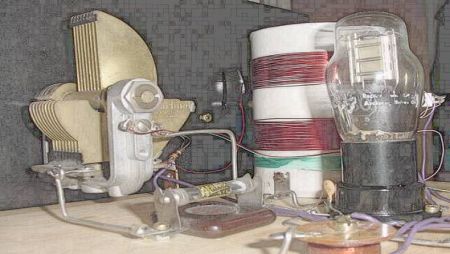
There are no microcontrollers in this project. In fact you wont find a single transistor. This classic regenerative tube radio, modeled after an early 20th century homebrew is complete with schematic and additional photos. For those who are not familiar with tube designs and for simplicity, the regeneration circuit can be thought of as feedback though this relation may be argued. Read the rest after the break which includes a crash course in tube operation. Continue reading “Homemade Regenerative Tube Radio” →

Etch PCBs With Ferric Chloride And A Sponge

F7Z9JTTFX23V5VV

Etching a printed circuit board generally takes a bit of time and uses a lot of etchant. [TechShopJim] posted a method that uses a sponge to reduce the amount of etchant used while speeding up the entire process. First, a resist is applied using either a sharpie or the toner transfer method. Using gloves to handle everything, he soaked a sponge in ferric chloride and continually wiped a copper-clad board until all the exposed copper was removed. This technique moves the etchant around more, keeping “fresh” etchant closer to the copper. If you can’t procure ferric chloride, you can also use our method that uses 2 household chemicals: hydrogen peroxide and hydrochloric acid.

Arduino Nano Updated

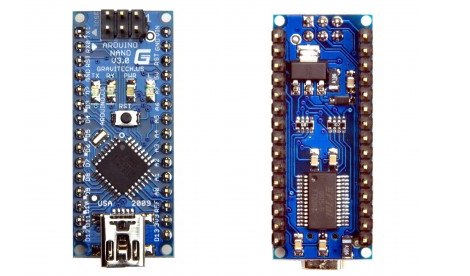
The official Arduino Nano design has been updated to version 3.0. Like other new Arduino designs, it’s using the ATmega328 instead of the ATmega168. It’s also a slightly more reasonable $35. The small board is designed to be plugged directly into a breadboard and accessed via mini USB cable. This new design is also two layers instead of four making it easier to produce and modify. The new Nanos will ship at the end of the month.

4 LED RGB Controller

4rgbled-angle-rainbow_thumb (Custom)

[Steven] was inspired by the BlinkM and Shiftbrite modules, but really wanted something that could be controlled via RS232. He decided to build his own RGB LED module capable of PWM that fit his needs. He’s using a PIC16F628 microcontroller as the base. Each module has 4 individually addressable LEDs with multiple intensities for each color. The units can be daisy chained as well. The schematics and PCB files are available on his site for download.

[via Hacked Gadgets]