It’s A NAS, For Sony Mavica Disks

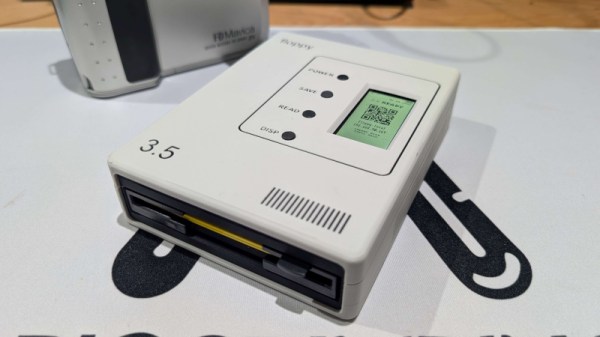
At the dawn of the consumer digital camera age, manufacturers tested this new market with a wide array of interesting and unorthodox designs. This era only lasted a few years before they moved toward making models that resembled the 35mm cameras the consumers were used to. Sony’s Mavica offerings were particularly unusual, because they eschewed Flash storage for the then-ubiquitous 3.5″ floppy disk. Where there are files, there might be a need to share them, so [Bigcrimping] has created floppy3.5. It’s a NAS for digital Mavica disks.

Continue reading “It’s A NAS, For Sony Mavica Disks” →

VapourDeck Is The 486 Handheld You Didn’t Know You Needed

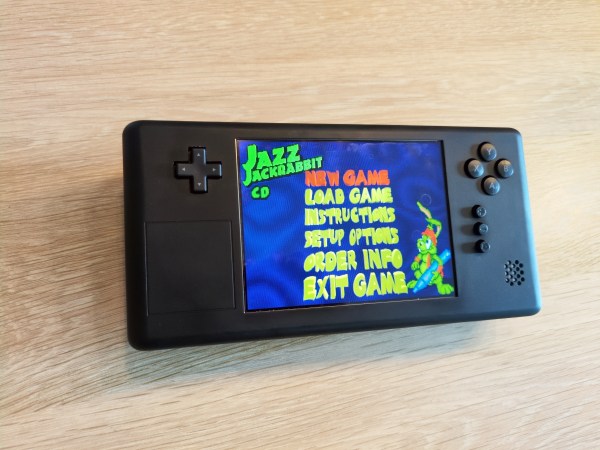
Do you need a 486-based handheld computer for DOS games? Well, we didn’t think so either — until we saw [Sprite_tm]’s impressive and excellently documented VapourDeck homebrew handheld PC. Now we want one for Christmas and to be [Sprite_tm] when we grow up.

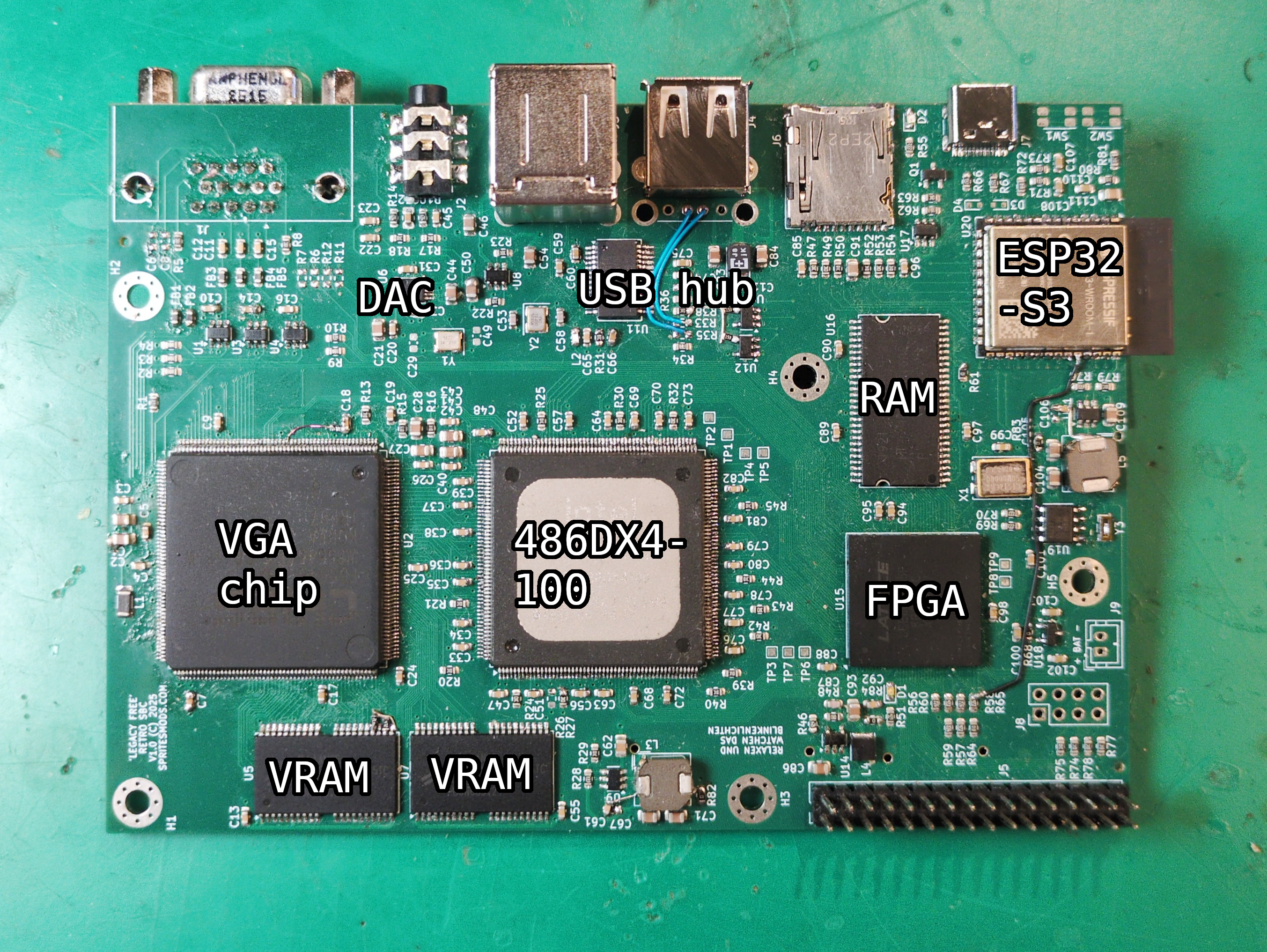
There exist industrial single-board computers designed around the Intel 486, and you’d be forgiven for thinking that’s what lives inside this build– but no. [Sprite_tm] was tired of thinking of a motherboard as “deep magic” and decided it was high time he designed his own. He chose the 486 because Intel actually let mere mortals at the documentation in those days, and it would let him play all his favourite DOS games on the fly. The board contains a period-appropriate VGA chip — complete with whopping 1MB of VRAM!– though most of the glue logic, I/Om and sound are on a modern FPGA and ESP32-S3, respectively. An image of the custom 486 SBC with the main components labelled

The writeup gives a good idea of the thinking behind this machine, but if you want to build one yourself, you can get all the files on Codeburg, because [Sprite_tm] was kind enough to open-source his work even if he’s not sure anyone else would want to replicate it.

We’ve seen a lot of [Sprite_tm]’s work on Hackaday over the years, including a portable Vectrex he walked us through at Supercon one year.

Thanks to [Vital] for the tip!

Hackaday Links Column Banner

Hackaday Links: November 15, 2026

Another Hackaday Supercon is in the history books. The new venue was amazing. We had more attendees than ever and still had room to spare. You can find many of the talks, including the lightning talks, in the live section of our YouTube channel. You can even watch the final badge hacking competition.

Continue reading “Hackaday Links: November 15, 2026” →

Loop Antennas For Transmitting

Loop antennas are becoming increasingly popular as more radio fans find they can’t erect elaborate outdoor antennas. Like most things, of course, there are trade-offs. But, most often, loop antennas are for receiving. Only a few can handle transmitting, and [FesZ] wanted to build some that could handle transmit power. You can find out what he discovered in the video below.

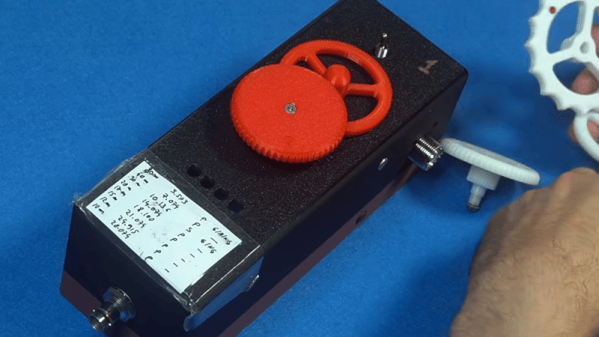
Loop antennas are very sensitive, and a standard variable capacitor just rotates less than a single rotation. High-precision devices would often have gear reductions, but those are hard to find today. But with a 3D printer, it is reasonably easy to make gear reductions for a variable capacitor, and that’s what [FesZ] did.

Continue reading “Loop Antennas For Transmitting” →

An Orbital Sanders Crash Course And The Threat Of HAVS

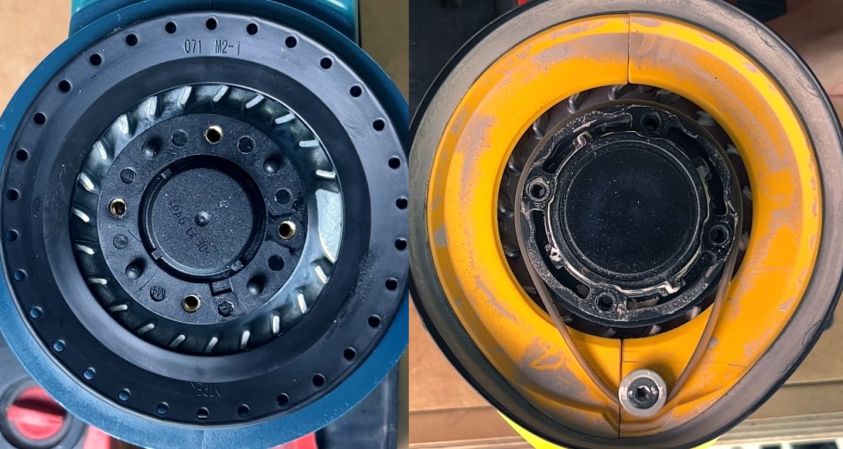
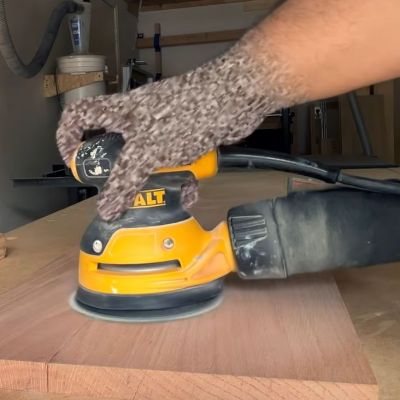
This is your hand on bad vibrations. (Credit: Five Duck Studio, YouTube)

Most people know about orbital sanders, as the cousin of sheet sanders, with many people using them every day to make wood and other surfaces smooth. Yet if you have ever wondered at the slightly numb and tingling feeling in your hands after using them for a while, you really want to watch this deep dive by [Five Duck Studio] on how orbital sanders work and why not all vibrations are good vibrations.

First, the basic workings of an orbital sander are explained in the video, including the way that the orbital sanding pattern is created by the spinning disc. These patterns aren’t the same size for each sander, with the ‘finisher’ ~2.5 mm pattern being decidedly more suitable for fine work, while the roughly 5 mm pattern is better for coarser work.

From here, the details spiral into the various brake mechanisms, which prevent the disc from spinning wildly when not on a surface. This can be as simple as an O-ring providing some friction.

Continue reading “An Orbital Sanders Crash Course And The Threat Of HAVS” →

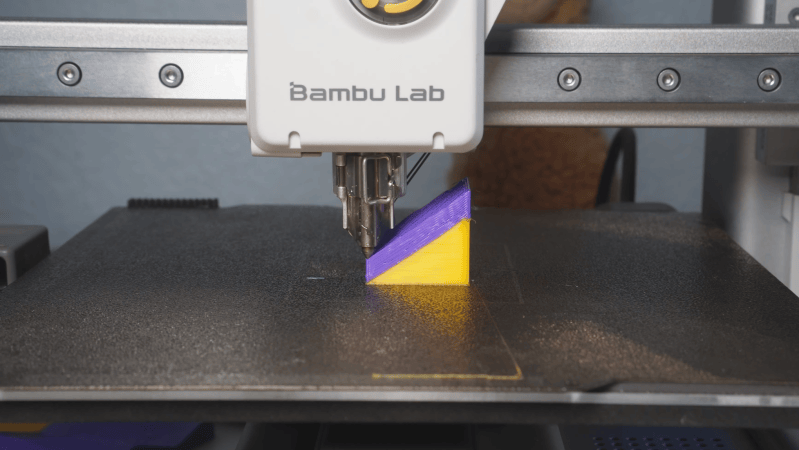
A Bambu Labs 3D printer is shown printing a cube. The cube has a division between yellow and purple plastic running at an angle through the cube. The printer is printing the purple section, and the face on which it is printing is angled at nearly 40 degrees to the print bed.

Printing Smooth Upper Surfaces With A Non-Planar Slicer

One of the most tantalizing prospects for 3D printing has been non-planar printing, which promises smoother surfaces without a staircase pattern, reduced or eliminated support structures in some incarnations, and the possibility of greater strength in others. One of the biggest limits to its adoption has been the lack of non-planar slicer programs, a gap which [Zimeng Xiong] of [Alpaca Engineering] has worked to eliminate with the non-planar PancakeSlicer.

PancakeSlicer is designed to work with standard 3-axis printers (a Bambu Labs A1 Mini in this case), so the non-planar paths available to it are limited by the print head’s clearance on each side of the nozzle. In the case of the A1 Mini, this could be substantially improved by removing the cooling shroud from the print head, relying instead on a remote static cooling system (RSCS), which blows cooling air in from the sides of the print bed. Being meant for 3-axis printers, the main goal of PancakeSlicer is to print smooth top surfaces without a stair-step pattern.

Continue reading “Printing Smooth Upper Surfaces With A Non-Planar Slicer” →

An MP3 Player, Implemented As A Factorio Blueprint

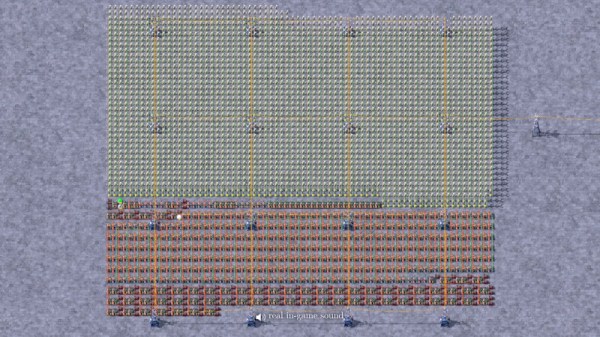
Factorio is a factory simulation game that leads its players into many happy hours of building ever more complex factories, but it comes with a snag. Its built-in music is a fairly simple synthesiser, and that doesn’t really cut it for the musical experience. This irked [Nablanaut] to the extent that he created his own MP3 player. Not just any MP3 player, this one is implemented as a Factorio blueprint, using only those in-game speaker elements as output.

The synth has a range of built-in instrument voices and not much else, so he had to find a way to reproduce complex sounds using only those tools. As you can imagine, the result looks a lot like Fourier analysis, but with the added complication that those voices are not the discrete tones needed in such a system. The video below the break is a deep dive into the tricks and compromises required to not only play an MP3, but play it well, as we hear the various versions of the output as bit by bit they get better.

The blueprint itself isn’t created by hand, of course; instead, it’s generated procedurally by a script. As far as we can see, it contains both the audio samples and the playback logic, making for a very complex factory. We especially like the song at the end of the video.

Continue reading “An MP3 Player, Implemented As A Factorio Blueprint” →