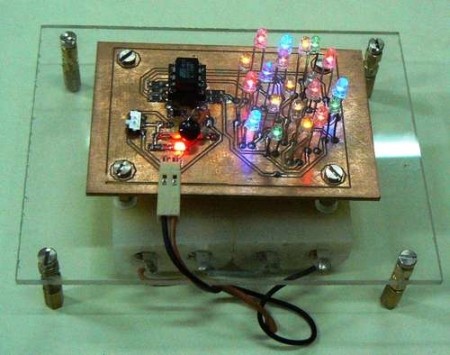
Instructables user [cedtlab] has posted an interesting LED project that simulates birthday candles. The circuit runs on an AVR ATTiny45, and is powered by 4 AA or AAA batteries. By using a Charliplexing technique, they are able to drive all 20 LEDs with only 5 pins of the ATTiny. A thermistor is used for detecting breath by measuring temperature changes, and then blocks of LEDs turn off depending on the change detected. They have provided schematics and source code for everything. Make sure to check out the video of the “ficticious birthday party” after the break.
USB Popcorn Popper
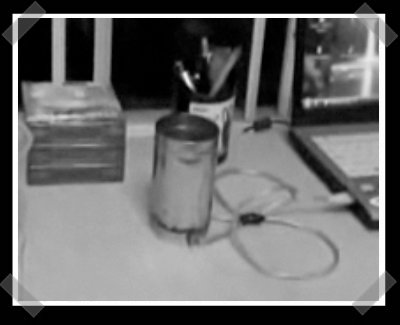
[sophia] sent in this interesting little video of a USB popcorn popper. It might just work too – we’ve burned our digits a time or two on a hot flashlight. The bottom is a jar lid, fitted with a pair of high intensity flashlight bulbs. These are wired directly to a USB cable (maybe a bit unwise). When plugged in, the bulbs are on and heat the metal container. Just add oil and popcorn… As usual, you can catch the video after the break.
Dancing Wall-E And Rhythmic Synth

Whether you loved, hated, or didn’t see Wall-E, it’s hard not to fall in love with the iDance Wall-E toy. Connect him to an audio source and Wall-E will dance around like an epileptic Billy Bass.
[Gian Pablo Villamil] at NYC Resistor wondered whether it would work with his custom made Rhythmic Synth, and to his and our delight, it does! The Rhythmic Synth is an older project of his; it is a simple rhythm generator with 4 pitch knobs, 4 modulation knobs, and 4 phase switches. The case was taken from an old external Iomega CD-ROM drive.
Getting the Wall-E to dance isn’t much of a feat, but something about the dancing combined with a synth with embedded lights just screams robot dance party, and that can never be wrong. We’d love to see the Wall-E dancing to a cleaner, more complete synth: maybe this one. Check out Wall-E busting a move after the break.
Spotlight On Tinyminds

Etsy places a spotlight on tinyminds, creator of the much-hyped solar robots. [Jenny], the brains behind tinyminds and self-described “all round nerd and non-stop crafter”, claims to draw inspiration for her BEAM solar bug and monster robots from things as varied as paper and wood. She describes the process of creating her robots and working with solar energy as “magical”. The fact that they’re solar-powered is a huge advantage – these “pets” never die and never need recharging, only light. Her Cthulhu robot was linked to by BoingBoing Gadgets, and is unfortunately sold out at the moment. tinyminds has plenty of other inventive, equally inspiring robots available for purchase.
Pirate Bay Hits The Road, Angles For Encryption

Piratbyrån and their hearties from The Pirate Bay are on a pan-European summer journey that will end at the Manifesta art biennial in Italy, but in the meantime they’ve been hard at work lobbying for total network encryption, a system that would protect users of a network (say, a P2P network) from deep packet inspection and other forms of activity analysis.
The system by which this will be achieved is called IPETEE, and it works by replacing the basic operating system network stack and doing all encryption and decryption itself. More details can be found in the IPETEE technical proposal.
Ars Technica pointed out numerous holes in the scheme, noting that most torrent apps already have encryption options. IPETEE applies to more than just torrents, though, so the larger problem is that encrypted packet still need source and destination IP addresses, meaning that one of the most crucial things you’d want to keep private (your destination site) is still accessible.
Portable Air Conditioner
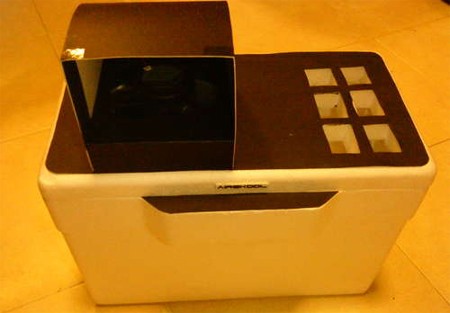
The dog days of Summer are looming just over the horizon like a hot sticky wave of impending doom, but you don’t have to take it lying down. Building a portable air conditioner is cheap easy, and we daresay refreshing.
You’ll need the following materials: a condenser, heater core, or radiator, a styrofoam cooler, a submersible water pump, a few case fans, some adapters to power the works, and a few other materials. The pump circulates cold water through the condenser as the fan pushes air through it and the rest of the box.
We’ve never been huge fans of swamp coolers like this one since they offer no true refrigeration cycle. What’s more, they pump a good deal of humidity into the air, which makes the heat worse in the long run, or creates a vicious cycle of cooling and humidifying. Still, when the heat is scrambling our brains, it’s hard to say no to any relief, however ephemeral.
Cheap Hack May Double Solar Panel Power

MIT researchers have devised something they call the Solar Concentrator which is to be placed on top of existing solar cells. Its purpose is to separate the visible and infrared spectra of light by absorbing the visible spectrum and routing the energy to specialized cells. They claim this could lead to doubling the panel’s efficiency and greatly reducing costs.
We have seen many promising advances to solar panel efficiency in the past few years, but what is special about this one is the amazingly simple and cheap technique. Essentially, all the team has done is coat a piece of glass with simple organic dyes. After the organic molecules absorb the visible light, they remit the energy to the sides of the glass where it can be routed to their specific cells. The process is more efficient because the dye absorbs the light rather than something expensive like silicon. That means less silicon, and thus a better price range. Also, the fact that this material is just a piece of glass also opens up the possibility of solar windows.