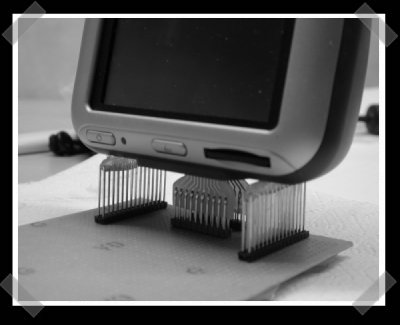
TomToms have been getting pretty cheap. We like ’em because they’re nice and hackable. This diy docking station was made from some etched PCBs, a bunch of male pin headers and a bit of hot glue.
Consumer HMD Comparison

We’ve wanted headed mounted display technology to take hold for a long time. Gizmodo recently compared two consumer models: the Zeiss Cinemizer ($400) and the Myvu Crystal ($300). Unfortunately the resolution of HMDs has gone nowhere in the last 10 years. These two devices only support 640×480 and are aimed specifically at iPod users. With computers getting smaller and higher resolution, we’re surprised that HMDs have not followed suit. Why isn’t someone going to market with a 1280×720 headset? If you really must choose one of these two, we’d recommend the Myvu. It has composite input so you can hook almost anything up to it.
DNS Spoofing With Ettercap
[IronGeek] has published his latest video how-to: DNS Spoofing with Ettercap. Ettercap is designed specifically to perform man in the middle attacks on your local network. It can do ARP poisoning, collect passwords, fingerprint OSes, and content filtering. For DNS spoofing, you just need to edit a config file that defines which domains resolve to which IP addresses. You can use wildcards for the domains. In the video, he uses Linux because the network interfaces are easier to remember. Once you’re done playing with DNS spoofing, remember to flush your local cache otherwise your browser will continue to go to the wrong IP.
[photo: mattdork]
More Hardware Music
today and tomorrow found a few more projects using computer hardware to create music like our earlier Radiohead post. Above is a rendition of The Imperial March using a 3.5 inch floppy drive. Two more projects are embedded below.
IR Controlled Relays
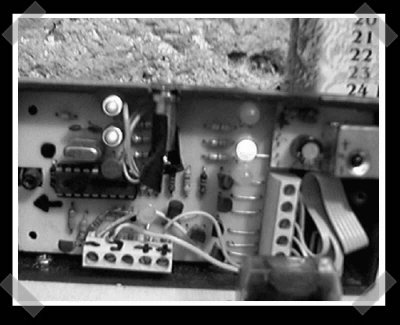
If you’re thinking of building some DIY home automation, this looks like an interesting idea. At the heart is a PIC16F84 that decodes IR signals and controls six outputs – in this case, relays to activate various appliances. The PIC is dirt cheap – if you get a deal on some relays you should be able to build a small local IR HA system for $30… This might be just the thing for my office. It’s cheap enough that it probably wouldn’t walk off.
Tips On Picking The Right Case
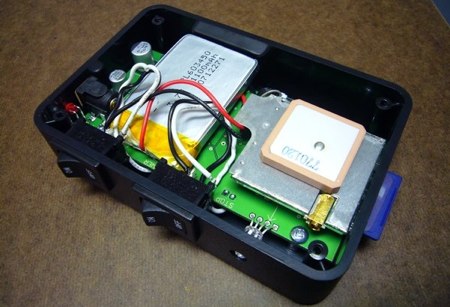
Finding the right enclosure to house your latest project can be tricky, so Sparkfun wrote up some handy tips on the how to pick the right one.
The most important tip is to have your components measured before acquiring a case; even being a few milimeters too small can put you back at square one. To do this right, it’s useful to look at the dimensional drawings of prospective cases to get a sense for the size. These typically include recommended shapes for PCBs too.
You may find a case that meets your dimensional needs but doesn’t have the appropriate mounting bosses. To get the placement right, screw some plastic standoffs to the PCB, then use super glue to attach them firmly to the case.
Tips on button choices, hole drilling, and other typical issues with case modification can also be found in this guide. If this is something that’s been stumping you, give it a look.
How-To: Binary Clock Using A Freeduino SB 2.1
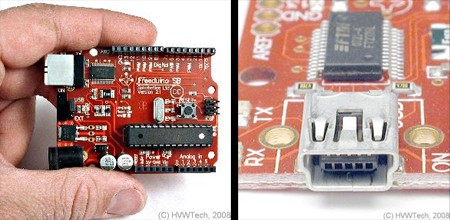
Solarbotics recently released its own version of the Arduino microcontroller development board. They based their board on the Freeduino design. We thought this would be a good opportunity to review the new board as well as present a How-To about building a simple binary clock. Along the way we’ll cover some basics on attaching LEDs and switches to a microcontroller.
Continue reading “How-To: Binary Clock Using A Freeduino SB 2.1”