Beverage Hacks


It’s Memorial Day in the US, so we thought we’d put together a collection of links we’ve covered in the past that might help you celebrate.

The Apu 3000 is one of the finer examples of drug use leading to carpentry. It’s a 4 gallon frozen margarita machine built out of a garbage disposal. A new garbage disposal. We don’t have the time here to speculate on what sort chemical dangers you may expose yourself to by constructing this though.

Continuing the trend of throwing horsepower at problems is the gas powered blender. It’s good for people that love a refreshing beverage while inhaling the fumes of 2-stroke engines.

We’ve covered a couple peltier based cooling projects in the past too. The first was a can cooler for the desktop. The second involved snaking a CAT5 cable across the yard to power a mug.

Back in 2005, Hackaday regular [evan] sent in his BASIC Stamp controlled kegerator. It’s very reliable and way cheaper than a commercial unit.

We’re closing on a sad note: It seems the instructions for making Guinness beersicles have fallen offline, again. From what we remember, you throw the can in the freezer till it reaches a thick slush stage. Then, release the gas so it forms a head in the can. Pierce the bottom of the can and insert the stick. Return the can to the freezer and let it freeze solid.
Make An ECG With Your Sound Card


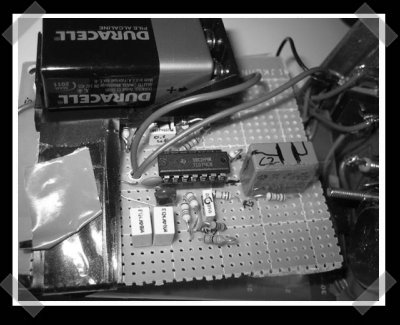
[Marcus] sent in his work on making ECGs. His first one was inspired by [Jason]’s. Believe it or not, you can build this thing for under $5. After getting it semi-functional, he decided to pick up a cheap one and mod it for PC input via the sound card. (There are plenty of sound card oscilloscope projects that will work for this.) Remember kids, don’t go sticking electrodes on anyone unless you know what you’re doing: correctly placed electrical shocks (even low power ones) can be deadly.

Simple Linux Robot With IR Camera


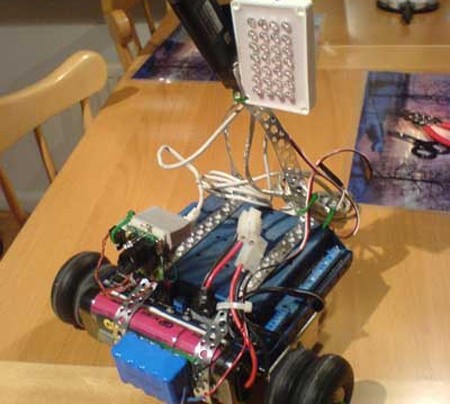
Here’s something else we found while writing up our duplicate Ikea Linux Cluster post. [Janne] also built this simple linux robot. The robot uses the Qwerk robot controller, a webcam with the IR filter removed (something like this one), a usb WiFi card, an IR spotlight, and a set of repurposed model airplane wheels. The WiFi adapter and webcam attach directly to the Qwerk via its on-board usb ports; the servo motors are also connected via built-in ports. Although [Janne] doesn’t post specific instructions, the Qwerk platform seems fairly easy to work with. Have a look at the Qwerk overview for more information.

IKEA Linux Cluster


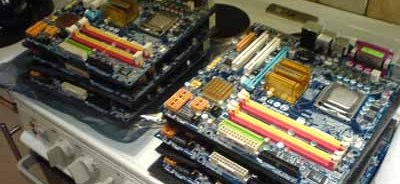
Building a render cluster doesn’t mean you have to spend a lot of money, even if you’re buying brand new hardware. [Janne] built this 6 unit cluster inside of a 6 drawer IKEA Helmer cabinet. He wanted the cluster to be low power and low cost. After finding a good price on 6 65nm Intel Core 2 CPUs, he found 6 cheap Gigabyte motherboards. The memory on each board was maxed at 8GB. With 24 2.4GHz cores consuming 400W, the power consumption and cost isn’t much more than a high end PC. Each board is running Fedora 8 and mounts an NFS share. Dr Queue is used to manage the render farm’s processes. [Janne] says jobs that previously took all night now only require about 10-12 minutes. The estimated capacity is 186Gflops, but plans are already in motion for a12Tflop version.

His site also has plans for an underwater camera housing like our recent post. If you want to see more IKEA abuse, check out IKEA Hacker, even if it’s not very technical.

[via Hackzine]

[UPDATE: yep, we duped ourselves]

Nintendo DS Music Creation

[youtube=http://www.youtube.com/watch?v=MQCZnwNr0ms&hl=en]
Homebrew developer [yaarglafr] recently released this video of his Protein DScratch in action. You can download a demo version here. The program simulates DJ scratching on the DS with an intuitive interface much like the ones on the touchscreen turntables we discussed the other day. It works well with any of the major DS slot devices; just run a DLDI patch on it and you’re good to go.

Continue reading “Nintendo DS Music Creation” →

LCD Projector Repair


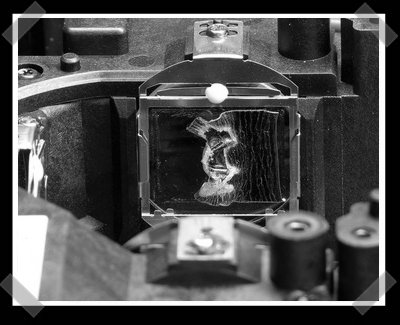
[Kieth] picked up an Infocus projector only to find that it needed some repair. The polarizer on the blue light path was toast. When he parted out an Optoma projector he scored a polarizer that was just about right for the repair. It’s a good read even if you don’t have a projector in pieces at the moment. He ended up bending the mounting bracket a bit to hold the filter and got his projector fully up and running again.

Metalab’s LED Matrix Display


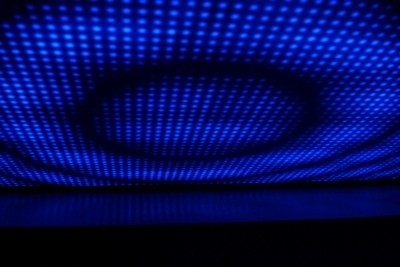
Our friends at Vienna’s Metalab have been working on this project quite a while. Soldering their hearts out to create an FPGA controlled monochrome LED dot matrix display. It’s 48×72 array totaling 3,456 LEDs, soldered by hand. It creates some serious geek bling thanks to an mplayer plugin developed just for the project and it runs up to 72fps. Build details and source code are on the project page. Be sure to check out the awesome video demo below.

Continue reading “Metalab’s LED Matrix Display” →