Printed Sleeve Gives Keys Some Grip

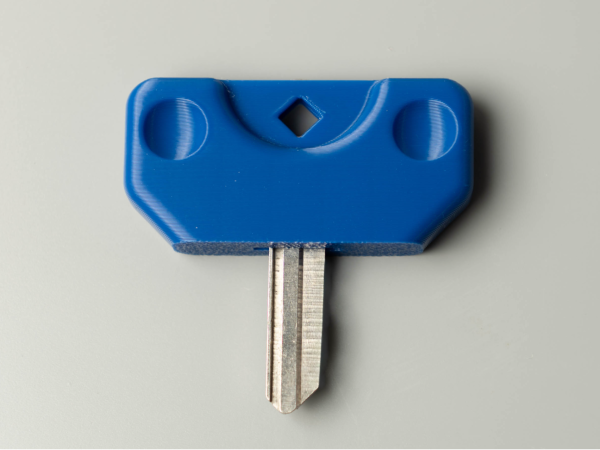
[Enginerd]’s chonky key handle is a beautiful use of 3D printing that helps people help themselves. The large wings, indented faces, and beefed-up grip make a typical house key much easier for someone with arthritis or difficulty gripping those brass slivers. Bright filaments in different colors can also help someone with vision limitations. The thing that will not improve is the space in your pocket or purse.

The design only requires a tiny bit of plastic, prints without supports, and what sets it apart from similar models is that you do not need any double-sided tape or bolts, only a keyring, so someone may have to assemble it for the user. The author is clever enough to use an uncut blank in the project photo so that no one will be decoding and copying their house key. We would wager they have read Hackaday if they are so prepared.

Some of the people who purchased early consumer 3D printers already need these kinds of builds, and there is no shortage of intelligent people creating remarkable open-source designs.

Continue reading “Printed Sleeve Gives Keys Some Grip”

With Affordable Storage Options Dwindling, Where To Store Our Data?

These days our appetite for more data storage is larger than ever, with video files larger, photo resolutions higher, and project files easily zipping past a few hundred MB. At the same time our options for data storage are becoming more and more limited. For the longest time we could count on there always being a newer, roomier, faster, and cheaper form of storage to come along, but those days would seem to be over.

We can look back and laugh at low capacity USB Flash drives of the early 2000s, yet the first storage drive to hit 1 TB capacity did so in 2007, with a Hitachi Deskstar 7k100, only for that level of capacity in PCs to not really be exceeded nineteen years later.

We also had Blu-ray discs (BD) promise to cram the equivalent of dozens of DVDs onto a single BD, with two- and even four-layer BDs storing up to a one-hundred-and-twenty-eight GB. Yet today optical media is dying a slow death as the sole remaining cheap storage option. NAND Flash storage has only increased in price, and the options for those of us who have large cold storage requirements would seem to be decreasing every day.

So what is the economical solution here? Invest in LTO tapes using commercial left-overs, or give up and sign up for Cloud Storage™ for the low-low price of a monthly recurring fee?

Continue reading “With Affordable Storage Options Dwindling, Where To Store Our Data?”

Tracking Parts Box Usage With Stickers

Many of us are guilty of toeing the line between having a ready supply of components at hand and simply hoarding for fear of throwing anything out. In a first admission of this problem, [Scott Lawson] decided to implement a couple of changes to assess his own position on this sliding scale.

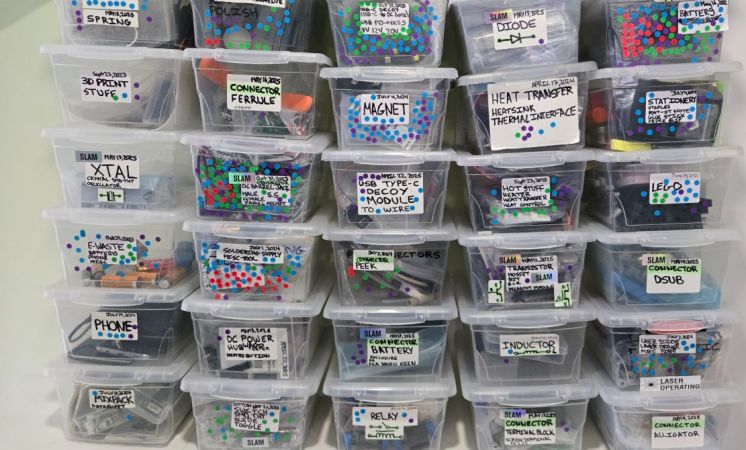
The first change was to only put parts, components, and supplies in transparent boxes. Next was to add a sticker on each box noting the contents and box creation date. This was extended to plastic bags inside the boxes when further subdivision was warranted.

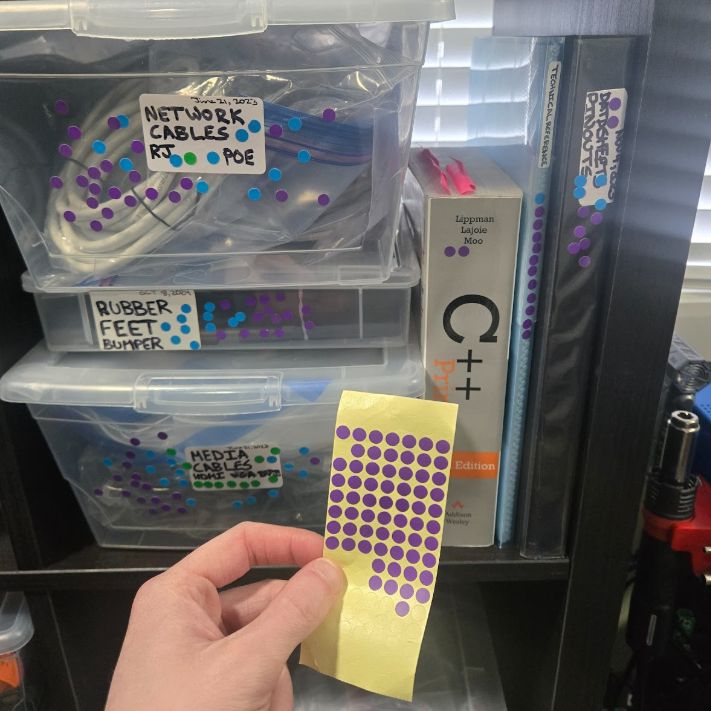
Next, the question was about usage patterns, as you may think that you know how often you use something from a specific box, or how important its contents are, but it helps to add some objectivity to this. For this, [Scott] used sheets of dot stickers, with a sticker added each time he opened a box and used something from it.

By persistently doing this for a few years at his home lab, [Scott] was able to assess which boxes fell into any of three categories: hot, warm, and cold. Cold boxes are very rarely — if ever — accessed, and can thus be readily moved to the attic, shed, or even sold off if they have spent a year or longer in cold storage. Hot boxes should obviously be kept near the work areas. This way, one can make objective decisions of what boxes should go where for optimal access, and what things in your home lab are basically just there to look pretty and gather dust.

This is an effective low-tech way to get organized. Or you can go the opposite direction.

Making A DIY Refrigerated Vest With Battery And Solar Power

Keeping a cool head is difficult at the best of times, least of all when it’s summer and merely thinking of touching bare skin to the pavement already gets you a second-degree burn. Unfortunately, it’s not possible to spend all summer in an air-conditioned room, but what if you took said room with you? Introducing [Hyperspace Pirate]’s air-conditioned vest.

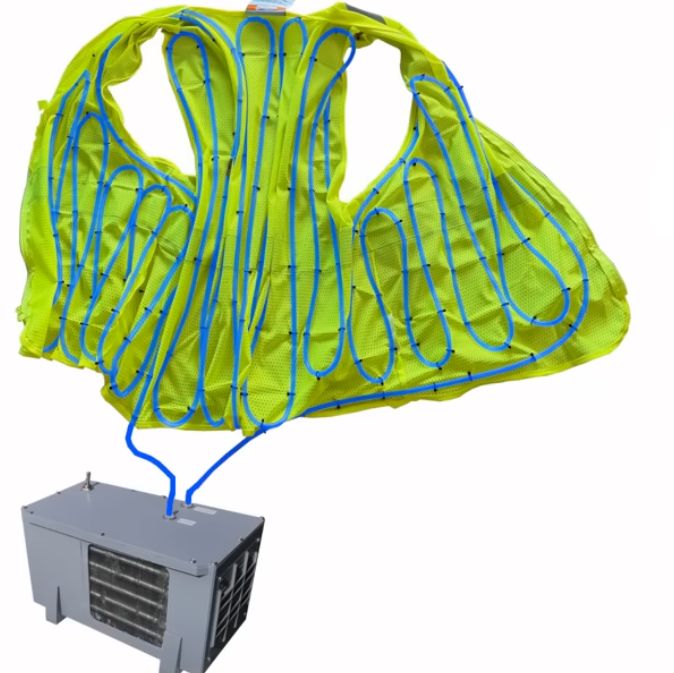
Following on from last time’s adventures with a battery-powered air-conditioner that merely blew cold air onto one’s overheating body, this time the same compressor is used for a more compact build.

Since obviously using your body as part of the evaporator would be uncomfortable, instead a heat exchanger was used that transfers the delicious frosty cold to water-filled tubing, zip-tied inside a very fashionable vest.

The basic unit runs on a couple of LiPo packs, but a solar-powered circuit was also built and tested using two small-ish panels. Of course, the requisite backpack-sized setup for that configuration is somewhat bulky, but at least the panels can also provide shade in addition to power for the compressor, hitting two fiery birds with one frosty stone.

Compared to one of those solar-powered caps with a built-in fan, this unit with some refinement could actually be an improvement, as well as keeping you a lot chillier. We’re looking forward to [Hyperspace]’s trial runs in the upcoming Floridian summer, as well as future chilling adventures.

Continue reading “Making A DIY Refrigerated Vest With Battery And Solar Power”

A biohacker with her lactose-rich slurry

Biohack Your Way To Lactose Tolerance (Through Suffering)

A significant fraction of people can’t handle lactose, like [HGModernism]. Rather than accept a cruel, ice cream free existence, she decided to do something you really shouldn’t try: biohacking her way to lactose tolerance.

The hack is very simple, and based on a peer reviewed study from the 1990s: consume lactose constantly, and suffer constantly, until… well, you can tolerate lactose. If you’re lactose intolerant, you’re probably horrified at the implications of the words “suffer constantly” in a way that those milk-digesting-weirdos could never understand. They probably think it is hyperbole; it is not. On the plus side, [HGModernism]’s symptoms began to decline after only one week.

The study dates back to the 1980s, and discusses a curious phenomenon where American powdered milk was cluelessly distributed during an African famine. Initially that did more harm than good, but after a few weeks mainlining the white stuff, the lactose-intolerant Africans stopped bellyaching about their bellyaches.

Humans all start out with a working lactase gene for the sake of breastfeeding, but in most it turns off naturally in childhood. It’s speculated that rather than some epigenetic change turning the gene for lactose tolerance back on — which probably is not possible outside actual genetic engineering — the gut biome of the affected individuals shifted to digest lactose painlessly on behalf of the human hosts. [HGModernism] found this worked but it took two weeks of chugging a slurry of powdered milk and electrolyte, formulated to avoid dehydration due to the obvious source of fluid loss. After the two weeks, lactose tolerance was achieved.

Should you try this? Almost certainly not. [HGModernism] doesn’t recommend it, and neither do we. Still, we respect the heck out any human willing to hack the way out of the limitations of their own genetics. Speaking of, at least one hacker did try genetically engineering themselves to skip the suffering involved in this process. Gene hacking isn’t just for ice-cream sundaes; when applied by real medical professionals, it can save lives.

Continue reading “Biohack Your Way To Lactose Tolerance (Through Suffering)”

Reason Versus Sentimental Attachment For Old Projects

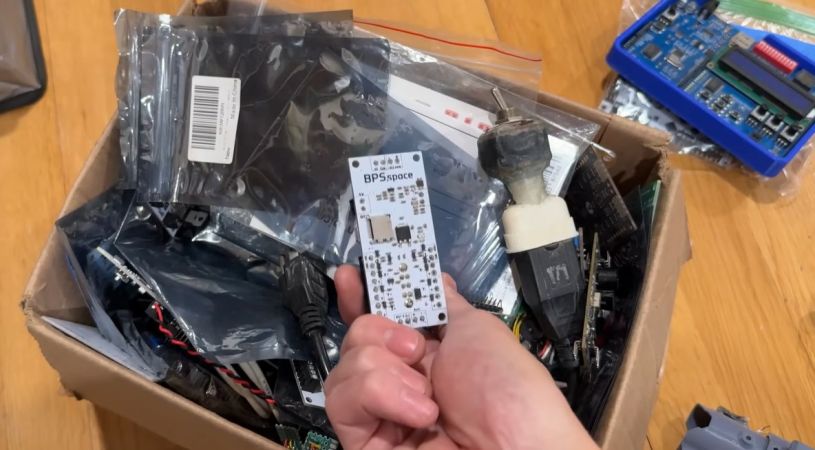
We have probably all been there: digging through boxes full of old boards for projects and related parts. Often it’s not because we’re interested in the contents of said box, but because we found ourselves wondering why in the name of project management we have so many boxes of various descriptions kicking about. This is the topic of [Joe Barnard]’s recent video on his BPS.shorts YouTube channel, as he goes through box after box of stuff.

For some of the ‘trash’ the answer is pretty simple; such as the old rocket that’s not too complex and can have its electronics removed and the basic tube tossed, which at least will reduce the volume of ‘stuff’. Then there are the boxes with old projects, each of which are tangible reminders of milestones, setbacks, friendships, and so on. Sentimental stuff, basically.

Some rules exist for safety that make at least one part obvious, and that is that every single Li-ion battery gets removed when it’s not in use, with said battery stored in its own fire-resistant box. That then still leaves box after box full of parts and components that were ordered for projects once, but not fully used up. Do you keep all of it, just in case it will be needed again Some Day™? The same issue with boxes full of expensive cut-off cable, rare and less rare connectors, etc.

One escape clause is of course that you can always sell things rather than just tossing it, assuming it’s valuable enough. In the case of [Joe] many have watched his videos and would love to own a piece of said history, but this is not an option open to most. Leaving the question of whether gritting one’s teeth and simply tossing the ‘value-less’ sentimental stuff and cheap components is the way to go.

Although there is always the option of renting storage somewhere, this feels like a cheat, and will likely only result in the volume of ‘stuff’ expanding to fill the void. Ultimately [Joe] is basically begging his viewers to help him to solve this conundrum, even as many of them and our own captive audience are likely struggling with a similar problem. Where is the path to enlightenment here?

Continue reading “Reason Versus Sentimental Attachment For Old Projects”

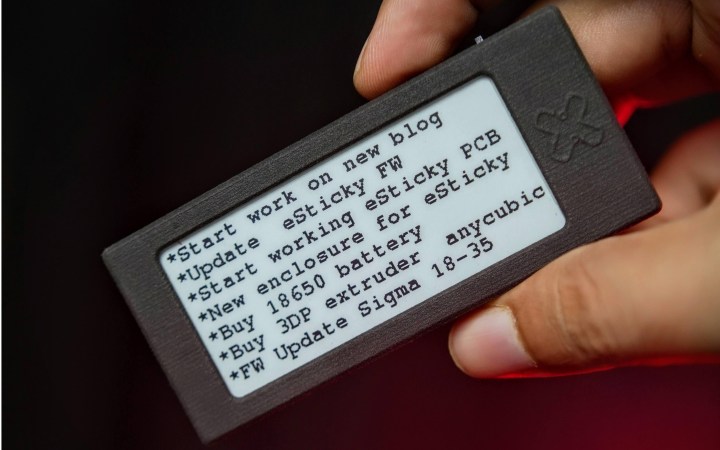
A hand holds a charcoal-colored rectangle with a black and white screen in taking up most of its face. A bulleted list of items are displayed: "Start work on new blog, Update eSticky FW, Start working on eSticky PCB, New enclosure for eSticky, Buy 18650 battery, Buy 3DP extruder anycubic, FW Update Sigma 18-35."

ESticky Is A Paperless Post-It

E-paper screens have opened up a wide variety of novel use cases that just wouldn’t work with the higher power draw of an LCD. [gokux] thought it would be perfect for a digital sticky note.

Using a Waveshare 2.9″ e-paper display hooked up to a Seeed Studio XIAO ESP32C3, a battery, and a switch all inside the 3D printed enclosure, the part count on this is about as simple as it gets. Once everything is soldered together and programmed, you get a nifty little display that can hold some of your thoughts without having to reopen an app to get to them.

Access is currently provided via a web page, and there are a few minor hiccups like text alignment and image upload support. This project is open source, so [gokux] has expressed interest in anyone wanting to help refine the concept. We think it might be nice to add a magnet on the back for an easier way to actually stick to things.

If you prefer a different way to use electricity for a sticky note, why not do it at 2,000 V? If that’s not your jam, how about a plotter that writes your label or message on masking tape?

Continue reading “ESticky Is A Paperless Post-It”