Bare-Metal STM32: Exploring Memory-Mapped I/O And Linker Scripts

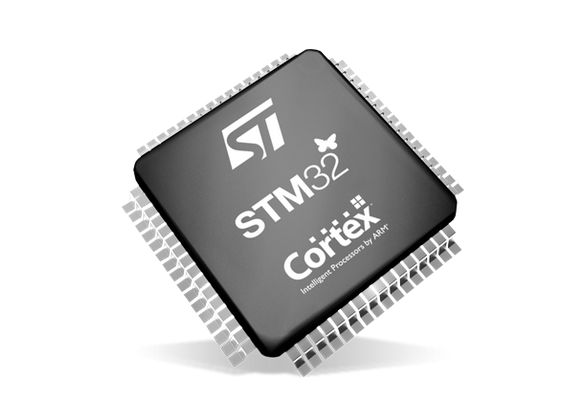
In the first installment of this series we had a brief look at the steps needed to get a bare-metal application running on an STM32 microcontroller. While this allowed us to quickly get to the juicy stuff, there are two essential elements which make an MCU so easy to use. One is found on the hardware side, in the form of so-called memory-mapped I/O (input/output), the other is the information contained in the files that are passed to the linker when we build a firmware image.

Memory-mapping of hardware peripheral registers is a straightforward way to make them accessible to the processor core, as each register is accessible as a memory address. This is both convenient when writing the firmware code, as well as for testing, as we can use a memory mapping specific for unit or integration testing.

We will take an in-depth look at this way of testing, as well as how these linker script files are connected to the memory layout. Continue reading “Bare-Metal STM32: Exploring Memory-Mapped I/O And Linker Scripts”
C++ Compiler Targets The Web

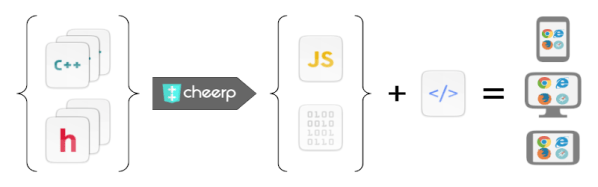
It is a common problem these days. You have a piece of code in C or C++. Maybe it is older code. Or maybe you prefer prototyping your ideas using C. But, inevitably, someone now wants your code to run in a Web browser. The options for making this happen have expanded quite a bit lately and one possibility is Cheerp, an open-source compiler that handles up to C++ 17 and can output to WebAssembly, JavaScript, or asm.js.

The compiler is free to use for GPLv2 projects. If you aren’t open yourself, it looks like you have to cut a deal to use Cheerp with its maker, Learning Technologies.

Continue reading “C++ Compiler Targets The Web”

BASH Template Promises Safer Scripts

Many bash scripts start out as something quick and dirty but then become so useful that they live for years, indeed sometimes seeing more use than our traditional programs. Now that you can even run bash well under Windows (although, you’ve always been able to run it there if you tried), there are even more opportunities for your five-minute bash script to proliferate. [Maciej] decided he was tired of always having to patch up his quick and dirty scripts to be more robust, so he created (and shared) his boilerplate template for scripts.

Probably most of us have at least some basic template we start with, even if it just our last script project. What’s nice about [Maciej’s] template is that he documents what’s going on with each part of it. It is also relatively short without a lot of excess stuff. Of course, you’ll probably customize it, but it is a great place to start.

Continue reading “BASH Template Promises Safer Scripts”

Remoticon Video: How To Use Max In Your Interactive Projects

When you want to quickly pull together a combination of media and user interaction, looking to some building blocks for the heavy lifting can be a lifesaver. That’s the idea behind Max, a graphical programming language that’s gained a loyal following among anyone building art installations, technology demos (think children’s museum), and user Kiosks.

Guy Dupont gets us up to speed with a how to get started with Max workshop that was held during the 2020 Hackaday Remoticon. His crash course goes through the basics of the program, and provides a set of sixteen demos that you can play with to get your feet under you. As he puts it, if you need sound, video, images, buttons, knobs, sensors, and Internet data for both input and output, then Max is worth a look. Video of the workshop can be found below.

Continue reading “Remoticon Video: How To Use Max In Your Interactive Projects”

Learn Compilers Online From Cornell

It sounds like the start of a joke, but what’s the difference between taking Cornell’s CS6120 online and in-person? The instructor, [Adrian Samspon] notes that the real class has deadlines, an end-of-semester project, and a discussion board that is only open to real-life students. He also notes that you only earn “imagination credits.”

Still, this is a great opportunity to essentially audit a PhD-level computer science class on a fascinating topic. The course consists of videos, papers, and open source projects using LLVM and a custom internal representation based on JSON that is made for the class. It is all open source, too. You do however need access to the papers, some of which are behind paywalls. Your local library can help if you can’t otherwise find copies of the papers.

Continue reading “Learn Compilers Online From Cornell”

Bare-Metal STM32: Blinky And The Secret Of Delay Functions

One of the very first examples for an MCU or SoC usually involves the famous ‘Blinky‘ example, where an LED is pulsed on and off with a fixed delay. This is actually a lot more complicated than the ‘Pushy‘ example which we looked at in the first installment of this series. The reason for this is that there’s actually quite a story behind a simple call to delay() or its equivalent.

The reason for this is that there are many ways to implement a delay function on a microcontroller (MCU), each of which comes with their own advantages and disadvantages. On an STM32 MCU, we get to choose between essentially an active delay (while loop), one implemented using the SysTick timer and using one of the peripheral timers. In the latter two cases we also have to use interrupts.

In this article we’ll take a look at all three approaches, along with their advantages and disadvantages.

Continue reading “Bare-Metal STM32: Blinky And The Secret Of Delay Functions”

Inside CHIP-8

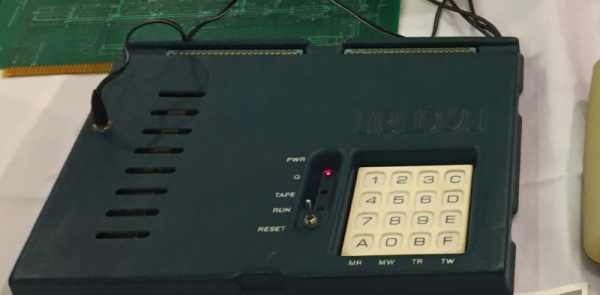
Certain old computers — most frequently those using the RCA 1802 — were fond of using an early form of byte-code interpreter for programs, especially games. The interpreter, CHIP-8, was very simple to create but offered high-level features that were tedious to recreate in the native assembly language. Because there are a fair number of simple games written in CHIP-8, there are of course, emulators for it, and [River Gillis] decided to look inside the CHIP-8 byte code interpreter.

Part of the power of CHIP-8 was it only had 35 virtual instructions. That was important when you were trying to shoehorn a game and the interpreter into a very small memory. Remember, in those days 1K of memory wasn’t an unusual number, although the prototypical CHIP-8 host would have 4K.

Continue reading “Inside CHIP-8”