If you’re like most makers, you have a few product ideas kicking about, but you may not have made it all the way to production of those things. If you’re thinking about making the leap, [Simone Giertz] recently discussed all the perils and pitfalls of the process from idea to reality.
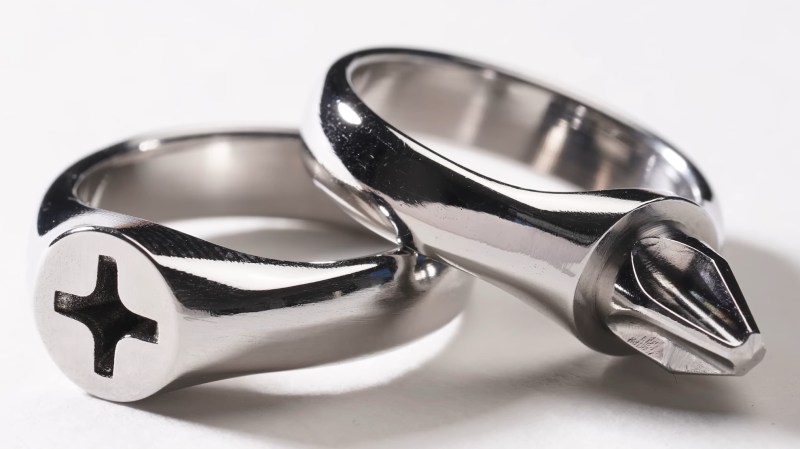
The TLDR is that there’s a big difference between making one item and making hundreds or thousands of them, which you probably already knew, but it is nice to see what sort of issues can crop up in this seemingly simple example of the Yetch Screwdriver Ring. It turns out that the metalworking skills of tool making and jewelry making rarely overlap in the contract manufacturing world.
[Giertz] also shares some of the more mundane, yet terrifying, parts of business like finally committing to bulk orders and whether it’s wise to go with intermediaries when working with suppliers overseas. She also keys us into parts of the process where things can go wrong, like how product samples typically use a different manufacturing process than bulk for practical reasons and how you need to have very specific quality control requirements not just decide if a product is good enough based on vibes.
If you’d like some more advice on making your own products, check out [Carrie Sundra]’s Supercon talk about Manufacturing on a Shoestring Budget.
Continue reading “Making Products For Fun And (Probably No) Profit”
![Wearables queen [Becky Stern] with a microcontroller and a speaker. And a skull!](https://hackaday.com/wp-content/uploads/2025/01/becky-stern-800.jpg?w=600&h=450)