At the end of the 19th century, [King Camp Gillette] had the idea of creating a disposable razor blade that didn’t need sharpening. There was one problem with this idea: metallurgy was not yet advanced enough to produce paper-thin carbon steel blades and sharpen them for a close shave. In 1901, [William Nickerson] solved this problem, and the age of disposable razors began.
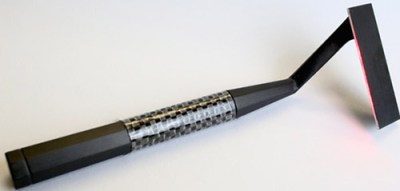
This Kickstarter would have you believe there is a new era of beard technology dawning. It’s a laser razor called Skarp, and it’s on track to become one of the most funded Kickstarters of all time. The only problem? Even with relatively good documentation on the Kickstarter campaign, a demo video, a patent, and an expert in the field of cosmetic lasers, only the creators can figure out how it works.
Instead of using technology that has been tried and tested for thousands of years, the Skarp uses a laser to shave hairs off, right at the surface of the skin. You need only look at a billboard for laser hair removal to realize this is possible, but building a laser razor is something that has eluded us for decades. This patent from 1986 at the very least demonstrates the beginnings of the idea – put a laser beam in a handheld package and plunge it into a beard. This patent from 2005 uses fiber optics to send a laser beam to a handheld razor. Like anything out of the sci-fi genre, a laser razor is a well-tread idea in the world of invention.
But Skarp thinks it has solved all of the problems which previously block lasers from finding a place in your medicine cabinet.
Continue reading “Ask Hackaday: I Love The Smell Of Burnt Hair In The Morning”



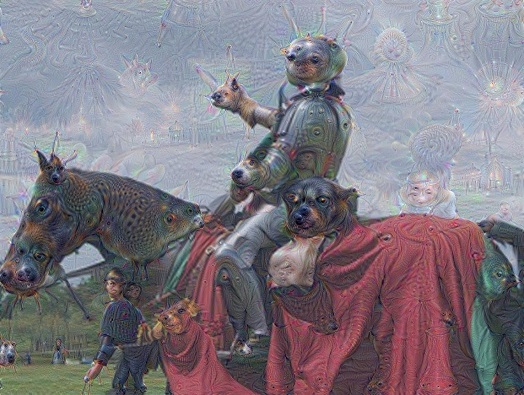 mind, however, is a simple question Google asked, and the resulting answer. To better understand the process, they wanted to know what was going on in the inner layers. They feed the network a picture of a truck, and out comes the word “truck”. But they didn’t know exactly how the network came to its conclusion. To answer this question, they showed the network an image, and then extracted what the network was seeing at different layers in the hierarchy. Sort of like putting a serial.print in your code to see what it’s doing.
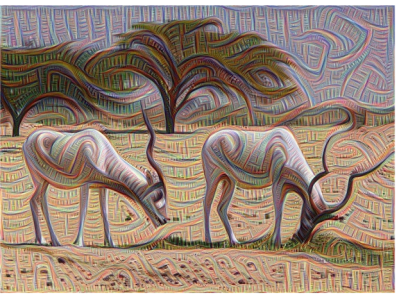 This technique gives them the level of abstraction for different layers in the hierarchy and reveals its primitive understanding of the image. They call this process
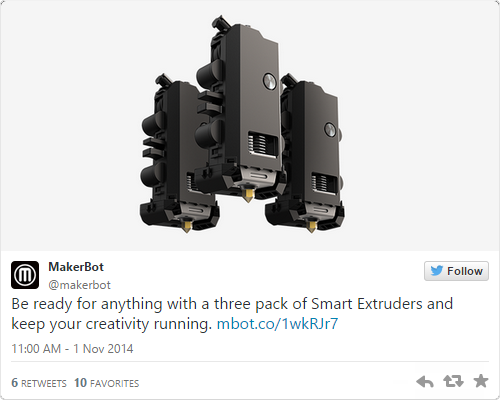 The phrase ‘meteoric rise’ doesn’t make sense, and since then the reputation of MakerBot has fallen through the floor, crashed through the basement, and is now lodged in one of the higher circles of hell. It’s not surprising; MakerBot took creations from their 3D object hosting site, Thingiverse,