
Automotive sound is a huge deal; for many people, it’s the place to listen to music. Back in the 80s, you were lucky to get anything more than two door speakers in the front of the car. Fast forward to today, and you can expect a 10-speaker system in an up-spec’d family sedan.
[Josh] has a car, and wanted to improve the sound. In particular, the aim was to improve the sense of space felt when listening. A car is a relatively small space, and the driver sits in close proximity to the front speakers, so it’s difficult to get a good soundstage.
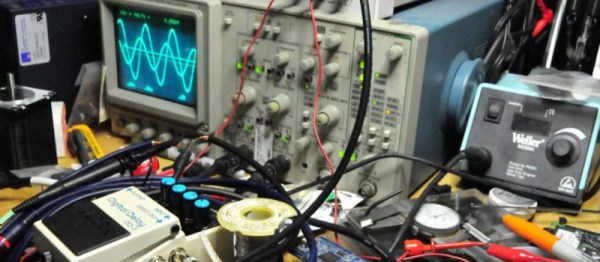
[Josh]’s approach was to create a “surround” effect for the car stereo, by feeding a left/right difference signal to the rear speakers. This was achieved by the use of a series of op-amps that buffer and then generate a mono signal that represents the difference between the left and right channel. For optimum results, [Josh] wanted to delay the signal being sent to the rear speakers, with a longer delay making the soundstage feel bigger, as if reflections are coming from farther away in a bigger room. To do this, [Josh] simply hooked up the signal to a Boss DD-3 Digital Delay guitar pedal – an off-the-shelf solution to an otherwise sticky problem. The DD-3 gives [Josh] a variable delay time with reasonably high fidelity, so it’s a perfect way to get the project done quickly.
The final piece of the puzzle is a filter. The difference signal doesn’t actually sound all that pleasant to the ears by itself, especially when it comes to transient high-pitched sounds like cymbals, so a lowpass filter is implemented to cut these higher frequencies down.
[Josh] made everything adjustable, from the filter to the delay, so it’s simple to dial things in until they’re just right, rather than relying on calculation or guesswork. The general idea is to feed the difference signal into the rear speakers at a low enough volume and with a subtle delay so that it adds to a general feeling of being in a larger room with the sound coming from all around, as opposed to listening to very loud point sources of audio.
It’s a cool project that we imagine would be very satisfying to dial in and enjoy on the road. What’s more, it’s a fairly straightforward build if you want to experiment with it yourself on your own car. Perhaps your problem is that you need an auxiliary input to your head unit, though – in that case, check out this Subaru project.
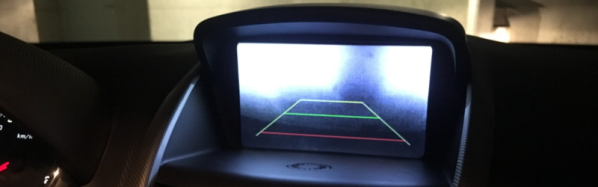
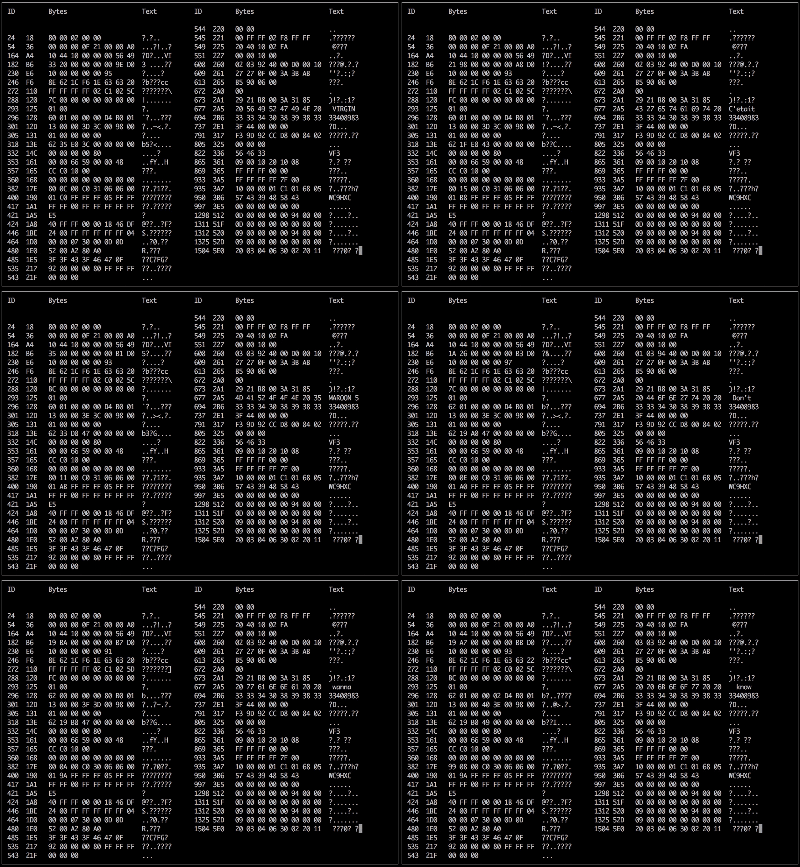 Adding the camera was the easiest part of the exercise when he found an after-market version specifically meant for his 207 model. The original non-graphical display had to make room for a new HDMI display and a fresh bezel, which cost him much more than the display. Besides displaying the camera image when reversing, the new display also needed to show all of the other entertainment system information. This couldn’t be obtained from the OBD-II port but the CAN bus looked promising, although he couldn’t find any details for his model initially. But with over 2.5 million of the 207’s on the road, it wasn’t long before [Alexandre] hit jackpot in a French University student project who used a 207 to study the CAN bus. The 207’s CAN bus system was sub-divided in to three separate buses and the “comfort” bus provided all the data he needed. To decode the CAN frames, he used an Arduino, a CAN bus shield and a python script to visualize the data, checking to see which frames changed when he performed certain functions — such as changing volume or putting the gear in reverse, for example.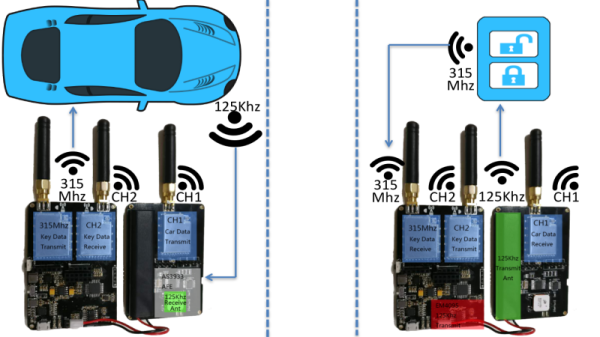
![This Herald is in much better condition than my 12/50 was. Philafrenzy [CC BY-SA 4.0]](https://hackaday.com/wp-content/uploads/2017/03/triumph_herald_southgate_london.jpg)









