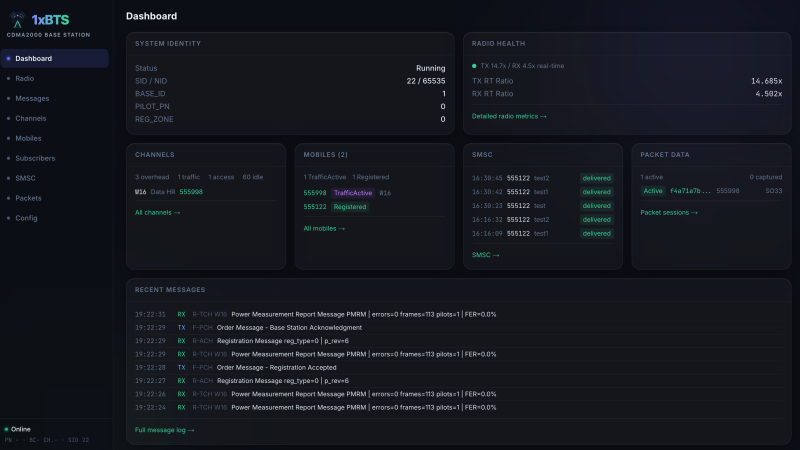
A web interface is shown providing information about a cellular network base station.

Running Your Own 3G Network

CDMA2000 was one of the protocols defined for 3G networks and is now years out of date and being phased out worldwide. Nevertheless, there are still vast numbers of phones that will happily connect to it, creating an opportunity for hackers seeking to run their own cellular networks. [Chrismoos] recently made this endeavour significantly easier by releasing 1xBTS, a Rust implementation of the lower three layers of a CDMA2000 network.

The lowest layer of the stack is an SDR for the actual radio communications. It’s been tested with the USRP B200 and B210, the LimeSDR Mini 2, and the BladeRF Micro 2.0. The code might work with certain other SDRs using the SoapySDR abstraction layer. The SDR is controlled by the base station (BTS) software, which, in turn, is controlled by the base station controller (BSC) over an Abis link. The BSC manages channels and mobile device associations, and exchanges frames with the mobile switching center (MSC), which handles message switching.
Continue reading “Running Your Own 3G Network”

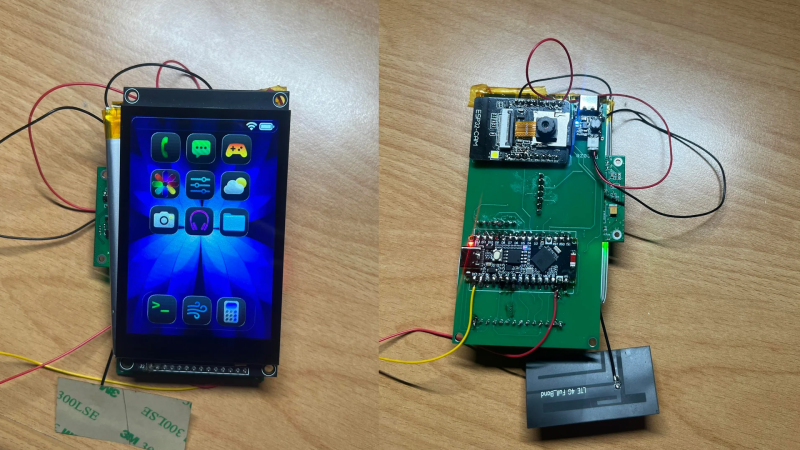
Front and back of the prototype phone

Neither Android Nor IOS: DIY Smartphone Runs On ESP32!

You may or may not be reading this on a smartphone, but odds are that even if you aren’t, you own one. Well, possess one, anyway — it’s debatable if the locked-down, one-way relationships we have with our addiction slabs counts as ownership. [LuckyBor], aka [Breezy], on the other hand — fully owns his 4G smartphone, because he made it himself.

OK, sure, it’s only rocking a 4G modem, not 5G. But with an ESP32-S3 for a brain, that’s probably going to provide plenty of bandwidth. It does what you expect from a phone: thanks to its A7682E simcom modem, it can call and text. The OV2640 Arducam module allows it to take pictures, and yes, it surfs the web. It even has features certain flagship phones lack, like a 3.5 mm audio jack, and with its 3.5″ touchscreen, the ability to fit in your pocket. Well, once it gets a case, anyway.

Continue reading “Neither Android Nor IOS: DIY Smartphone Runs On ESP32!”

Pi Compute Module Powers Fully Open Smartphone

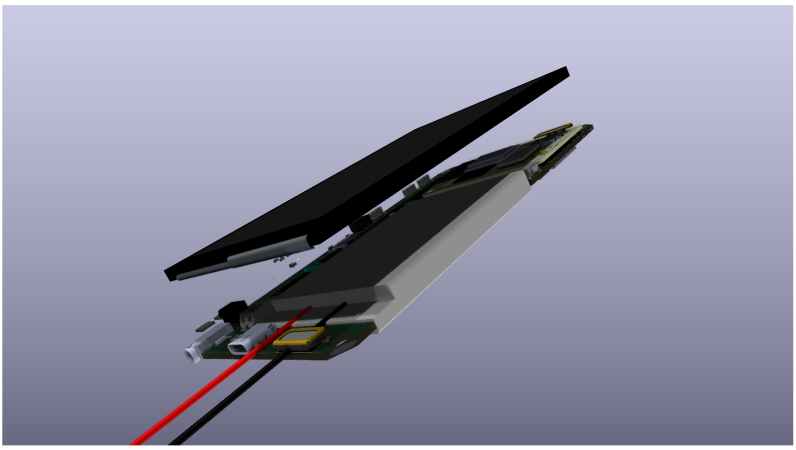
With the powerful off-the-shelf hardware available to us common hardware hobbyist folk, how hard can it be to make a smartphone from scratch? Hence [V Electronics]’s Spirit smartphone project, with the video from a few months ago introducing the project.

As noted on the hardware overview page, everything about the project uses off the shelf parts and modules, except for the Raspberry Pi Compute Module 5 (CM5) carrier board. The LCD is a 5.5″, 1280×720 capacitive one currently, but this can be replaced with a compatible one later on, same as the camera and the CM5 board, with the latter swappable with any other CM5 or drop-in compatible solution.

The star of the show and the thing that puts the ‘phone’ in ‘smartphone’ is the Quectel EG25-GL LTE (4G) and GPS module which is also used in the still-not-very-open PinePhone. Although the design of the carrier board and the 3D printable enclosure are still somewhat in flux, the recent meeting notes show constant progress, raising the possibility that with perhaps some community effort this truly open hardware smartphone will become a reality.

Continue reading “Pi Compute Module Powers Fully Open Smartphone”

Demonstrating The Sheer Lack Of Security In First Gen Cellular Networks

Modern cellular networks are built to serve millions upon millions of users, all while maintaining strict encryption across all communications. But earlier cellular networks were by no means so secure, as [Nostalgia for Simplicity] demonstrates in a recent video.

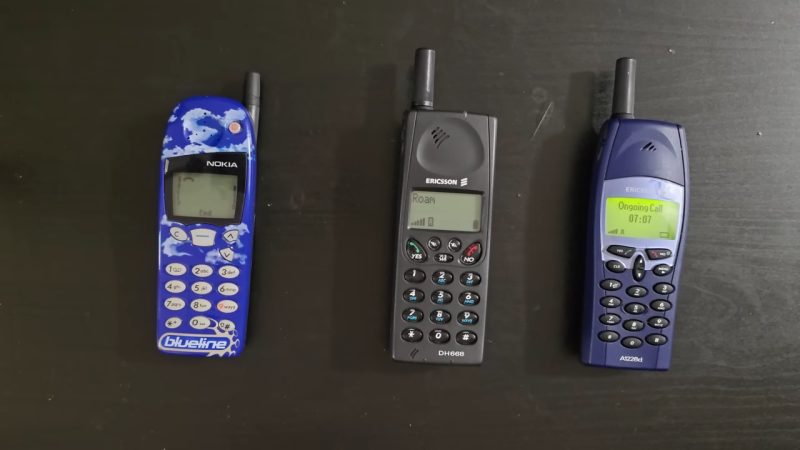
The video begins with an anecdote — our narrator remembers a family member who could listen in on other’s conversations on the analog AMPS phone network. This was easily achieved simply by entering a code that would put an Ericsson handset into a test mode, in which it could be switched to tune in any desired AMPS channel. Since the communications were transmitted in a purely analog manner, with no encryption of any sort, any conversation on such a network was basically entirely open for anyone to hear. The video shows a recreation of this method, using a software-defined radio to spin up a low-power, very local AMPS network. A phone call is carried out between two handsets, with a third handset able to listen in just by using the special test mode.

If you’re particularly keen to build your own first-generation AMPS phone network, just know that it’s not really allowed due to rules around spectrum allocations. Still, it’s entirely possible as we’ve covered before. It doesn’t even take much hardware in our modern SDR era.

Continue reading “Demonstrating The Sheer Lack Of Security In First Gen Cellular Networks”

Testing Whether Fast Charging Kills Smartphone Batteries, And Other Myths

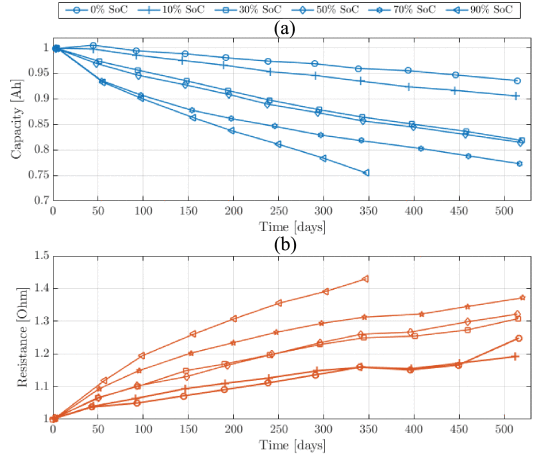
Calendar aging of NMC Li-ion cells at 50 ℃ at various SoCs. (Credit: Wiljan Vermeer, IEEE, 2021)

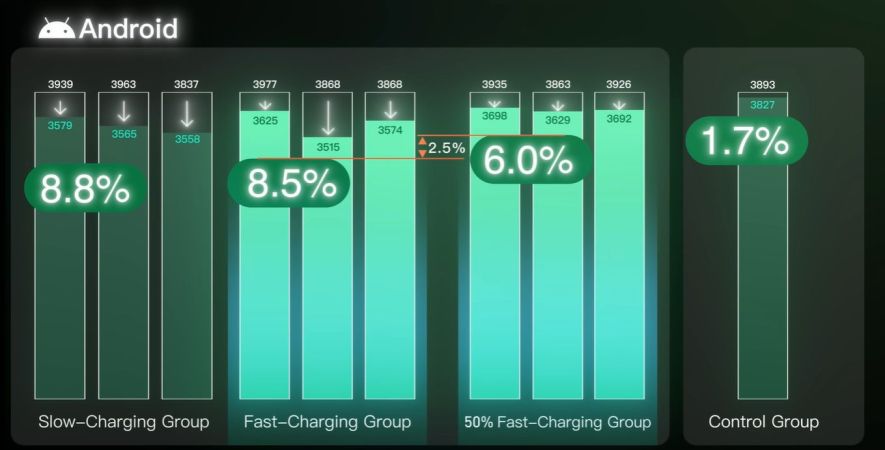
With batteries being such an integral part of smartphones, it’s little wonder that extending the period between charging and battery replacement has led to many theories and outright myths about what may affect the lifespan of these lithium-ion batteries. To bust some of them, [HTX Studio] over on YouTube has spent the past two years torturing both themselves and a myriad of both iOS and Android phones to tease out some real-life data.

After a few false starts with smaller experiments, they settled on an experimental setup involving 40 phones to investigate two claims: first, whether fast charging is worse than slow charging, and second, whether limiting charging to 80% of a battery’s capacity will increase its lifespan. This latter group effectively uses only 50% of the capacity, by discharging down to 30% before recharging. A single control phone was left alone without forced charge-discharge cycles.

Continue reading “Testing Whether Fast Charging Kills Smartphone Batteries, And Other Myths”

Old Phone Upcycled Into Pico Projector, ASMR

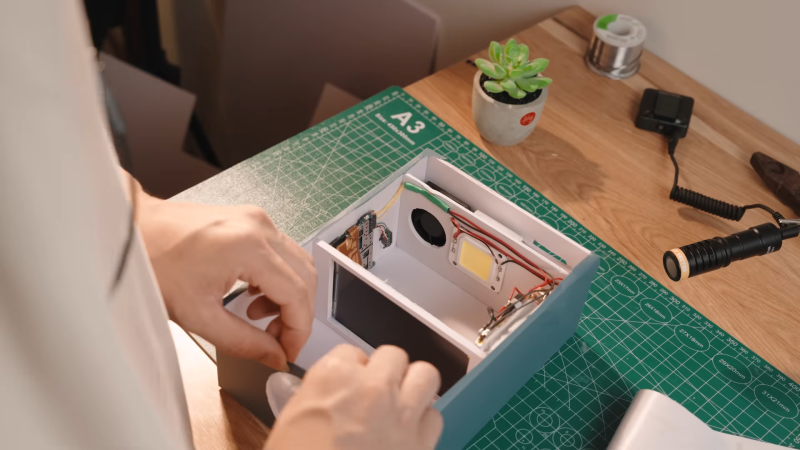
To update an old saying for the modern day, one man’s e-waste is another man’s bill of materials. Upcycling has always been in the hacker’s toolkit, and cellphones provide a wealth of resources for those bold enough to seize them. [Huy Vector] was bold enough, and transformed an old smartphone into a portable pico projector and an ASMR-style video. That’s what we call efficiency!

Kidding aside, the speech-free video embedded below absolutely gives enough info to copy along with [Huy Vector] even though he doesn’t say a word the whole time. You’ll need deft hands and a phone you really don’t care about, because one of the early steps is pulling the LCD apart to remove the back layers to shine an LED through. You’ll absolutely need an old phone for that, since that trick doesn’t apply to the OLED displays that most flagships have been rocking the past few years.

Continue reading “Old Phone Upcycled Into Pico Projector, ASMR”

phyphox

Smartphone Sensors Unlocked: Turn Your Phone Into A Physics Lab

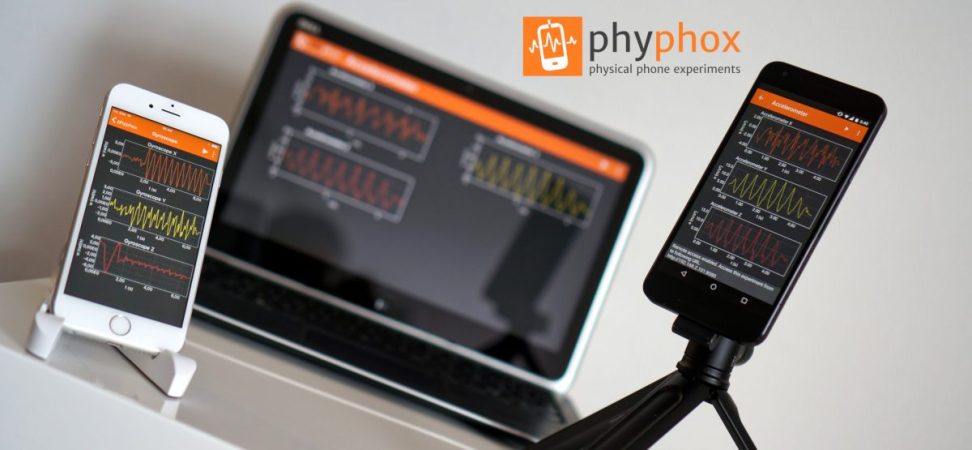
These days, most of us have a smartphone. They are so commonplace that we rarely stop to consider how amazing they truly are. The open-source project Phyphox has provided easy access to your phone’s sensors for over a decade. We featured it years ago, and the Phyphox team continues to update this versatile application.

Phyphox is designed to use your phone as a sensor for physics experiments, offering a list of prebuilt experiments created by others that you can try yourself. But that’s not all—this app provides access to the many sensors built into your phone. Unlike many applications that access these sensors, Phyphox is open-source, with all its code available on its GitHub page.

The available sensors depend on your smartphone, but you can typically access readings from accelerometers, GPS, gyroscopes, magnetometers, barometers, microphones, cameras, and more. The app includes clever prebuilt experiments, like measuring an elevator’s speed using your phone’s barometer or determining a color’s HSV value with the camera. Beyond phone sensors, the Phyphox team has added support for Arduino BLE devices, enabling you to collect and graph telemetry from your Arduino projects in a centralized hub.

Thanks [Alfius] for sharing this versatile application that unlocks a myriad of uses for your phone’s sensors. You can use a phone for so many things. Really.

Continue reading “Smartphone Sensors Unlocked: Turn Your Phone Into A Physics Lab”