SerialPlot Does Exactly What You Think It Does

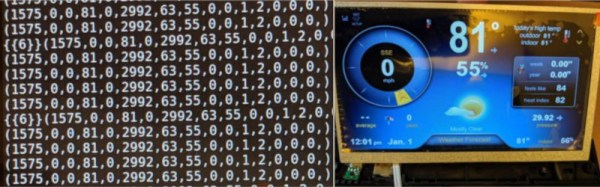
The serial port remains a hacker staple, being one of the easiest ways to move a little bit of data from one machine to another. All manner of projects use the interface, and often, sensors are connected and their data read over such connections. In these cases, it can be useful to plot said data, and SerialPlot is a tool that can do just that.

SerialPlot is capable of reading data over several serial ports at once, and plotting it for your viewing pleasure. It’s capable of interpreting data in a variety of integer and float formats, and plotting multiple channels in a synchronised manner. It’s also capable of sending basic commands out over the serial port, which can be used to trigger or control attached equipment.

Overall, it’s a useful utility for anyone with an array of sensor’s connected over the most classic of interfaces. Of course, if you’re having trouble keeping track of all your serial ports, there’s a utility to help with that, too.

Etching Aluminium Coins, Just For Fun

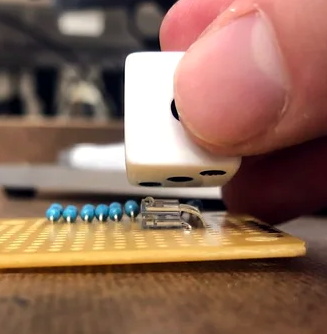
[MakeFailRepeat] was heading to MakerCentral in Birmingham, an event to which many makers were bringing coins to swap and trade. Wanting to get in on the action, he decided to etch some coins of his very own.

Etching aluminium is a simple process, readily accessible to the average maker. [MakeFailRepeat] started with an aluminium bar, and applied sticky-backed vinyl to the surface. This was then lasercut with the coin artwork, and the pieces removed to leave a negative space design for etching. With the resist layer in place, the aluminium was placed in a bath of salt water, and attached to the positive electrode of a DC supply or battery. With the negative electrode attached to a bolt, the aluminium is left to etch, with care taken to avoid over-etching. As a final finishing step, the coins were then placed in a cobbled-together rock tumbler, using scrap 3D printer filament as media.

The coins are a little rough around the edges, but we think they’re great for a first attempt. There’s plenty of different ways to etch; toner transfer is a particularly popular method. Video after the break.

Continue reading “Etching Aluminium Coins, Just For Fun”

Routing IP Over Instant Messages Is Possible Yet Impractical

Telegram is an instant messaging app, well known for its focus on security and encryption. It’s used by government officials, journalists, and the paranoid, and can also handle VoIP calls, in addition to its text messaging capability. [PiMaker] wondered if all this encryption could be put to good use, and decided to try and route IP over Telegram, as you do.

The project is called Teletun, and it works! It uses telgram-cli, a command line interface for the instant messaging network. The actual IP routing is handled with a Python script, and [PiMaker] recommends that in use, the user should “pray to the gods for mercy”. Reports are that bandwidth is limited, but latency can go as low as 100ms, which suggests Telegram is indeed a fairly instant messenger.

Tunneling over instant messaging services is good practice for any aspiring hacker, but likely to be unwieldy for any practical purpose. If you can think of one, other than irritating the intelligence agents tapping your communications, throw it down in the comments below. Otherwise, consider other oddball ways to (ab)use Telegram.

Vintage Fairchild IC Proves Tough To Decap

You’d think that something called “white fuming nitric acid” would be more than corrosive enough to dissolve just about anything. Heck, it’s rocket fuel – OK, rocket fuel oxidizer – and even so it still it wasn’t enough to pop the top on this vintage Fairchild μL914 integrated circuit, at least not without special measures.

As [John McMaster], part of the team that analyzed the classic dual 2-input NOR gate RTL chip from the 1960s, explains it, decapping modern chips is a straightforward if noxious process. Generally a divot is milled into the epoxy, providing both a reservoir for the WFNA and a roughened surface for it to attack. But the Fairchild chip, chosen for dissection for the Maker Faire Bay Area last week specifically because the features on the die are enormous by modern standards, was housed in an eight-lead TO-99 case with epoxy that proved nigh invulnerable to WFNA. [John] tried every chemical and mechanical trick in the book, going so far as to ablate epoxy with a Nd:YAG laser. He eventually got the die exposed, only to discover that it was covered with silicone rather than the silicon dioxide passivation layer of modern chips. Silicone can be tough stuff to remove, and [John] resorted to using lighter fluid as a solvent and a brush with a single bristle to clean up the die.

We applaud the effort that this took, which only proves that decapping is more art than science sometimes. And the results were fabulous; as Hackaday editor-in-chief [Mike Szczys] notes, the decapping led to his first real “a-ha moment” about how chips really work.

Continue reading “Vintage Fairchild IC Proves Tough To Decap”

A Modular Logic Analyzer For FPGAs

When working on a project, it’s incredibly helpful to be able to visualize the various signals in play. This is important when attempting to determine if what is supposed to be happening is actually happening. However, logic analyzers can be expensive, so a group from [Bruce Land]’s ECE5760 class developed their own hardware solution instead.

The primary idea behind the project is modularity. The basic building blocks of the logic analyser are coded in Verilog. They’re designed so that the number of channels and added functions can be mixed and match to suit the given purpose and the capabilities of the target FPGA platform. The team’s logic analyzer is also capable of decoding SPI and I2C in hardware, and has a graphical user interface running on an attached laptop for visualizing signals.

It’s a tidy build, and an excellent project to learn the fundamentals of both FPGA programming and the various communications protocols involved. [Bruce Land]’s classes are a hotbed of FPGA projects, from pokerbots to NES chiptune emulators. Video after the break.

Continue reading “A Modular Logic Analyzer For FPGAs”

Loads Of Testing Yields New, Reliable, And Cheap Leather Hardening Technique

Leather hardening has been around for such a long time that one might think that there was little left to discover, but [Jason F. Timmermans] certainly showed that is not the case. Right around the end of 2018 he set up experiments to compare different techniques for hardening leather, and empirically determine the best options. After considerable effort, he crafted a new method with outstanding results. It’s part of his exhaustive testing of different techniques for hardening leather, including some novel ones. It was a considerable amount of work but [Jason] says that he gathered plenty of really useful information, which we’re delighted that he took the time to share it.

According to [Jason], the various methods of hardening can be separated into four groups:

  1. Thermal: heat-treating at 180 ºF or higher, usually via some kind of boiling or baking process.
  2. Chemical: soaking in a substance that causes changes in the leather. Some examples include ammonia, vinegar, acetone, brine, and alcohol.
  3. Mechanical: hammering the leather.
  4. “Stabilizing” methods: saturating the leather with a substance to add rigidity and strength without otherwise denaturing the leather itself. Examples include beeswax, pine pitch, stearic acid, and epoxy.

We recommend making the time to follow the link in the first paragraph and read the full results, but to summarize: heat-treating generally yields a strong but brittle product, and testing revealed stearic acid  — which resembles a kind of hard, dense wax at room temperature — was an early standout for overall great results. Stearic acid has many modern uses and while it was unclear from [Jason]’s reasearch exactly when in history it became commonplace, at least one source mentioned it as a candidate for hardening leather.

But the story doesn’t stop there. Unsatisfied with simply comparing existing methods, [Jason] put a lot of work into seeing if he could improve things. One idea he had was to combine thermal treatment with a stabilizer, and it had outstanding results. The winning combination (named X1 in his writeup) was to preheat the leather then immerse it in melted stearic acid, followed by bringing the temperature of the combination to 200 ºF for about a minute to heat treat the leather at the same time. [Jason]’s observation was that this method “[B]lew the rest out of the water. Cutting the sample to view the cross section was like carving wood. The leather is very rigid and strong.”

The world may not revolve around leather the way it used to, but there’s still stuff to learn and new things to discover. For example, modern tools can allow for novel takes on old techniques, like using 3D printing to create custom leather embossing jigs.

Vintage Monoscope Tubes Generate Classic TV Test Patterns Once Again

Night creatures and insomniacs of a bygone era may fondly recall a TV test pattern appearing once [Jack Parr] or [Steve Allen] had had their say and the local TV station’s regular broadcast day had concluded. It was affectionately known as the Indian Head test pattern, for the stylized Native American, resplendent in a feathered headdress, that featured prominently in the graphic.

Unknown to most viewers was exactly how that test pattern and others like it were generated. But thanks to [Rich “The Lab Guy” Diehl] and his monoscope restoration project, we can all share in the retro details. It turns out that while some test patterns were merely a studio camera trained on a printed card, most were generated by a special tube called a monoscope. It functioned in basically the same manner as a studio camera, but rather than scanning the incident light of a scene with an electron beam, the image was permanently etched into a thin aluminum plate. [Rich] laid hands on two vintage monoscope tubes, one containing the Indian Head test pattern, and set about building a device to use them. “The Chief” can hold either tube in a Faraday cage of thin, flexible PCB material and 3D-printed parts, with supporting electronics like the power supply and video amplifiers in an aluminum chassis below.

It’s a nice piece of work and a great lesson in how it used to be done, and the lithophane of the Indian head is a nice touch. Hats off to [The Lab Guy] for build quality and great documentation, including a detailed video series that starts with the video below. If you need a little more background on how video came to be, [Philo Farnsworth]’s story is a good place to start.

Continue reading “Vintage Monoscope Tubes Generate Classic TV Test Patterns Once Again”