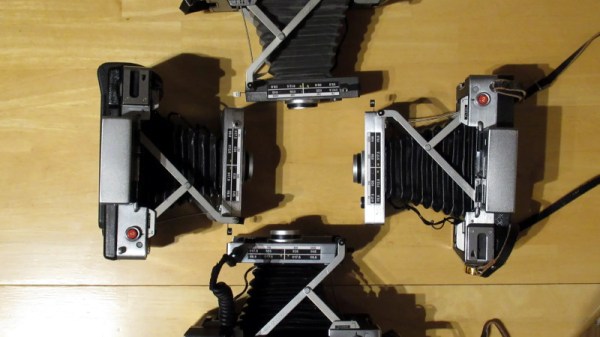
Film Is Dead. Long Live Film, Say Pentax

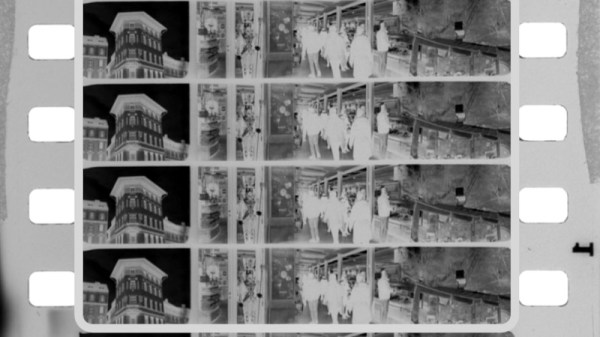
If your answer to the question “When did you last shoot a roll of film” is “Less than two decades ago”, the chances are that you’re a camera enthusiast, and that the camera you used was quite old. Such has been the switch from film to digital, that the new film camera is a rarity. Pentax think there may be an opening in the older format though, as they’ve announced in the videos below the break that they’re working on a fresh range of film cameras to serve the enthusiast market.

We don’t know the economics of the camera business, but we’re certainly interested to see what they come up with. In a world that’s still awash with cheap film cameras from a few decades ago, whatever they produce will have to be good, but given that it’s Pentax who are making the announcement we’re guessing the quality will be of a high standard.

Perhaps more interesting in the revival of interest in film is that it comes at a point when designing and making your own camera has almost never been easier. If you’re bored waiting for the new Pentax, make your own!

Continue reading “Film Is Dead. Long Live Film, Say Pentax”

Lo-Fi Fun: Beer Can Microphones

Sometimes, you just need an easy win, right? This is one of those projects. A couple months back, I was looking at my guitars and guitar accessories and thought, it is finally time to do something with the neck I’ve had lying around for years. In trying to decide a suitable body for the slapdash guitar I was about to build, I found myself at a tractor supply store for LEGO-related reasons. (Where else are you going to get a bunch of egg cartons without eating a bunch of eggs?) I  noticed that they happened to also stock ammo boxes. Bam! It’s sturdy, it opens easily, and it’s (very) roughly guitar body shaped. I happily picked one up and started scheming on the way home.

Having never built a cigar box guitar before and being of a certain vintage, I’m inclined to turn to books instead of the Internet, so I stocked up from the library. Among my early choices was Making Poor Man’s Guitars by Shane Speal, who is widely considered to be the guru on the subject. In flipping through the book, I noticed the beer can microphone project and was immediately taken by the aesthetic of some cool old 70s beer can with a 1/4″ instrument jack on the bottom, just asking for some dirty blues to be belted into it. I had to build one. Or twelve.

Continue reading “Lo-Fi Fun: Beer Can Microphones”

A 3D-printed case for the ZX Spectrum with a mechanical keyboard

The ZX Spectrum Finally Gets A Proper Keyboard

The Sinclair ZX Spectrum is fondly remembered by many for being their first introduction into the wonderful world of computing. Its advanced capabilities coupled with a spectacularly low price made it one of the great home computers of the 1980s, at least in the UK and nearby countries. What was less spectacular about the Spectrum was its awful keyboard: although a step up from the flat membrane keyboards of earlier Sinclair computers, the Spectrum’s tiny rubbery keys made typing anything more than a few characters a bit of a chore.

If you’re planning to do any serious programming on your Spectrum, you might therefore want to check out [Lee Smith]’s latest project in which he redesigns the Spectrum’s case to include a proper mechanical keyboard. [Lee] got this idea when he was looking for ways to fix a few Spectrums with broken or missing cases, and stumbled upon several projects that aim to recreate classic Sinclair machines using modern components. He took a keyboard PCB meant for the ZX Max 128 project, populated it with some high-quality switches, and added a modified set of keycaps from the ManuFerHi N-Go.

A new ZX Spectrum case, opened to show the keyboard connecting to the mainboard
The new keyboard plugs into the original connectors and doesn’t require any board-level modifications.

Together, those parts formed a modern, comfortable keyboard that still had the proper labelling on all keys. This is rather essential on the Spectrum, since each key is also used to generate symbols and BASIC keywords: for instance, the “K” key also functions as LIST, +, LEN and SCREEN$.

With the keyboard design settled, [Lee] set to work on the rest of the case: he designed and 3D-printed a sleek enclosure that takes the new keyboard as well as an original Spectrum mainboard. The resulting system is called the ZX Mechtrum, and looks fabulous with its matte black exterior and the obligatory four-coloured rainbow. A replaceable rear panel also allows several board-level modifications, like composite video or VGA output, to be neatly incorporated into the design.

We wrote an extensive retrospect on the Spectrum on its 40th anniversary earlier this year. If, somehow, you actually like the Spectrum’s original rubbery keyboard, then you can also modify the whole thing to work with modern computers.

Continue reading “The ZX Spectrum Finally Gets A Proper Keyboard”

Single Photon Detection With Photomultipliers

Unless you are an audiophile, you likely think of tubes as mostly relegated to people who work on old technology. However, photomultiplier tubes are still useful compared to more modern sensors, and [Jaynes Network] has a look into how they work, especially with scintillating detectors.

The RCA photomultiplier he examines has ten stages and can detect even a single photon. Combined with a scintillating detector, they make good radiation detectors.

We can’t help but smile when we hear someone obviously in love with the engineering behind a tube like this. We get it. The inside of the tube is crowded, so it is hard to identify the dynodes and other portions, but some diagrams make it readily apparent how the tube does its job.

We were impressed with how good the documentation that came with the tube looked, considering its age. We mean the condition it was in. The document itself was obviously a reproduction of a typewritten document with hand-drawn figures and graphs.

We were hoping for some footage of the tube in action, but we’ll have to wait for a future video. We are betting that is coming, though. Although there are some solid-state detectors, they are not suitable for all applications. There was a time, though, when the tubes were in many applications, including X-ray scanners and photography equipment.

Continue reading “Single Photon Detection With Photomultipliers”

Yesterday’s Future Is Brighter Today

The demoscene never ceases to amaze. Back in the mid-80s, people wouldn’t just hack software to remove the copy restrictions, but would go the extra mile and add some fun artwork and greetz. Over the ensuing decade the artform broke away from the cracks entirely, and the elite hackers were making electronic music with amazing accompanying graphics to simply show off.

Looked at from today, some of the demos are amazing given that they were done on such primitive hardware, but those were the cutting edge home computers at the time. I don’t know what today’s equivalent is, with CGI-powered blockbusters running in mainstream cinemas, the state of the art in graphics has moved on quite a bit. But the state of the old art doesn’t rest either. I’ve just seen the most amazing demo on a ZX Spectrum.

Simply put, this demo does things in 2022 on a computer from 1982 that were literally impossible at the time. Not because the hardware was different – this is using retro gear after all – but because the state of our communal knowledge has changed so dramatically over the last 40 years. What makes 2020s demos more amazing than their 1990s equivalents is that we’ve learned, discovered, and shared enough new tricks with each other that we can do what was previously impossible. Not because of silicon tech, but because of the wetware. (And maybe I shouldn’t underestimate the impact of today’s coding environments and other tooling.)

I love the old demoscene, probably for nostalgia reasons, but I love the new demoscene because it shows us how far we’ve come. That, and it’s almost like reverse time-travel, taking today’s knowledge and pushing it back into gear of the past.

Resurrecting PONG, One Jumper Wire At A Time

Between 1976 and 1978, over one million Coleco Telstar video game consoles were sold. The Killer App that made them so desirable? PONG. Yep, those two paddles bouncing a ball around a blocky tennis court were all the rage and helped usher in a new era. And as [Dave] of Dave’s Garage shows us in the video below the break, the bringing the old console back to life proved simpler than expected!

Thankfully, the console is built around what [Dave] quite aptly calls “PONG on a chip”, the General Instrument AY-3-8500 which was designed to make mass production of consoles possible. The chip actually contains several games, although PONG was the only one in use on the Coleco.

After removing the CPU from the non-functional console, [Dave] breathed life into it by providing a 2 MHz clock signal that was generated by an Arduino, of all things. A typical 2N2222 amplifies the audio, and a quick power up showed that the chip was working and generating audio.

Video is smartly taken care of just as it was in the original design, by combining various signals with a 4072 OR gate. With various video elements and synchronization patterns combined into a composite video signal, [Dave] was able to see the game on screen, but then realized that he’d need to design some “paddles”. We’ll leave that up to you to watch in the video, but make sure to check the comments section for more information on the design.

Is a breadboarded PONG console not retro enough for you? Then check out this old school mechanical version that was found languishing in a thrift store.

Continue reading “Resurrecting PONG, One Jumper Wire At A Time”

photograph of custom PCB assembly of NE555-based electronic dice

NE555-Based Electronic Dice

It has become a bit of a running joke in the Hackaday community to suggest that a project could or should have been done with a 555 timer. [Tim] has rather taken this to heart with his latest Electronic Dice project, which uses three of the venerable devices.

If three seems like a lot of 555s to make an electronic die, then it may be worth considering that the last time we shared his project he was using 22 of them! Since then, [Tim] has been busy optimising his design, whilst keeping within the constraints of an old-school through-hole soldering kit.

Maybe the most surprising thing about this project is the purpose to which the NE555 devices are pressed. Rather than using them for their famous oscillation properties, they are in actual fact just being used as Schmitt Triggers to clean up the three-phase ring oscillator that is constructed from discrete transistors and passives.

scope trace of the electronic dice ring oscillator
Simulation trace of the three-phase ring oscillator before Scmitt Trigger stages

The ring oscillator cleverly produces three phase-shifted square waves such that a binary combination of the three phases offers six unique states. Six being the perfect number for a dice throw, all that then remains is to figure out which LEDs need to be switched on in which state and wire them up accordingly.

To “roll” the dice, a push-button powers up the oscillator, and stops it again when it is released, displaying the random end-state on the LEDs.

It can be fun to see what can be done using old technology, and educational to try to optimise a design down to the fewest parts possible.

[Tim]’s earlier project is here if you want to see how the design has evolved. The documentation on both of these iterations is excellent and well worth a read.

Continue reading “NE555-Based Electronic Dice”