Are You Down With MPPT? (Yeah, You Know Me.)

Solar cells have gotten cheaper and cheaper, and are becoming an economically viable source of renewable energy in many parts of the world. Capturing the optimal amount of energy from a solar panel is a tricky business, however. First there are a raft of physical prerequisites to operating efficiently: the panel needs to be kept clean so the sun can reach the cells, the panel needs to point at the sun, and it’s best if they’re kept from getting too hot.

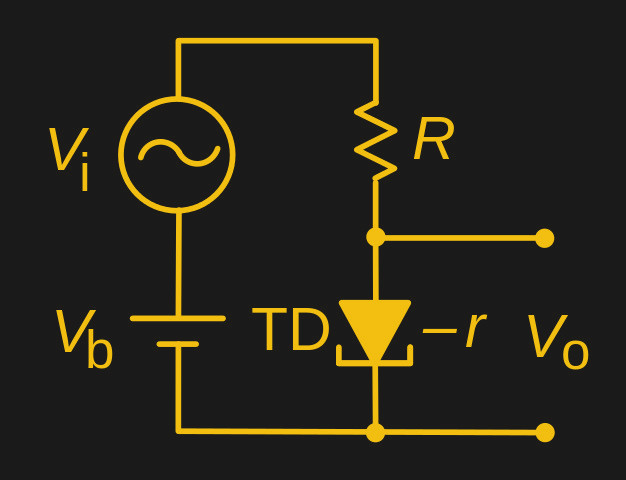
Along with these physical demands, solar panels are electrically finicky as well. In particular, the amount of power they produce is strongly dependent on the electrical load that they’re presented, and this optimal load varies depending on how much illumination the panel receives. Maximum power-point trackers (MPPT) ideally keep the panel electrically in the zone even as little fluffy clouds roam the skies or the sun sinks in the west. Using MPPT can pull 20-30% more power out of a given cell, and the techniques are eminently hacker-friendly. If you’ve never played around with solar panels before, you should. Read on to see how!

Continue reading “Are You Down With MPPT? (Yeah, You Know Me.)”

Fire Hazard Testing

How do you know that new appliance you bought won’t burn your house down? Take a look at any electrical appliance, and you’ll find it marked with at least one, and most often, several safety certification marks such as UL, DIN, VDE, CSA or BSI. Practically every electrical product that plugs into utility supply needs to go through a mandatory certification process to ensure it meets these conformity test requirements. Some examples include domestic and industrial electrical appliances, tools, electrical accessories, consumer electronics and medical electronics.

When you look through a typical safety test standard, you’ll notice it breaks down the various tests in two categories. “Type” tests are conducted on prototypes and samples of the final product or its individual parts and components, and are not generally repeated unless there are changes in design or materials. “Acceptance” tests are routine verification tests conducted on 100% of the products produced. For example, a typical Type test would be used to check the fire retardant properties of the plastics used in the manufacture of the product during development, while a Routine test would be carried out to check for high voltage breakdown or leakage and touch currents on the production line.

Nowadays, a majority of countries around the world adopt standards created by international organizations such as IEC, ISO, and ITU, then fine tune them to suit local requirements. The IEC works by distributing its work across almost 170 Technical Committees and Subcommittees which are entrusted with the job of creating and maintaining standards. One of these committees is “TC89 Fire hazard testing” whose job is to provide “Guidance and test methods for assessing fire hazards of electro-technical equipment, their parts (including components) and electrical insulating materials”. These tests are why we feel safe enough to plug something in and still sleep at night.

Practically all electrical products need to confirm to this set of tests as part of their “Type” test routine. This committee produces fire hazard testing documents in the IEC 60695 series of standards. These documents range from general guidelines on several fire hazard topics to specific instructions on how to build the test equipment needed to perform the tests. It’s interesting to see how some of these tests are carried out and the equipment used. Join me after the break as we take a look at that process.

Continue reading “Fire Hazard Testing”

The God Particle

The Greek philosopher Plato is well known for his allegories and metaphors. Of particular interest is his Allegory of the Cave, which appeared in The Republic, written around 380BCE. In it, Plato describes a group of prisoners which are chained to a wall within a cave, and have been all of their lives. They have no direct interaction with the world outside of the cave. They only know of the world via shadows that are cast on the wall opposite of them.  For the prisoners, the shadows are their reality.  Though you and I know the shadows are only a very low-resolution representation of that reality.

standard_01
Plato’s “Allegory of the Cave”, drawing by Markus Maurer

Theoretical physicist Steven Weinberg, a Nobel Prize winner who works out of the University of Texas at Austin, once likened himself to a prisoner in Plato’s cave. We are forever chained to this cave by the limitations in measurements we can make and experiments we can perform. All that we can know are shadows of the reality that exists in the sub-atomic world. We can see the shadowy figures lurking in our math and as wisps of misty vapor trails in our cloud chambers. We attempt to pierce the veil with the power of our imagination and draw nifty looking charts and animations depicting what our mind’s eye thinks it can see. But in the end, we are all trapped in a cave… staring at shadows. Reflections of a reality we can never truly know.

In our last Quantum Mechanics article, we introduced you to the idea of quantum electrodynamics, or to put it more simply — quantum field theory. In this article, we’re going to explore how QED lead to the prediction and eventual confirmation of something known as the Higgs Boson, also known as the God Particle. As usual, we’ll aim to keep things as simple as possible, allowing anyone with a curious mind to know what this God particle talk is all about. Like so many things in the quantum world, it all started with an unexpected outcome…

Continue reading “The God Particle”

WTF Are Ground Loops?

These magical creatures crop up out of nowhere and fry your electronics or annoy your ear holes. Understanding them will doubtless save you money and hassle. The ground loop in a nutshell is what happens when two separate devices (A and B) are connected to ground separately, and then also connected to each other through some kind of communication cable with a ground, creating a loop. This provides two separate paths to ground (B can go through its own connection to ground or it can go through the ground of the cable to A and then to A’s ground), and means that current may start flowing in unanticipated ways. This is particularly noticeable in analog AV setups, where the result is audio hum or visible bars in a picture, but is also sometimes the cause of unexplained equipment failures. Continue reading “WTF Are Ground Loops?”

Don’t Fear The Filter: Lowpass Edition

There comes a time in every electronic designer’s life when, whether they know it or not, they need an analog filter in their design. If you’re coming from a digital background, where everything is nice and numeric, the harsh reality of continuous voltages can be a bit of a shock. But if you’re taking input from, or sending output to the big analog world out there, it pays to at least think about the frequency-domain properties of the signal, and maybe even do something about them.

Designing an analog filter to fit your needs can be a bit of a daunting task: there are many factors that you’re going to need to consider, and they all interact. It’s easy to get lost. We’re going to simplify this as much as possible by instead focusing on a few common applications and building up the simplest possible filters that work well for them.

Today, we’re going to consider the lowpass filter, and specifically a Sallen-Key filter with Butterworth characteristics and a second-order rolloff. Sound like word salad? We’ll fix that up right away, because this is probably the single most important filter to have in your analog toolbox for two very common use cases: pulse-width modulated (PWM) output and analog-to-digital conversion (ADC) input.

Continue reading “Don’t Fear The Filter: Lowpass Edition”

Punching It Down: Insulation Displacement Connectors

In my misspent youth I found myself doing clinical rotations at a local hospital. My fellow students and I were the lowest of the low on the hospital pecking order, being the ones doing the bulk of the work in the department and paying for the privilege to do so. As such, our locker facilities were somewhat subpar: a corner of a closet behind a door labeled “COMMS”.

In the room was a broken chair and a couple of hooks on the wall for our coats, along with an intriguing (to me) electrical panel. It had a series of rectangular blocks with pins projecting from it. Each block had a thick cable with many pairs of thin, colorful wires fanned out and neatly connected to the left side, and a rats nest of blue and white wires along the right side. We were told not to touch the board. I touched it nonetheless.

I would later learn that these were Type 66 punchdown blocks for the department’s phone system, and I’d end up using quite a few of them over my hacking life. Punchdown connectors were a staple of both private and public telco physical plants for decades, and belong to a class of electrical connections called insulation displacement connections, or IDC. We’ve recently looked at how crimp connections work, and what exactly is going on inside a solder joint. I thought it might be nice to round things out with a little bit about the workings of IDC.

Continue reading “Punching It Down: Insulation Displacement Connectors”

Saved By The Bel — Understanding Decibels

If you’ve hung around electronics for any length of time, you’ve surely heard of the decibel (often abbreviated dB). The decibel is a measure of a power ratio. Actually, the real measure is a bel, but you almost never see that in practice. If you are versed in metric, you won’t be surprised to learn a decibel is 1/10 of a bel. Sometimes in electronics, we deal with really large ratios, so the decibel is logarithmic to cope with this. Doubling the number of decibels doesn’t double the ratio, as you will soon see. It’s all about logarithms, and this ends up being extremely useful when measuring something like antenna or amplifier gain.

Besides antennas, decibels are often used to measure sound and light. The reason is that human ears and eyes have a logarithmic response to those quantities. Your ear, for example, has a huge dynamic range. That is to say, you can hear a whisper or a space shuttle launch. That ratio is about 1 trillion to 1, but that’s only 120 dB. This is also why potentiometers made for volume controls have a logarithmic taper. A linear pot would seem off because, for example, a tenth of a turn at one extreme will affect the apparent volume much more than a tenth of a turn at the other extreme. This holds true whether or not those knobs go up to eleven.

Continue reading “Saved By The Bel — Understanding Decibels”