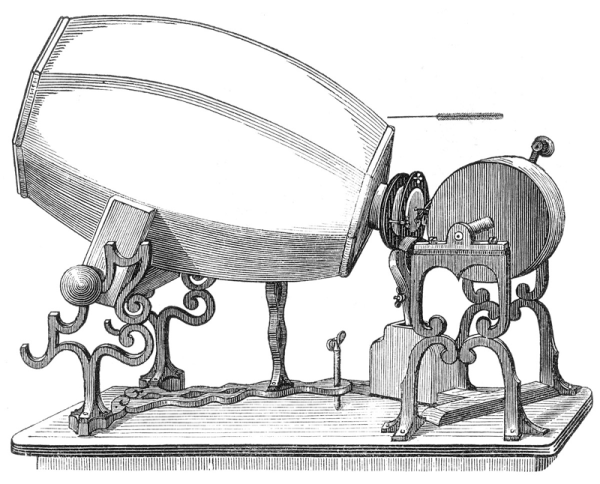
You probably learned in school that Thomas Edison was the first human voice recorded, reciting Mary Had a Little Lamb. As it turns out though, that’s not strictly true. Edison might have been the first person to play his voice back, but he wasn’t the first to deliberately record. That honor goes to a French inventor named Édouard-Léon Scott de Martinville. He wanted to study sound and created the phonautograph — a device which visualized sound on soot-covered paper. They were not made to be played back, but the information is there. These recordings were made around 1860. There’s a 9-part video series about how the recordings were made — and more interestingly — how they were played back using modern technology. Part 1 appears below.
We say around 1860 because there were some early recordings starting around 1857 that haven’t been recovered. Eventually, the recordings would have a tuning fork sound which allows modern playback since the known signal can estimate the speed of the hand-cranked cylinder. The date of the first recovered recording was today, April 9th, 158 years ago.
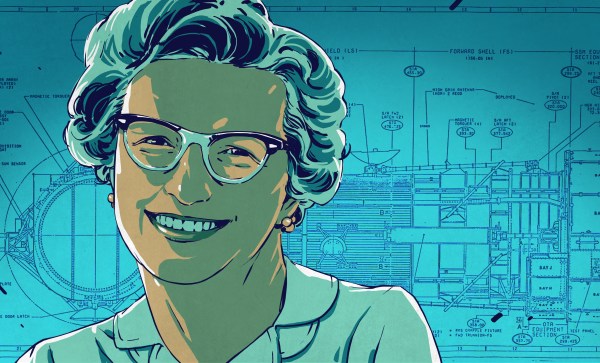
When she was four years old, Nancy Grace Roman loved drawing pictures of the Moon. By the time she was forty, she was in charge of convincing the U.S. government to fund a space telescope that would give us the clearest, sharpest pictures of the Moon that anyone had ever seen. Her interest in astronomy was always academic, and she herself never owned a telescope. But without Nancy, there would be no Hubble.
Goodnight, Moon
A view of the Milky Way from Reno, Nevada. Via Lonely Speck
Nancy was born May 16, 1925 in Nashville, Tennessee. Her father was a geophysicist, and the family moved around often. Nancy’s parents influenced her scientific curiosities, but they also satisfied them. Her father handled the hard science questions, and Nancy’s mother, who was quite interested in the natural world, would point out birds, plants, and constellations to her.
For two years, the family lived on the outskirts of Reno, Nevada. The wide expanse of desert and low levels of light pollution made stargazing easy, and Nancy was hooked. She formed an astronomy club with some neighborhood girls, and they met once a week in the Romans’ backyard to study constellations. Nancy would later reminisce that her experience in Reno was the single greatest influence on her future career.
By the time Nancy was ready for high school, she was dead-set on becoming an astronomer despite a near-complete lack of support from her teachers. When she asked her guidance counselor for permission to take a second semester of Algebra instead of a fifth semester of Latin, the counselor was appalled. She looked down her nose at Nancy and sneered, “What lady would take mathematics instead of Latin?”
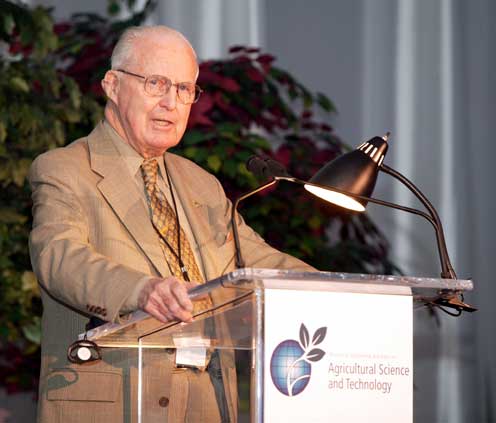
Everyone loves a hero. Save someone from a burning building, and you’ll get your fifteen minutes of fame. That’s why I’m always surprised that more people don’t know Norman Borlaug, who would have celebrated his 104th birthday on Sunday. He won the Nobel prize in 1970 and there’s good reason to think that his hacking efforts saved about a billion people from starving to death. A billion people. That’s not just a hero, that’s a superhero.
To understand why that claim is made, you have to go back to the 1970s. The population was growing and was approaching an unprecedented four billion people. Common wisdom was that the Earth couldn’t sustain that many people. Concerns about pollution were rampant and there were many influential thinkers who felt that we would not be able to grow enough food to feed everyone.
Paul Ehrlich, in particular, was a Stanford University biologist who wrote a book “The Population Bomb.” His forecast of hundreds of millions starving to death in the 1970s and 1980s, including 65 million Americans, were taken very seriously. He also predicted doom for India and that England would not exist by the year 2000.
Here we are 40 or 50 years later and while there are hungry people all over the world, there isn’t a global famine of the proportions many people thought was imminent. What happened? People are pretty good problem solvers and Norman Borlaug — along with others — created what’s known as the Green Revolution.
When a 13-year old Marie-Sophie Germain was stuck in the house because of the chaotic revolution on the streets of Paris in 1789, she found a refuge for her active mind: her father’s mathematics books. These inspired her to embark on pioneering a new branch of mathematics that focussed on modeling the real world: applied mathematics.
Post-revolutionary France was not an easy place for a woman to study mathematics, though. She taught herself higher maths from her father’s books, eventually persuading her parents to support her unusual career choice and getting her a tutor. After she had learned all she could, she looked at studying at the new École Polytechnique. Founded after the revolution as a military and engineering school to focus on practical science, this school did not admit women.
Anyone could ask for copies of the lecture notes, however, and students submitted their observations in writing. Germain got the notes and submitted her coursework under the pseudonym Monsieur Antoine-August Le Blanc. One of the lecturers that she impressed was Joseph Louis Lagrange, the mathematician famous for defining the mathematics of orbital motion that explained why the moon kept the same face to the earth. Lagrange arranged to meet this promising student and was surprised when Germain turned out to be a woman.
Gauss and Germain
‘Le Blanc’ also corresponded with German mathematician Carl Friedrich Gauss on number theory. When Napoleon’s armies occupied the town the famous mathematician lived in, Germain enlisted a family friend in the army to check that Gauss had not been harmed. Gauss didn’t realize who had helped him out, until he discovered that ‘Le Blanc’ was Sophie Germain, he wrote to her thanking her for her concern and praising her mathematical prowess given the hurdles set before her.
“How sweet is the acquisition of a friendship so flattering and precious to my heart. The lively interest you took during this terrible war deserves the most sincere recognition….But when a person of this sex, who, for our mores and prejudices, must recognize infinitely more obstacles and difficulties than men to become acquainted with these thorny searches, knows how to get rid of these obstacles and to penetrate what they have, most hidden, must undoubtedly, she has the most noble courage, talents quite extraordinary, genius superior.”
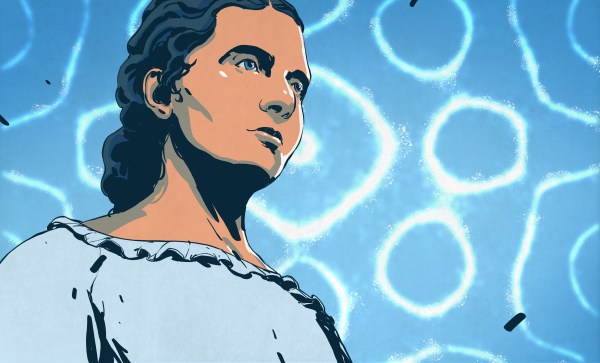
As well as working on the thorny and theoretical problems of number theory, Germain worked on applying mathematics to real world problems. One of these was a challenge set by the Paris Academy of Science to mathematically describe the elasticity of metal plates. An experimenter called Ernest Chladni had demonstrated that a metal plate would resonate in odd ways when vibrated at certain frequencies. If you put sand on the plate, it would collect in different patterns created by the resonance of the plate, called Chladni figures. To win the prize, the solution had to predict these figures.
The Mathematics of Stress and Strain
Mathematically predicting the behavior of metal plates could make it easier to design metal objects and predict how they would behave under stress. The prize was set in 1808 but was so difficult that Germain was the only one who decided to try to solve it, as it required coming up with a whole new way to analyze and describe how materials bend and change under stress.
The first two solutions that she submitted were rejected due to mathematical errors, but the third version won her the prize in 1816. However, due to the Academy policy of not allowing women to join (and to only attend events if they were wives of members), Germain was not able to attend the ceremony where the prize was granted. She was also not allowed to attend meetings of the Academy. After the Academy failed to publish her prize-winning work, Germain had to pay to publish the work herself in 1821.
Later, her friend Joseph Fourier allowed her to attend meetings and presentations, but the mathematical establishment never really accepted her, or her work. In a letter to a colleague in 1826 she complained about the way they rebuffed her:
“These facts are my domain and it is to me alone that they remain hidden. That’s the privilege of the ladies: they get compliments and no real benefits.”
In the same letter, Germain complained of suffering fatigue and she was diagnosed with breast cancer shortly afterwards. She died in 1831. Her final years were spent working on a solution to Fermat’s Last Theorem, and just before her death she published a partial solution that was the basis for much research into the theorem, which was finally solved only with computer help in the late 1990s.
Although Sophie Germain never earned a degree in her lifetime, she was given an honorary degree in 1837 from the University of Göttingen at the suggestion of Gauss, who noted that
“she proved to the world that even a woman can accomplish something worthwhile in the most rigorous and abstract of the sciences and for that reason would well have deserved an honorary degree.”
The Academy that snubbed her also now offers an annual prize for mathematics in her name. Perhaps more importantly, her work formed the basis of the study of elasticity and stress in metals that allowed engineers to build larger objects and buildings. Creations such as the Eiffel tower in 1887 were directly influenced by her work, and it laid some of the groundwork for Einstein’s theory of General Relativity.
Modern scholars argue that Germain could have been more than she was: her work, they argue, was hamstrung by a limited understanding of some of the fundamental concepts that Gauss and others had described. Although her work was fundamental and important, if she had been given free access to the education that she wanted and deserved, it’s easy to imagine that she would have gone farther.
In the 1950s, artwork of what the future would look like included flying cars and streamlined buildings reaching for the sky. In the 60s we were heading for the Moon. When digital watches came along in the 70s, it seemed like a natural step away from rotating mechanical hands to space age, electrically written digits in futuristic script.
But little did we know that digital watches had existed before and that our interest in digital watches would fade only to be reborn in the age of smartphones.
Mechanical Digital Watches
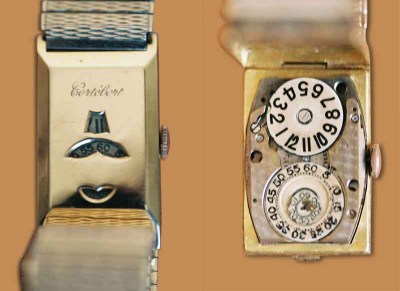
Cortébert jump-hour wristwatch. Image by Wallstonekraft CC-BY-SA 3.0
In 1883, Austrian inventor Josef Pallweber patented his idea for a jumping hour mechanism. At precisely the change of the hour, a dial containing the digits from 1 to 12 rapidly rotates to display the next hour. It does so suddenly and without any bounce, hence the term “jump hour”. He licensed the mechanism to a number of watchmakers who used it in their pocket watches. In the 1920s it appeared in wristwatches as well. The minute was indicated either by a regular minute hand or a dial with digits on it visible through a window as shown here in a wristwatch by Swiss watchmaker, Cortébert.
The jump hour became popular worldwide but was manufactured only for a short period of time due to the complexity of its production. It’s still manufactured today but for very expensive watches, sometimes with a limited edition run.
The modern digital watch, however, started from an unlikely source, the classic movie 2001: A Space Odyssey.
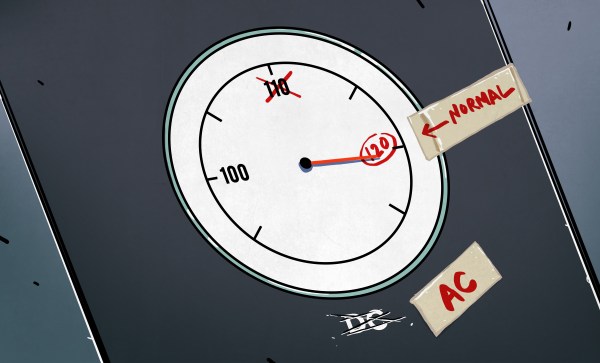
What kind of power service is in the United States? You probably answered 120-volt service. If you thought a little harder, you might remember that you have some 240-volt outlets and that some industrial service is three phase. There used to be DC service, but that was a long time ago. That’s about it, right? Turns out, no. There are a very few parts of the United States that have two-phase power. In addition, DC didn’t die as quickly as you might think. Why? It all boils down to history and technological inertia.
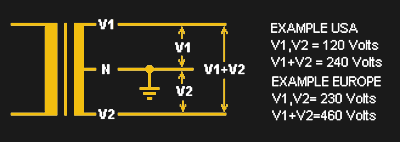
You probably have quite a few 120-volt power jacks in sight. It is pretty hard to find a residence or commercial building these days that doesn’t have these outlets. If you have a heavy duty electric appliance, you may have a 240-volt plug, too. For home service, the power company supplies 240 V from a center tapped transformer. Your 120V outlets go from one side to the center, while your 240V outlets go to both sides. This is split phase service.
Industrial customers, on the other hand, are likely to get three-phase service. With three-phase, there are three wires, each carrying the line voltage but out of phase with each other. This allows smaller conductors to carry more power and simplifies motor designs. So why are there still a few pockets of two-phase?
Today is March 14th, or Pi Day because 3.14 is March 14th rendered in month.day date format. A very slightly better way to celebrate the ratio of a circle’s circumference to its diameter is July 22nd, or 22/7 written in day/month order, a fractional approximation of pi that’s been used for thousands of years and is a better fit than 3.14. Celebrating Pi Day on July 22nd also has the advantage of eschewing middle-endian date formatting.
But Pi Day is completely wrong. We should be celebrating Tau Day, to celebrate the ratio of the circumference to the radius instead of the diameter. That’s June 28th, or 6.283185…. Nonetheless, today is Pi Day and in the absence of something truly new and insightful — we’re still waiting for someone to implement a spigot algorithm in 6502 assembly, by the way — this is a fantastic opportunity to discuss something tangentially related to pi, the history of mathematics, and the idea that human knowledge builds upon itself in an immense genealogy stretching back to the beginning of history.
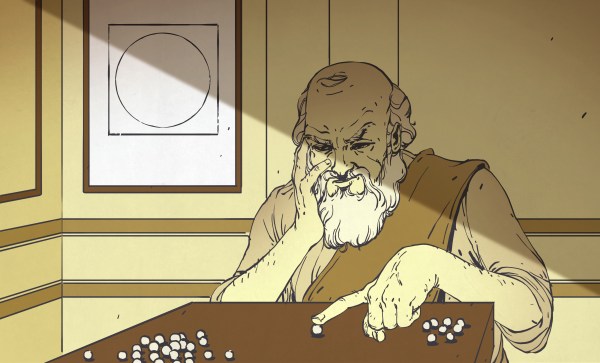
This is our Pi Day article, but instead of complaining about date formats, or Tau, we’re going to do something different. This is how you approximate pi with the Monte Carlo method, and how anyone who can count to a million can get a better approximation of one the fundamental constants of the Universe than Archimedes.



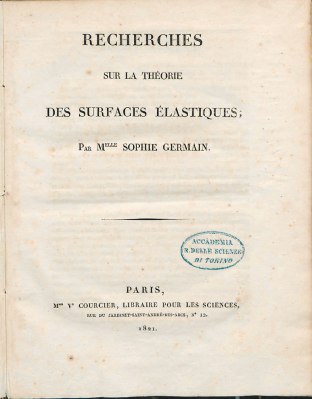 The first two solutions that she submitted were rejected due to mathematical errors, but the third version won her the prize in 1816. However, due to the Academy policy of not allowing women to join (and to only attend events if they were wives of members), Germain was not able to attend the ceremony where the prize was granted. She was also not allowed to attend meetings of the Academy. After the Academy failed to publish her prize-winning work,