The Flight That Made The Calculator And Changed The World

It was the fall of 1965 and Jack Kilby and Patrick Haggerty of Texas Instruments sat on a flight as Haggerty explained his idea for a calculator that could fit in the palm of a hand. This was a huge challenge since at that time calculators were the size of typewriters and plugged into wall sockets for their power. Kilby, who’d co-invented the integrated circuit just seven years earlier while at TI, lived to solve problems.

Fig. 2 from US 3,819,921 Miniature electronic calculator

By the time they landed, Kilby had decided they should come up with a calculator that could fit in your pocket, cost less than $100, and could add, subtract, multiply, divide and maybe do square roots. He chose the code name, Project Cal Tech, for this endeavor, which seemed logical as TI had previously had a Project MIT.

Rather than study how existing calculators worked, they decided to start from scratch. The task was broken into five parts: the keyboard, the memory, the processor, the power supply, and some form of output. The processing portion came down to a four-chip design, one more than was initially hoped for. The output was also tricky for the time. CRTs were out of the question, neon lights required too high a voltage and LEDs were still not bright enough. In the end, they developed a thermal printer that burned images into heat-sensitive paper.

Just over twelve months later, with the parts all spread out on a table, it quietly spat out correct answers. A patent application was filed resulting in US patent 3,819,921, Miniature electronic calculator, which outlined the basic design for all the calculators to follow. This, idea borne of a discussion on an airplane, was a pivotal moment that changed the way we teach every student, and brought the power of solid-state computing technology into everyday life.

Continue reading “The Flight That Made The Calculator And Changed The World”

Radio Apocalypse: The GWEN System

Recent developments on the world political stage have brought the destructive potential of electromagnetic pulses (EMP) to the fore, and people seem to have internalized the threat posed by a single thermonuclear weapon. It’s common knowledge that one bomb deployed at a high enough altitude can cause a rapid and powerful pulse of electrical and magnetic fields capable of destroying everything electrical on the ground below, sending civilization back to the 1800s in the blink of an eye.

Things are rarely as simple as the media portray, of course, and this is especially true when a phenomenon with complex physics is involved. But even in the early days of the Atomic Age, the destructive potential of EMP was understood, and allowances for it were made in designing strategic systems. Nowhere else was EMP more of a threat than to the complex web of communication systems linking far-flung strategic assets with central command and control apparatus. In the United States, one of the many hardened communications networks was dubbed the Groundwave Emergency Network, or GWEN, and the story of its fairly rapid rise and fall is an interesting case study in how nations mount technical responses to threats, both real and perceived. Continue reading “Radio Apocalypse: The GWEN System”

Joan Feynman Found Her Place In The Sun

Google ‘Joan Feynman’ and you can feel the search behemoth consider asking for clarification. Did you mean: Richard Feynman? Image search is even more biased toward Richard. After maybe seven pictures of Joan, there’s an endless scroll of Richard alone, Richard playing the bongos, Richard with Arline, the love of his life.

Yes, Joan was overshadowed by her older brother, but what physicist of the era wasn’t? Richard didn’t do it on purpose. In fact, no one supported Joan’s scientific dreams more than he did, not even their mother. Before Richard ever illuminated the world with his brilliance, he shined a light on his little sister, Joan.

Continue reading “Joan Feynman Found Her Place In The Sun”

The Database Of The Time Lords

Time zones have been a necessity since humans could travel faster than a horse, but with computers, interconnected over a vast hive of information, a larger problem has emerged. How do you keep track of time zones? Moreover, how do you keep track of time zones throughout history?

Quick question. If it’s noon in Boston, what time is it in Phoenix? Well, Boston is in the Eastern time zone, there’s the Central time zone, and Phoenix is in the Mountain time zone; noon, eleven, ten. If it’s noon in Boston, it’s ten o’clock AM in Phoenix. Here’s a slightly harder question: if it’s noon in Boston, what time is it in Phoenix during Daylight Savings Time? Most of Arizona doesn’t observe Daylight Savings Time, so if it’s noon in Boston, it’s 9 AM in Phoenix. What about the Navajo Nation in the northwestern part of Arizona? Here, Daylight Savings Time is observed. You can’t even make a rule that all of Arizona is always on Mountain Standard Time.

Indiana is another example of bizarre time zones. For most of the 20th century, Indiana was firmly in the Central time zone. Starting in the 1960s, the line between Eastern and Central time slowly moved west from the Ohio border. Some countries opted not to observe Daylight Savings Time. In 2006, the entire state started to observe DST, but the northwest and southwest corners of the state remained firmly in the Central time zone. The odd geographic boundaries of time zones aren’t limited to the United States, either; Broken Hill, New South Wales, Australia is thirty minutes behind the rest of New South Wales.

Working out reliable answers to all of these questions is the domain of the Time Zone Database, a catalog of every time zone, time zone change, and every strange time-related political argument. It records Alaska’s transition from the Julian to the Gregorian calendar. It describes an argument in a small Michigan town in 1900. It’s used in Java, nearly every kind of Linux, hundreds of software packages, and at least a dozen of the servers and routers you’re using to read this right now.

Continue reading “The Database Of The Time Lords”

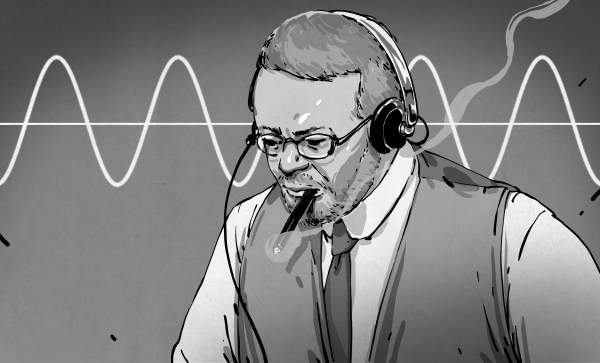
Radio Apocalypse: The Emergency Broadcast System

Some sounds are capable of evoking instant terror. It might be the shriek of a mountain lion, or a sudden clap of thunder. Whatever your trigger sound, it instantly stimulates something deep in the lizard brain that says: get ready, danger is at hand.

For my part, you can’t get much scarier than the instantly recognizable two-tone alert signal (audio link warning) from the Emergency Broadcast System (EBS). For anyone who grew up watching TV in the 60s and 70s in the US, it was something you heard on at least a weekly basis, with that awful tone followed by a grave announcement that “the broadcasters of your area, in voluntary cooperation with the FCC and other authorities, have developed this system to keep you informed in the event of an emergency.” It was a constant reminder that white-hot death could rain from the sky at any moment, and the idea that the last thing you may ever hear was that tone was sickening.

While I no longer have a five-year-old’s response to that sound, it’s still a powerful reminder of a scary time. And the fact that it’s still in use today, at least partially, seems like a good reason to look at the EBS in a little more depth, and find out the story behind the soundtrack of the end of the world.

Continue reading “Radio Apocalypse: The Emergency Broadcast System”

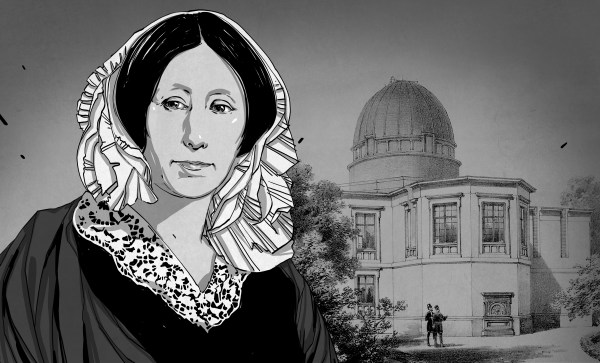
Maria Goeppert-Mayer: The Other Nobel Prize Winner

Maria Goeppert-Mayer was one of only two women to win the Nobel prize for physics thus far, the other being Marie Curie. And yet her name isn’t anywhere near as well known as Marie Curie’s. She also worked on the Manhattan Project and spent time during her long career with Enrico Fermi, Max Born, Edward Teller, and many other physics luminaries.

She was “other” in another way too. She followed her husband from university to university, and due to prevailing rules against hiring both husband and wife, often had to take a non-faculty position, sometimes even with no salary. Yet being the other, or plus-one, seemed to give her what every pure scientist desires, the freedom to explore. And explore she did, widely. She was always on the cutting edge, and all the time working with the leading luminaries of physics. For a scientist, her story reads like it’s too good to be true, which is what makes it so delightful to read about.

Continue reading “Maria Goeppert-Mayer: The Other Nobel Prize Winner”

Hacking When It Counts: Prison Locksmithing

In 1978, Tim Jenkin was a man living on borrowed time, and he knew it. A white South African in his late 20s, he had been born into the apartheid system of brutally enforced racial segregation. By his own admission, he didn’t even realize in his youth that apartheid existed — it was just a part of his world. But while traveling abroad in the early 1970s he began to see the injustice of the South African political system, and spurred on by what he learned, he became an activist in the anti-apartheid underground.

Intent on righting the wrongs he saw in his homeland, he embarked on a year of training in London. He returned to South Africa as a propaganda agent with the mission to spread anti-apartheid news and information to black South Africans. His group’s distribution method of choice was a leaflet bomb, which used a small explosive charge to disperse African National Congress propaganda in public places. Given that the ANC was a banned organization, and that they were setting off explosives in a public place, even though they only had a few grams of gunpowder, it was inevitable that Jenkin would be caught. He and cohort Steven Lee were arrested, tried and convicted;  Jenkin was sentenced to 12 years in prison, while Lee got eight.

Continue reading “Hacking When It Counts: Prison Locksmithing”