The Aluminum Wiring Fiasco

Someone who decides to build a house faces a daunting task. It’s hard enough to act as the general contractor for someone else, but when you decide to build your own house, as my parents did in the early 1970s, it’s even tougher. There are a million decisions to make in an information-poor and rapidly changing environment, and one wrong step can literally cast in stone something you’ll have to live with forever. Add in the shoestring budget that my folks had to work with, and it’s a wonder they were able to succeed as well as they did.

It was a close call in a few spots, though. I can recall my dad agonizing over the wiring for the house. It would have been far cheaper to go with aluminum wiring, with the price of copper wire having recently skyrocketed. He bit the bullet and had the electrician install copper instead, which ended up being a wise choice, as houses that had succumbed to the siren call of cheaper wiring would start burning down all over the United States soon thereafter.

What happened in the late 60s and early 70s in the residential and commercial electrical trades was an expensive and in some cases tragic lesson in failure engineering. Let’s take a look at how it all happened.

Continue reading “The Aluminum Wiring Fiasco” →

Inside Mechanical Calculators

For as busy as things can get at the grocery store on a typical afternoon just before the dinner hour, at least the modern experience has one thing going for it: it’s relatively quiet. Aside from the mumbled greetings and “Paper or plastic?” questions from the cashier, and the occasional screaming baby in the next aisle, the only sound you tend to hear is the beeping of the barcode scanner as your purchase is tallied up.

Jump back just 40 years and the same scene was raucous, with cashiers reading price tags and pounding numbers into behemoth electromechanical cash registers. Back then, if you wanted help with any arithmetic with more than just a few operations, some kind of mechanical calculator was your only choice. From simple “one-banger” adding machines to complex analog computers, mechanical devices were surprisingly capable data processing tools. Here’s a brief look at how some of the simpler ones worked.

Continue reading “Inside Mechanical Calculators” →

Firing Bullets Through Propellers

Early airborne combat was more like a drive-by shooting as pilot used handheld firearms to fire upon other aircraft. Whomever could boost firepower and accuracy would have the upper hand and so machine guns were added to planes. But it certainly wasn’t as simple as just bolting one to the chassis.

This was during World War I which spanned 1914 to 1918 and the controllable airplane had been invented a mere eleven years before. Most airplanes still used wooden frames, fabric-covered wings, and external cable bracing. The engineers became pretty inventive, even finding ways to fire bullets through the path of the wooden propeller blades while somehow not tearing them to splinters.

Continue reading “Firing Bullets Through Propellers” →

Beeping The Enemy Into Submission

In July 1940 the German airforce began bombing Britain. This was met with polite disagreement on the British side — and with high technology, ingenuity, and improvisation. The defeat of the Germans is associated with anti-aircraft guns and fighter planes, but a significant amount of potential damage had been averted by the use of radio.

Night bombing was a relatively new idea at that time and everybody agreed that it was hard. Navigating a plane in the dark while travelling at two hundred miles per hour and possibly being shot at just wasn’t effective with traditional means. So the Germans invented non-traditional means. This was the start of a technological competition where each side worked to implement new and novel radio technology to guide bombing runs, and to disrupt those guidance systems.

Continue reading “Beeping The Enemy Into Submission” →

Another Reason To Learn Morse Code: Kidnapping

Morse code — that series of dots and dashes — can be useful in the strangest situations. As a kid I remember an original Star Trek episode where an injured [Christopher Pike] could only blink a light once for yes and twice for no. Even as a kid, I remember thinking, “Too bad they didn’t think to teach him Morse code.” Of course odd uses of Morse aren’t just for TV and Movies. Perhaps the strangest real-life use was the case of the Colombian government hiding code in pop music to send messages to hostages.

In 2010, [Jose Espejo] was close to retirement from the Colombian army. But he was bothered by the fact that some of his comrades were hostages of FARC (the Revolutionary Armed Forces of Colombia; the anti-government guerrillas), some for as many as ten years. There was a massive effort to free hostages underway, and they wanted them to know both to boost morale and so they’d be ready to escape. But how do you send a message to people in captivity without alerting their captors?

Continue reading “Another Reason To Learn Morse Code: Kidnapping” →

Clive Sinclair, The Other Author

A reasonable selection of the Hackaday readership will have had their first experiences of computing on an 8-bit machine in a black case, with the word “Sinclair” on it. Even if you haven’t work with one of these machines you probably know that the man behind them was the sometimes colourful inventor Clive (now Sir Clive) Sinclair.

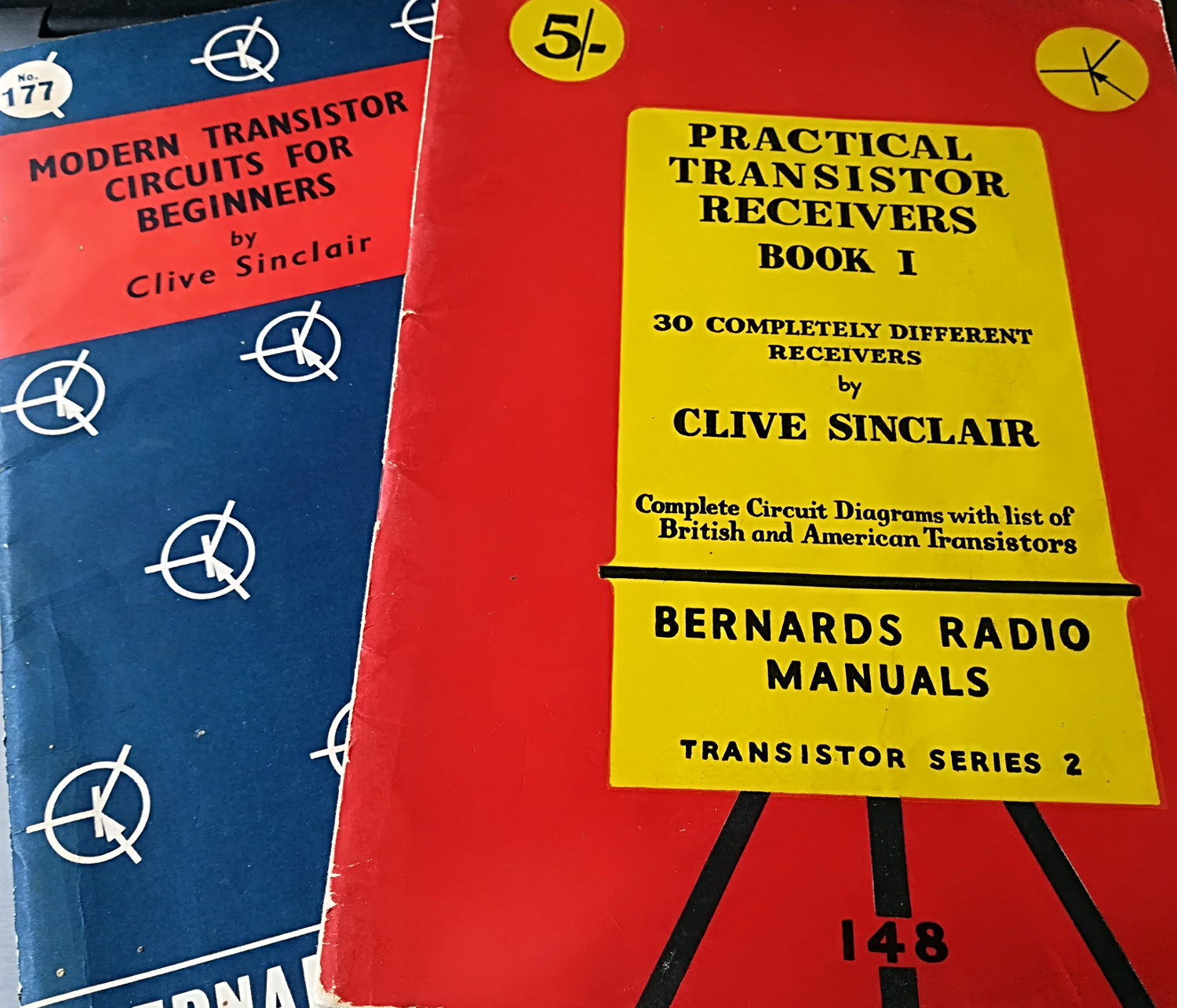
The finest in 1950s graphic design, applied to electronics books.

He was the founder of an electronics company that promised big results from its relatively inexpensive electronic products. Radio receivers that could fit in a matchbox, transistorised component stereo systems, miniature televisions, and affordable calculators had all received the Sinclair treatment from the early-1960s onwards. But it was towards the end of the 1970s that one of his companies produced its first microcomputer.

At the end of the 1950s, when the teenage Sinclair was already a prolific producer of electronics and in the early stages of starting his own electronics business, he took the entirely understandable route for a cash-strapped engineer and entrepreneur and began writing for a living. He wrote for electronics and radio magazines, later becoming assistant editor of the trade magazine Instrument Practice, and wrote electronic project books for Bernard’s Radio Manuals, and Bernard Babani Publishing. It is this period of his career that has caught our eye today, not simply for the famous association of the Sinclair name, but for the fascinating window his work gives us into the state of electronics at the time.

Continue reading “Clive Sinclair, The Other Author” →

Hacking When It Counts: Pigeon-Guided Missiles

The image of the crackpot inventor, disheveled, disorganized, and surrounded by the remains of his failures, is an enduring Hollywood trope. While a simple look around one’s shop will probably reveal how such stereotypes get started, the image is largely not a fair characterization of the creative mind and how it works, and does not properly respect those who struggle daily to push the state of the art into uncharted territory.

That said, there are plenty of wacky ideas that have come down the pike, most of which mercifully fade away before attracting undue attention. In times of war, though, the need for new and better ways to blow each other up tends to bring out the really nutty ideas and lower the barrier to revealing them publically, or at least to military officials.

Of all the zany plans that came from the fertile minds on each side of World War II, few seem as out there as a plan to use birds to pilot bombs to their targets. And yet such a plan was not only actively developed, it came from the fertile mind of one of the 20th century’s most brilliant psychologists, and very nearly resulted in a fieldable weapon that would let fly the birds of war.

Continue reading “Hacking When It Counts: Pigeon-Guided Missiles” →