
Hyperloops And Robot Cars, A Glimpse Into The Future

His mobile blooped at him with one of those noises a company spent money to get. A timer started on the screen as he rushed to put his shoes on. He finished and pushed open his door, running down the stairs two to a bound. By the time he reached the bottom of the stairs he had his backpack slung over both shoulders, which he mentally cursed himself for since he’d just have to take the dang thing off again.

It was morning on January first, and he was due at his parent’s house for a new year’s dinner fifteen hundred miles away. He should have booked a plane weeks ago, but now the Loop was his only option. The Loop didn’t really have peak rates, and while the plane would be a little faster, more direct, and cheaper IF he had remembered to book it in time, the Loop would take him the same distance today. Plus, the seats were comfier. They reclined nicely, and he intended to nap on the way. Hopefully, by the time he got there, the bleariness from last night’s celebration would be undetectable by parental senses.

He locked the door to his apartment complex, a reassuringly square assembly from the seventies, and walked to the sidewalk where a friendly light blue car waited for him. When he got close, his mobile vibrated and made another distressingly cheery noise. The doors of the car swung open opposite of each other to expose the space inside. The car displayed two rows of inward facing bench seats, a panoramic row of windows around the entire perimeter of the vehicle, and… yes, his nose was telling him before his eyes fixed on it, a very unsettling amount of vomit in the center of the floor.

He turned around, a bit squeamish, and took out his mobile. He navigated through the controls. Where is the menu option? What year is it now? Why is this still hard? Three awkward menus deep and he finally found and selected the option to let the dispatch know the car had an issue which made it uninhabitable. The car immediately began to chirp warnings and the doors soon started to close. In a moment, a human somewhere in the city would be looking at a video of the inside of the car, determining him a liar or not. As expected, a few seconds later, the little car began to drive off. The lights on the rear of the car turned from bright red to the yellow amber of headlights as it decided its front would be its back. It drove off to the dispatch center for cleaning and repair. Someone would be eating a 100 dollar cleaning bill today. He didn’t feel sorry for them.

His phone began to vibrate. He picked it up to answer a call from a bored customer service representative who was trying hard to sound earnest. “Sorry for the trouble sir, the ride today will be free. We have another car on its way”

Continue reading “Hyperloops And Robot Cars, A Glimpse Into The Future” →
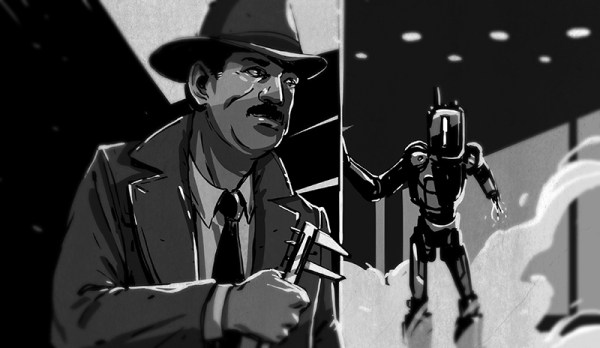
Dr Noirimetla, Private Failure Investigator And The Mystery Of Galileo’s Pillars

One dark and stormy morning, Dr. Richard Noirimetla, private failure investigator, was sitting at his desk nursing his morning cup of joe. It was an addiction, but life, and engineering was hard. Intense eyes sat in a round dark-skinned face. An engineering degree from the prestigious Indian Institute of Technology hung from the wall in his sparse office. Lightning flashed outside of his window, as the rain began to beat even harder against his corner office windows.

His phone rang.

“Hello, Dr. Noirimetla, Private Failure Investigator here.” He said in deep, polite voice. “How may I help you?”

“Ah, I’m Chief of Manufacturing for Galileo Concrete Pillars Inc. We have a bit of a problem here. We used to see a failure rate above 33% for our concrete pillar operation. As part of our lean manufacturing efforts we tried to reduce that number through various improvements. However, we see a failure rate of almost 50% now. We expect foul play… from one of our suppliers. Can you come right away?” a worried man’s voice sounded over the phone.

“I see, that’s very troubling,” Noirimetla rumbled. “I’ll send over the contract detail. There will be an increased fee, but I’m on my way.”

“Sounds good, we’ll pay anything! Just get our operation up to standards!” The man bid a polite goodbye and hung up.
Continue reading “Dr Noirimetla, Private Failure Investigator And The Mystery Of Galileo’s Pillars” →

Citizen Scientist: Hedy Lamarr

For all the destruction and human misery unleashed during World War II, it was also a time of incredible creativity and ingenuity. In America, it was a time when everyone wanted to pitch in. Young men and women enlisted and were shipped overseas, and those left behind kept the factories running full tilt. Even Hollywood went to war, with its steady output of films that gave people a little glamour and provided an escape from the horror and loss of the war. Hollywood stars lined up to entertain troops and raise money for the war effort, and many joined up and fought too.

But one Hollywood star made an unconventional contribution to the war effort, and in the process proved that beauty and brains are not always mutually exclusive. This is the story of Hedy Lamarr, movie star and inventor.

“The Most Beautiful Woman in the World”

By the time she was 23 in 1937, Hedwig Eva Maria Kiesler was a genuine film star in her native Austria. She was also trapped in an unhappy marriage to a rich and powerful Austrian munitions magnate, Fritz Mandl. Hedy was miserable as a trophy wife, adorning the dining room as her husband entertained rich and powerful guests – including Mussolini and Hitler – over long dinners in one of his mansions. They dismissed her; clearly a woman so beautiful could have nothing else to offer, an empty head perched on a graceful neck. But she was far from stupid, and while her husband discussed business with the men who were building the Axis arsenal, Hedy listened and learned.

Continue reading “Citizen Scientist: Hedy Lamarr” →

Teeny Tiny Very Small – Atomic Resolution And The Home Hobbyist

Atoms are small. Really small. You just won’t believe how minusculely microscopically mindbogglingly small they are. I mean you may think it’s a short way down the road to the chemist’s, but that’s just peanuts to atoms.

Atoms really are small. The atomic radius of a carbon atom is on the order of 0.1 nanometers, that’s 0.0000001 millimeters. It’s hard to grasp how fantastically small this is compared to objects we generally encounter, but as a starting point I’d recommend looking at the “Powers of Ten” video found below whose ability to convey the concept has been unrivaled since it was published in 1977.

The term nanometer might be most familiar from the semiconductor industry, and its seemingly unstoppable march to smaller feature sizes. Feature sizes currently hover somewhere around the 10 nanometer mark. So while these multi-billion dollar facilities can achieve 10nm precision it’s somewhat surprising that sub-nanometer feature size positioning, and fabrication techniques are available at relatively low cost to the hacker hobbyist.

In this article we’re going to review some of the amazing work demonstrated by hobbyists in the area of the very very small through use of cutting edge, but low cost techniques.

Continue reading “Teeny Tiny Very Small – Atomic Resolution And The Home Hobbyist” →

Navigating The Oceans Is Deadly Without A Clock

I came across an interesting question this weekend: how do you establish your East/West location on the globe without modern technology? The answer depends on what you mean by “modern”, it turns out you only have to go back about three centuries to find there was no reliable way. The technology that changed that was a clock; a very special one that kept accurate time despite changing atmospheric conditions and motion. The invention of the Harrison H1 revolutionized maritime travel.

We can thank Andy Weir for getting me onto this topic. I just finished his amazing novel The Martian and I can confirm that George Graves’ opinion of the high quality of that novel is spot on. For the most part, Andy lines up challenges that Mark Watney faces and then engineers a solution around them. But when it came to plotting location on the surface of Mars he made just a passing reference to the need to have accurate clocks to determine longitude. I had always assumed that a sextant was all you needed. But unless you have a known landmark to sight from this will only establish your latitude (North/South position).

Continue reading “Navigating The Oceans Is Deadly Without A Clock” →

Ethics In Engineering: Volkswagen’s Diesel Fiasco

Every so often – and usually not under the best of circumstance – the field of engineering as a whole is presented with a teaching moment. Volkswagen is currently embroiled in a huge scandal involving emissions testing of 11 Million diesel cars sold in recent years. It’s a problem that could cost VW dearly, to the tune of eighteen Billion dollars in the US alone, and will, without a doubt, end the careers of more than a few Volkswagen employees. In terms of automotive scandals, this is bigger than Unsafe at Any Speed. This is a bigger scandal than the Ford Pinto’s proclivity to explode. This is engineering history in the making, and an enormously teachable moment for ethics in engineering.

Continue reading “Ethics In Engineering: Volkswagen’s Diesel Fiasco” →

This Is What A Real Bomb Looks Like

In 1980, Lake Tahoe, Nevada was a popular tourist spot. The area offered skiing, sailing, hiking in the mountains, and of course, gambling on the Nevada side of the lake. It was in this somewhat unlikely place where the authorities found the largest improvised bomb seen to that date in the USA.

Harvey’s casino was opened by former butcher Harvey Gross in 1944. In less than 20 years it grew to a 192 room, 11 story hotel casino. Thousands of people played Harvey’s slot machines and table games. Some were winners, but most were losers. John Birges was one of the latter. Formerly a successful landscaping company owner worth millions, he lost all of it to his gambling addiction.

Born in Hungary in 1922 as János Birges, John grew up in Budapest. When WWII hit, he flew an Me-109 for the Luftwaffe. He was arrested by the Gestapo for disobeying orders during the war, but was released. After the war, he again found himself in hot water – this time with the Russians. He was arrested in 1948 and charged with espionage. His sentence was 25 years of hard labor in the Gulag. The stories vary, but most agree that Birges was able to escape his work camp by detonating a bomb as a diversion.

In 1957 Birges and his wife Elizabeth immigrated to California. He changed his name from János to John to fit in. The couple had two sons, Johnny and Jimmy. John built up a successful landscaping business and bought a restaurant, working his way into the millionaires’ club. From the outside, they were the perfect example of the American dream.

Appearances can be deceiving. Behind closed doors, Birges was a right bastard to his family. He beat his wife and his children, even forcing them to kneel on gravel when they disobeyed him. Eventually, Johnny left home to escape his father’s fists. Elizabeth filed for divorce, and was later found dead under mysterious circumstances. Birges began gambling heavily, especially at Harvey’s Wagon Wheel casino in Lake Tahoe. He eventually burned through his personal savings, as well as the income from his businesses. The once millionaire was now penniless, but he had a plan. Just as a bomb had helped him escape the Gulag, he’d use a bomb to extort his money back from Harvey’s.

Continue reading “This Is What A Real Bomb Looks Like” →