Clipper Windpower: Solutions In Search Of Problems

The first modern wind turbines designed for bulk electricity generation came online gradually throughout the 80s and early 90s. By today’s standards these turbines are barely recognizable. They were small, had low power ratings often in the range of tens to hundreds of kilowatts, and had tiny blades that had to rotate extremely quickly.

When comparing one of these tiny machines next to a modern turbine with a power rating of 10 or more megawatts with blades with lengths on the order of a hundred meters, one might wonder if there is anything in common at all. In fact, plenty of turbines across the decades share fundamental similarities including a three-blade design, a fairly simple gearbox, and a single electric generator. While more modern turbines are increasingly using direct-drive systems that eliminate the need for a gearbox and the maintenance associated with them, in the early 2000s an American wind turbine manufacturer named Clipper Windpower went in the opposite direction, manufacturing wind turbines with an elaborate, expensive, and heavy gearbox that supported four generators in each turbine. This ended up sealing the company’s fate only a few years after the turbines were delivered to wind farms.

Some history: the largest terrestrial wind turbines were approaching the neighborhood of 2 megawatts, but some manufacturers were getting to these milestones essentially by slapping on larger blades and generators to existing designs rather than re-designing their turbines from the ground up to host these larger components. This was leading to diminishing returns, as well as an increased amount of mechanical issues in the turbines themselves, and it was only a matter of time before the existing designs wouldn’t support this trend further. Besides increased weight and other mechanical stresses on the structure itself, another major concern was finding (and paying for) cranes with enough capacity to hoist these larger components to ever-increasing heights, especially in the remote locations that wind farms are typically located. And cranes aren’t needed just for construction; they are also used whenever a large component like a generator or blade needs to be repaired or replaced. Continue reading “Clipper Windpower: Solutions In Search Of Problems”

Ask Hackaday: What’s The Deal With Humanoid Robots?

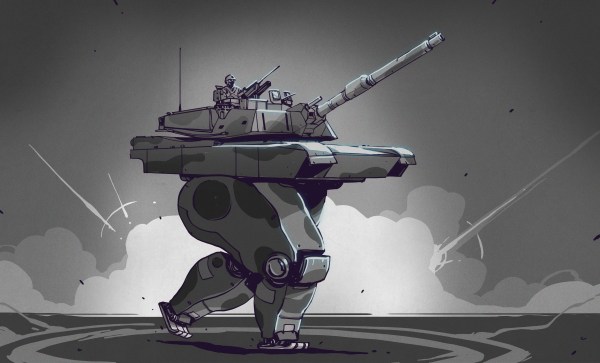
When the term ‘robot’ gets tossed around, our minds usually race to the image of a humanoid machine. These robots are a fixture in pop culture, and often held up as some sort of ideal form.

Yet, one might ask, why the fixation? While we are naturally obsessed with recreating robots in our own image, are these bipedal machines the perfect solution we imagine them to be?

Continue reading “Ask Hackaday: What’s The Deal With Humanoid Robots?”

How To Survive A Wet Bulb Event

Territories across the northern hemisphere are suffering through record-breaking heatwaves this summer. Climate scientists are publishing graphs with red lines jagging dangerously upwards as unprecedented numbers pour in. Residents of the southern hemisphere watch on, wondering what the coming hot season will bring.

2023 is hinting at a very real climate change that we can’t ignore. As the mercury rises to new heights, it’s time to educate yourself on the very real dangers of a wet bulb event. Scientists predict that these deadly weather conditions could soon strike in the hottest parts of the world. What you learn here could end up saving your life one day.

Hot Bodies

The body has methods of maintaining a set temperature. Credit: Wikimedia Commons, CNX OpenStax, CC BY-SA 4.0

To understand the danger of a wet bulb event, we must first understand how our bodies work. The human body likes to maintain its  temperature at approximately 37 °C (98.6 °F). That temperature can drift slightly, and the body itself will sometimes move its temperature setpoint higher to tackle infection, for example. The body is a delicate thing, however, and a body temperature above 40 °C (104 °F) can become life threatening. Seizures, organ failures, and unconsciousness are common symptoms of an overheating human. Death is a near-certainty if the body’s temperature reaches 44 °C (112 °F), though in one rare case, a patient in a coma survived a body temperature of 46.5 °C (115.7 °F).

Thankfully, the body has a host of automated systems for maintaining its temperature at its chosen set point. Blood flow can be controlled across the body, and we instinctively seek to shed clothes in the heat and cover ourselves in the cold. However, the bare naked fact is that one system is most crucial to our body’s ability to cool itself. The perspiration system is vital, as it uses sweat to cool our body via evaporation. Water is a hugely effective coolant in this way, with beads of sweat soaking up huge amounts of heat from our skin as they make the phase change from liquid to vapor.

Continue reading “How To Survive A Wet Bulb Event”

ChatGPT, The Worst Summer Intern Ever

Back when I used to work in the pharma industry, I had the opportunity to hire summer interns. This was a long time ago, long enough that the fresh-faced college students who applied for the gig are probably now creeping up to retirement age. The idea, as I understood it, was to get someone to help me with my project, which at the time was standing up a distributed data capture system with a large number of nodes all running custom software that I wrote, reporting back to a central server running more of my code. It was more work than I could manage on my own, so management thought they’d take mercy on me and get me some help.

The experience didn’t turn out quite like I expected. The interns were both great kids, very smart, and I learned a lot from them. But two months is a very tight timeframe, and getting them up to speed took up most of that time. Add in the fact that they were expected to do a presentation on their specific project at the end of the summer, and the whole thing ended up being a lot more work for me than if I had just done the whole project myself.

I thought about my brief experience with interns recently with a project I needed a little help on. It’s nothing that hiring anyone would make sense to do, but still, having someone to outsource specific jobs to would be a blessing, especially now that it’s summer and there’s so much else to do. But this is the future, and the expertise and the combined wisdom of the Internet are but a few keystrokes away, right? Well, maybe, but as you’ll see, even the power of large language models has its limit, and trying to loop ChatGPT in as a low-effort summer intern leaves a lot to be desired.

Continue reading “ChatGPT, The Worst Summer Intern Ever”

Smart Assistants Need To Get Smarter

Science fiction has regularly portrayed smart computer assistants in a fanciful way. HAL from 2001: A Space Odyssey and J.A.R.V.I.S. from the contemporary Iron Man films are both great examples. They’re erudite, wise, and capable of doing just about any reasonable task that is asked of them, short of opening the pod bay doors.

Cut back to reality, and you’ll only be disappointed at how useless most voice assistants are. It’s been twelve long years since Siri burst onto the scene, with Alexa and Google Assistant following years later. Despite years on the market, their capabilities remain limited and uninspiring. It’s time for voice assistants to level up.

Continue reading “Smart Assistants Need To Get Smarter”

Crab Shells Massively Improve Zinc-Ion Batteries

In the fast-moving world of battery research, scientists are constantly on the lookout for innovative materials with the right properties to help improve energy storage. Meanwhile, batteries are in greater demand than ever as production of EVs and renewable energy projects ramp up to new heights.

In the hunt for new and better battery materials, scientists found an unexpected hero: crab shells.Researchers at the University of Maryland have uncovered a remarkable breakthrough by exploring their use in battery production.

Continue reading “Crab Shells Massively Improve Zinc-Ion Batteries”

Keeping Thermal Plants Cool Without Breaking The Cooling Water Budget

Steam generators in thermal (steam-cycle) power plants require a constant influx of cool water to maximize the transfer of thermal energy. How this water is cooled again in the condensor after much of the steam’s thermal energy has been spent in the steam turbines or heat exchangers is a very important consideration in the design and construction of these plants. The most obvious and straightforward system is direct “once-through” cooling, where the water is drawn straight from a nearby river or other body of water and released after passing through the condenser. This type of system is by far the cheapest, but is also impacted by both the seasons and environmental considerations.

Where cool surface water is less abundantly available, evaporative cooling in a recirculating system such as with spray ponds and cooling towers is a good alternative. Although slightly more costly, a big benefit of these is that they require far less water and have much more control over the intake water temperature, which can raise plant efficiency. Finally, dry cooling is essentially a closed-loop system, which is exceedingly useful in areas where water is scarce. This latter type of cooling is what allows thermal plants to operate even in desert regions.

As the global climate changes – with more extreme weather events – picking the right cooling solution is more important than ever, and has us looking at retrofitting existing thermal plants with more efficient solutions. If you were ever curious how power plants keep the cool side cool, read on!

Continue reading “Keeping Thermal Plants Cool Without Breaking The Cooling Water Budget”