In the movies, everything is modular. Some big gun fell off the spaceship when it crashed? Good thing you can just pick it up and fire it as-is (looking at you, Guardians of the Galaxy 2). Hyperdrive dead? No problem, because in the Star Wars universe you can just drop a new one in and be on your way.
Of course, things just aren’t that simple in the real world. Most systems, be they spaceships or cell phones, are enormously complicated and contain hundreds or thousands of interconnected parts. If the camera in my Samsung phone breaks, I can’t exactly steal the one from my girlfriend’s iPhone. They’re simply not interchangeable because the systems were designed differently. Even if we had the same phone and the cameras were interchangeable, they wouldn’t be easy to swap. We’d have to crack open the phones and carefully perform the switch. Speaking of switches, the Nintendo Switch is a good counterexample here. Joycon break? Just buy a new one and pop it on.
What if more products were like the Nintendo Switch? Is its modularity just the tip of the iceberg?
If you’ve got 10 minutes, how about a quick break to watch a video about renewable clean electric power? Must be a recent video, right? Nope. The Coronet Instruction Film below is from 1948 and covers using rivers to generate power. Hydropower isn’t a new idea, of course, and the film starts out with an old-fashioned water wheel. That’s not really what they are driving at, though.
The announcer sounds just like the guy who narrated all the film strips you saw in school. There are some good vintage shots of Niagra Falls and some other dams. The video also makes some economic arguments about hydroelectric versus coal and why some rivers aren’t suitable for power generation.
If there’s one thing humans hate, it’s exercising willpower. Whether its abstaining from unhealthy foods, going to bed early, or using less energy and reducing greenhouse gas emissions, we’re famously bad at it. Conversely, if there’s one thing humans love, it’s a workaround. Something that lets us live our lives as the carefree hedonists we are, and deals with the sticky consequences so we don’t have to.
A story that passed almost unnoticed was that the Coca-Cola company plan to run a limited trial of paper bottles. Wait, paper for a pressurized beverage? The current incarnation still uses a plastic liner and cap but future development will focus on a “bio-based barrier” and a bio composite or paper cap tethered to the vessel.
Given that plastic pollution is now a major global concern this is interesting news, as plastic drinks bottles make a significant contribution to that problem. But it raises several questions, first of all why are we seemingly unable to recycle the bottles in the first place, and given that we have received our milk and juice in paper-based containers for decades why has it taken the soda industry so long?
Plastic soft drink bottles are made from Polyethylene terephthalate or PET, the same polyester polymer as the one used in Dacron or Terylene fabrics. They’re blow-moulded, which is to say that an injection-moulded preform something like a plastic test tube with a screw top fitting is expanded from inside in a mould by compressed gas. As anyone who has experimented with bottle rockets will tell you, they are immensely strong, and as well as being cheap to make and transport they are also readily recyclable when separated from their caps.
The other day, I saw this gigantic mutant strawberry on reddit that looked like it had either been growing in a radiation zone, hitting the gym regularly, or sprinkled with magic dust. I immediately felt more than mildly interested in this phenomenon, which is called fasciation.
As it turns out, fasciation is fairly rare occurrence that nonetheless occurs in a wide variety of vascular plants. These mutant strawberries may be a bit unnerving to look at, but they are totally safe to eat. The only problem is that you’re more likely to come across a fasciated dandelion or daisy out in the wild than a strawberry or pineapple at the grocery store because the so-called ugly produce tends to be weeded out.
Fasciation is essentially unregulated tissue growth that occurs when the apical meristem, better known as the growing tip of the plant strays from shooting upward in cylindrical fashion and instead splays out flat, resulting in ribbon-like plant stems, elongated or multiple flower heads, and semi-circular strawberries.
Although fasciation tends to present as a flattened main stem, the phenomenon can occur nearly anywhere in the plant — the root, stem, leaves, flower heads, or fruit. It can be localized to just one area, or it affect the entire plant.
Fasciation gets compared to cancer because it has a number of causes and ways of expression, but it’s not quite as harmful or scary. Some races of plants exhibit extreme expression of fasciation. While it’s not fatal, it’s also not ideal, because the condition can result in broken tissues, distorted organization, and a decrease in fertility.
Fasciation: How does it work?
One absolute unit of dandelion. Image via Wild Yorkshire
Fasciation has many causes both internal and external. Internally, it happens because of a hormonal imbalance in the growth cells, a bacterial or viral infection, or a random genetic mutation. There are also environmental causes, like chemical exposure, cold and frost exposure, or fungi, mite, and insect attacks.
The wonder of fasciation knows no geographical, climatic, ecological, or taxonomical bounds among vascular plants. It equally affects annuals, biennials, and perennials; woody and herbaceous plants; shrubs, trees, and vines. Although fasciation can occur in any vascular plant, it is quite common in the rose (includes strawberries), legume, sunflower, and cactus families, and is often found among dandelions and snapdragons.
Some vascular plants are prone to fasciation and prized for it, like the cockscomb (Celosia cristata) flower. A few fasciated flora have even become objects of reverence, like the Virgin Mary appearing on a slice of toast. There was once a fasciated pumpkin vine growing in South India. The twenty-foot-long fasciated portion drew huge crowds of people to worship it, believing the vine to be an incarnation of King Cobra or Naga Sarpa, messenger of the god Vishnu.
This spring, I’ll be looking high and low for abnormal dandelions and daisies. I’ve already started scouting the produce at the grocery store for giant strawberries and found these two in the same box. Won’t you join me? We’re probably more likely to find fasciated fruits or flowers than four-leaf clovers.
There’s a document I had to sign to wrap up a community responsibility in rural Oxfordshire. At the bottom, dotted lines for signature and date. My usual illegible scrawl for a signature, and scribble in the date below it. Then there’s the moment when the lady handling the form scans it with a puzzled face for a minute, before accepting it with a smile. She’s just been ISO’d!
I’m telling you, you’ve got Pi Day wrong. Evan Shelhamer, CC BY 2.0.
Where I come from in England, it’s the norm to represent dates in ascending order: day, month, year. Thus the 4th of March 2021 becomes 04/03/2021 when written down on a form. This is entirely logical, and makes complete sense given the way a date is said aloud in English and other languages.
Meanwhile in America it’s the norm to represent dates in a different manner: month, day, year. Thus March 4th, 2021 becomes 03/04/2021 when written down on a form. This is also entirely logical, and makes complete sense given the way dates are pronounced in American English.
As someone whose job entails crossing the Atlantic in linguistic terms, I am frequently confused and caught out by this amusing quirk of being divided by a common language. Is 03/04/2021 the 3rd of April or March 4th? “Why can’t Americans use a logical date format!” I cry as in a distant transatlantic echo I hear my friends over there bemoaning our annoying European ways. It’s doubtful that this divergence has caused any satellites to crash, but it sure can be annoying.
Confusing Everyone For Over Three Decades
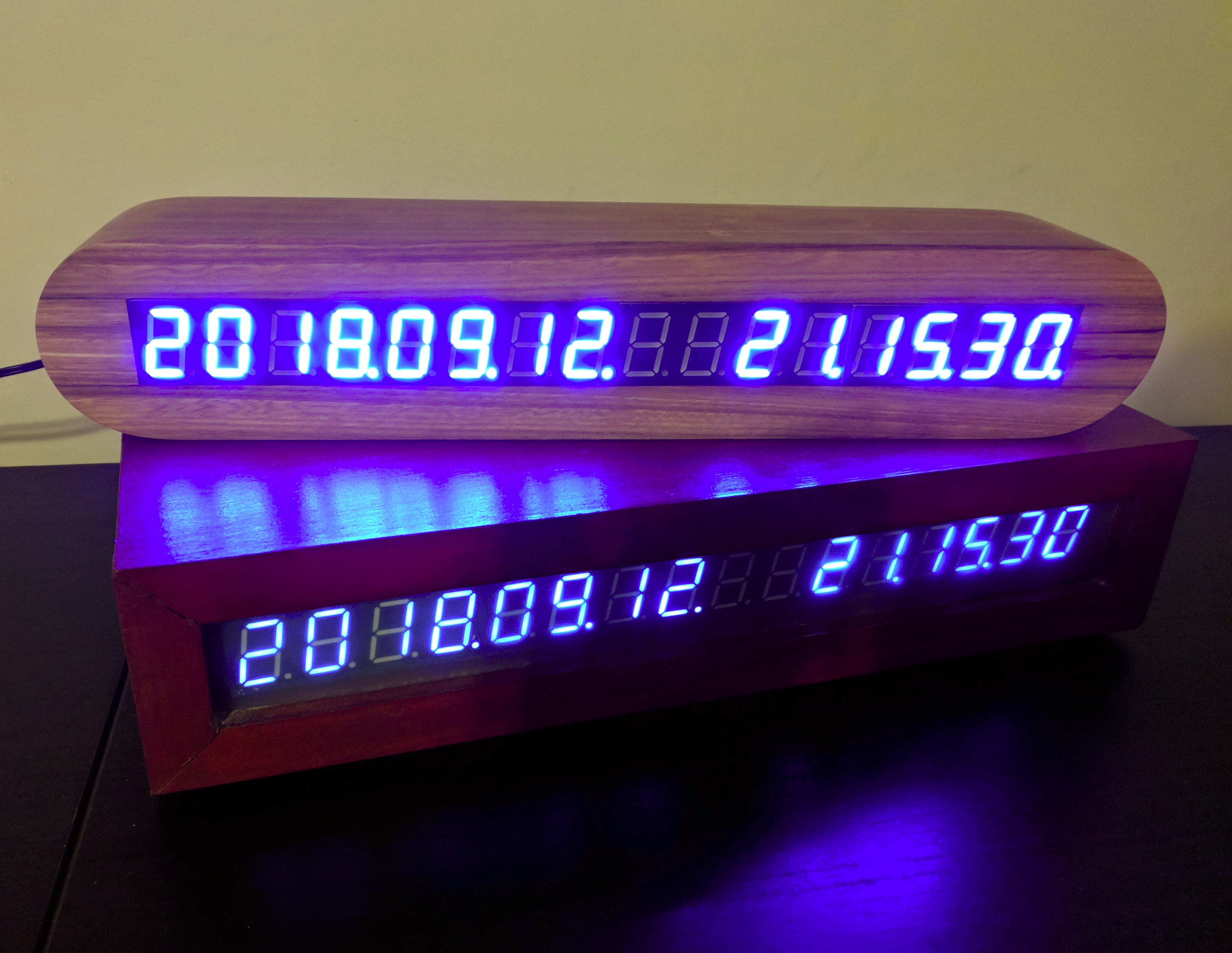
So I took a stand. A couple of decades ago I adopted ISO 8601 in writing dates, an international standard that’s been with us for well over three decades. It too is an entirely logical way to express time, but unlike the two mentioned earlier it’s not tied to any linguistic quirks. Instead it starts with the largest unit and expresses a date or time in descending order, and extends beyond dates into time. Thus the date on my form that caused the puzzlement was 2021-03-04. I’m guessing that here at Hackaday I’m preaching to the choir as I certainly won’t be the only one here using ISO 8601 in my daily life, but while we’re talking about alternative date formats within our community it’s an opportunity to take stock of the situation.
UNIX time is probably the most instantly recognisable of all our measurement schemes, being a count of seconds elapsed since the Unix epoch of 1970-01-01T00:00:00+00:00 UTC. Coincidentally this is also an auspicious date for many readers, as it’s our birthday. If I’d written the 4th of March on that form as 1614816000 though I would have been met with complete incomprehension, so aside from the occasional moment of coming together to observe a rollover it’s not something we use outside coding.
But it does lead neatly to another question: since UNIX time is most often expressed in text as a base-10 number, why on earth does our clock time work in base 60 for seconds, base 12 or 24 for hours, and then base 12 for months? Why don’t we use a base 10 metric time system?
It makes sense for our annual calendar and the length of our day to be derived from Earth’s orbit, as we use dates as a measure of season and times as a measure of the daily progress rather than simply elapsed periods. We owe our twelve-hour days and nights to the ancient Greeks and our 60 seconds and minutes to the ancient Babylonians, while our twelve months come from the ancient Romans. It’s clear that a 365.24-day year with four seasons doesn’t divide neatly into ten months, so we’re at the mercy of our own set of celestial bodies when talking about dates. But surely we could move on from ancient Greece and Babylon when it comes to the time of day?
Liberté, Égalité, Ponctualité!
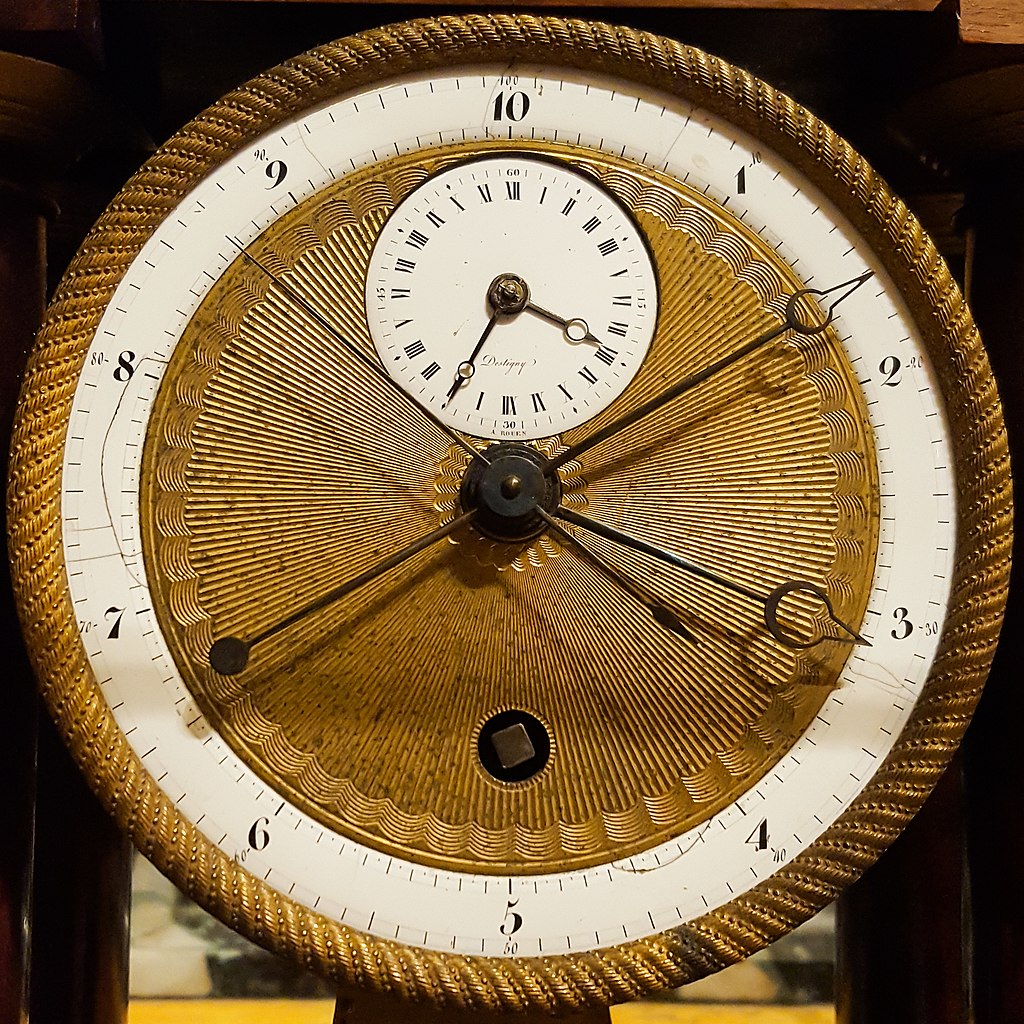
A 10-digit Revolutionary French clock. DeFacto, CC BY-SA 4.0
Probably the most famous attempt at a decimal calendar came in the aftermath of the French Revolution; the French Republican calendar perhaps wisely stuck with twelve months but made each of them of three 10-day weeks, and then split the day by 10 hours, with each further subdivision being by base 10. The months each had 30 days, with the remaining 5 days (or 6 in leap years) being public holidays.
It came to an official end when the revolutionary government that had introduced it was replaced by that of Napoleon. Unlike other French Republican measurements such as the meter, it evidently didn’t provide enough advantage for its popularity to outlive its political origins.
There’s an interesting parallel in the decimalisation of British currency in 1971. Previously, a pound was 20 shillings, each of which were 12 pence. Afterwards, a pound became 100 new pence, and that’s stuck. Despite some people’s lingering nostalgia for the old system, the utility of decimialisation was self-evident.
The moral of the French time-decimalization story was that people simply use a calendar and time system to tell the date and time. When you need to do frequent arithmetic, as is the case with currency, distance, or weights, this is made significantly easier through decimals. But when nature hands you four seasons, you’re pressed into twelve months. Perhaps when we slip the bonds of Earth, we’ll use decimal Stardates, but in the mean-time, ISO might just be the way to go.
Whether gasoline, diesel, or electric, automakers work hard to wring every last drop of mileage out of their vehicles. Much of this effort goes towards optimising aerodynamics. The reduction of drag is a major focus for engineers working on the latest high-efficiency models, and has spawned a multitude of innovative designs over the years. We’ll take a look at why reducing drag is so important, and at some of the unique vehicles that have been spawned from these streamlining efforts.