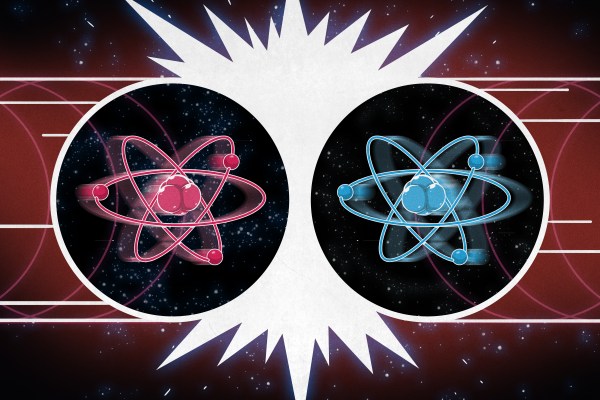
When it comes to building particle accelerators the credo has always been “bigger, badder, better”. While the Large Hadron Collider (LHC) with its 27 km circumference and €7.5 billion budget is still the largest and most expensive scientific instrument ever built, it’s physics program is slowly coming to an end. In 2027, it will receive the last major upgrade, dubbed the High-Luminosity LHC, which is expected to complete operations in 2038. This may seem like a long time ahead but the scientific community is already thinking about what comes next.
Recently, CERN released an update of the future European strategy for particle physics which includes the feasibility study for a 100 km large Future Circular Collider (FCC). Let’s take a short break and look back into the history of “atom smashers” and the scientific progress they brought along. Continue reading “Smashing The Atom: A Brief History Of Particle Accelerators”→
If you’ve logged onto GitHub recently and you’re an active user, you might have noticed a new badge on your profile: “Arctic Code Vault Contributor”. Sounds pretty awesome right? But whose code got archived in this vault, how is it being stored, and what’s the point?
Pistons being lasered into existence. Image via The Drive
These pistons are printed from high-purity aluminium alloy powder that was developed by German auto parts manufacturer Mahle. Porsche is having these produced by Mahle in partnership with industrial machine maker Trumpf using the laser metal fusion (LMF) process. It’s a lot like selective laser sintering (SLS), but with metal powder instead of plastic.
The machine dusts the print bed with a layer of powder, and then a laser melts the powder according to the CAD file, hardening it into shape. This process repeats one layer at a time, and supports are zapped together wherever necessary. When the print job is finished, the pistons are machined into their shiny final form and thoroughly tested, just like their cast metal cousins have been for decades. Continue reading “Porsche’s Printed Pistons Are Powerful And Precise”→
The jet engine has a long and storied history. Its development occurred spontaneously amongst several unrelated groups in the early 20th Century. Frank Whittle submitted a UK patent on a design in 1930, while Hans von Ohain begun exploring the field in Germany in 1935. Leading on from Ohain’s work, the first flight of a jet-powered aircraft was in August 27, 1939. By the end of World War II, a smattering of military jet aircraft had entered service, and the propeller was on the way out as far as high performance aviation is concerned.
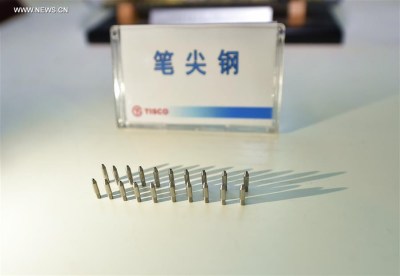
China’s development of ballpoint pen tips was a national news story in 2017. Source: Xinhua
In the age of the Internet and open source, technology moves swiftly around the world. In the consumer space, companies are eager to sell their product to as many customers as possible, shipping their latest wares worldwide lest their competitors do so first. In the case of products more reliant on infrastructure, we see a slower roll out. Hydrogen-powered cars are only available in select regions, while services like media streaming can take time to solve legal issues around rights to exhibit material in different countries. In these cases, we often see a lag of 5-10 years at most, assuming the technology survives to maturity.
In most cases, if there’s a market for a technology, there’ll be someone standing in line to sell it. However, some can prove more tricky than others. The ballpoint pen is one example of a technology that most of us would consider quaint to the point of mediocrity. However, despite producing over 80% of the world’s ballpoint pens, China was unable to produce the entire pen domestically. Chinese manufactured ballpoint tips performed poorly, with scratchy writing as the result. This attracted the notice of government officials, which resulted in a push to improve the indigenous ballpoint technology. In 2017, they succeeded, producing high-quality ballpoint pens for the first time.
The secrets to creating just the right steel, and manipulating it into a smooth rolling ball just right for writing, were complex and manifold. The Japanese, German, and Swiss companies that supplied China with ballpoint tips made a healthy profit from the trade. Sharing the inside knowledge on how it’s done would only seek to destroy their own business. Thus, China had to go it alone, taking 5 years to solve the problem.
There was little drive for pen manufacturers to improve their product; the Chinese consumer was more focused on price than quality. Once the government made it a point of national pride, things shifted. For jet engines, however, it’s somewhat of a different story.
In the streaming era, music is accessed from a variety of online services, ephemeral in nature and never living on board the device. However, the online audio revolution really kicked off with the development of one very special format. The subject of bitter raps and groundbreaking lawsuits, this development from Germany transformed the music industry as we know it. Twenty-five years on from the date the famous “.mp3” filename was chosen, we take a look back at how it came to be, and why it took over the world.
When you think of renewable energy, what comes to mind? We’d venture to guess that wind and solar are probably near the top of the list. And yes, wind and solar are great as long as the winds are favorable and the sun is shining. But what about all those short and bleak winter days? Rainy days? Night time?
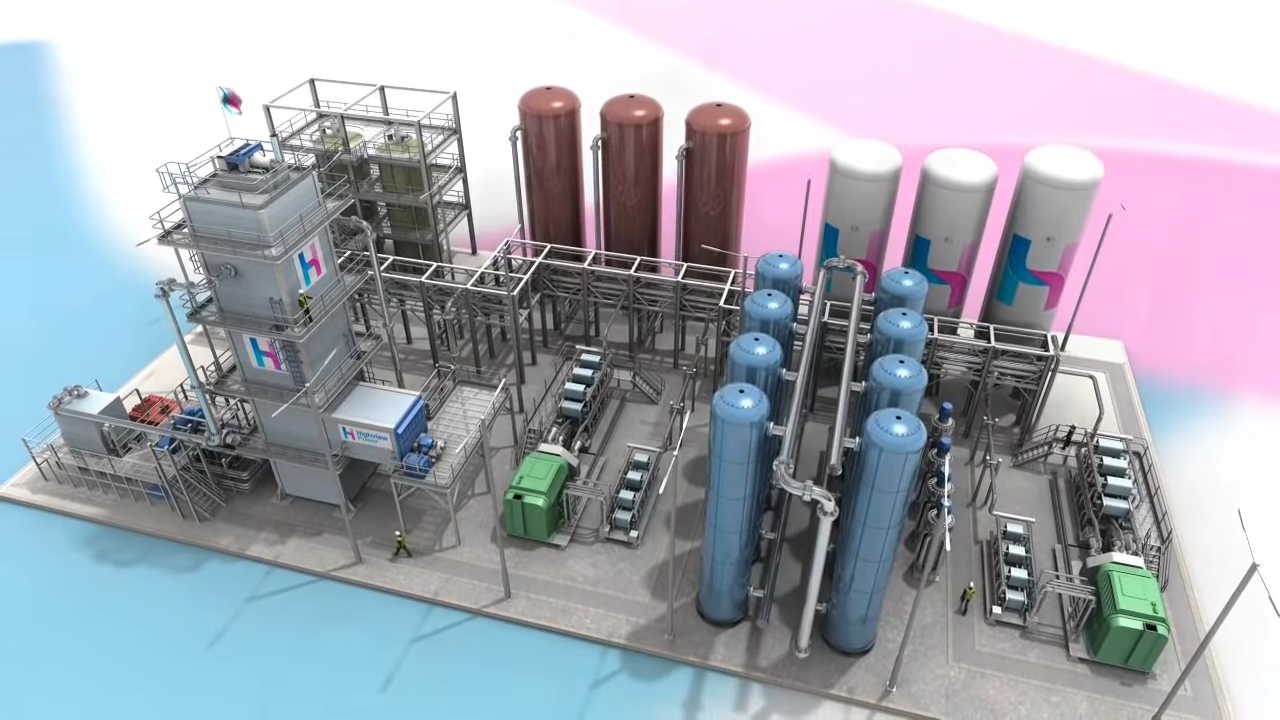
Render of a Highview LAES plant. The air is cleaned, liquefied in the tower, and stored in the white tanks. The blue tanks hold waste cold which is reused in the liquefaction process. Image via Highview Power
Unfavorable conditions mean that storage is an important part of any viable solution that uses renewable energy. Either the energy itself has to be stored, or else the means to produce the energy on demand must be stored.
One possible answer has been right under our noses all along — air. Regular old ambient air can be cooled and compressed into a liquid, stored in tanks, and then reheated to its gaseous state to do work.
This technology is called Cryogenic Energy Storage (CES) or Liquid Air Energy storage (LAES). It’s a fairly new energy scheme that was first developed a decade ago by UK inventor Peter Dearman as a car engine. More recently, the technology has been re-imagined as power grid storage.
UK utility Highview Power have adopted the technology and are putting it to the test all over the world. They have just begun construction on the world’s largest liquid air battery plant, which will use off-peak energy to charge an ambient air liquifier, and then store the liquid air, re-gasifying it as needed to generate power via a turbine. The turbine will only be used to generate electricity during peak usage. By itself, the LAES process is not terribly efficient, but the system offsets this by capturing waste heat and cold from the process and reusing it. The biggest upside is that the only exhaust is plain, breathable air.
If you were to travel back in time to the turn of the previous century and try to convince the average person that the grains of sand on just about any beach would be the basis of an industry worth hundreds of billions of dollars within 100 years, they’d probably have thought you were crazy. Aside from being coarse, rough, and irritating, sand is everywhere, and convincing anyone of its value would be a hard sell, unless your interlocutor was a real estate visionary with an appreciation of the future value of seaside property and a lot of patience.
Fast forward to our time, and we all know the value of the material that comes from common quartz sand: silicon, specifically the ultra-purified crystals of silicon that end up as the wafers we depend on to build the circuitry of life. The trip from beach to chip foundry is a long and non-obvious one which would not have been possible without the insights of an undistinguished Polish student and one-time druggist who discovered the process that made the Information Age possible: Jan Czochralski.