Raspberry Pi Pico W Adds Wireless

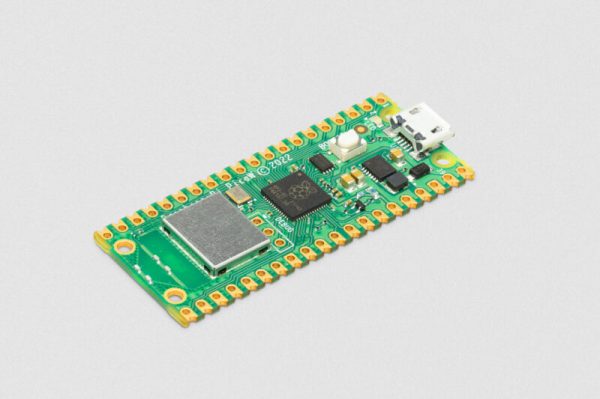
News just in from the folks at Raspberry Pi: the newest version of their Pico has WiFi and is called, obviously, the Pico W. We were going to get our hands on a sample unit and kick its tires, but it’s stuck in customs. Boo! So until it shows up, here’s what we can glean from the press releases and documentation.

The Pico is, of course, the Raspberry Pi microcontroller dev board based on their RP2040 microcontroller. This in turn has two Cortex M0+ cores and a good chunk of onboard RAM, which has made it a popular target for MicroPython. They had some extra real estate on the PCB, so they’ve added an Infineon CYW43439 WiFi chip, and voila: Pico W.

As of now, the WiFi is supported in both the C SDK and the pre-baked MicroPython image. It looks trivially easy to get it working, and it’s based on the time-tested lwIP stack, a classic in the embedded world. The CYW43439 is also Bluetooth capable, but there’s no firmware support for that yet, but we wouldn’t be surprised if it showed up soon.

The price? $6 for the whole shooting match. You can view this two ways: a small $2 premium over the old Pico, or a price increase of 50%. How you see things probably depends on your order quantity. Either way, it’s firmly in the ESP32 module price range, so you’ve got some comparison shopping to do if your project needs a microcontroller and WiFi. And in these days of silicon shortages, it’s nice to have a couple of options.

Bare-Metal STM32: Adding An Analog Touch With ADCs

An Analogue to Digital Converter (ADC) is at its core a straight-forward device: by measuring an analog voltage within a set range and converting the measured level to a digital value we can use this measurement value in our code. Through the use of embedded ADCs in microcontrollers we can address many essential use cases, ranging from measuring the setting on a potentiometer, to reading an analog output line on sensors, including the MCU’s internal temperature and voltage sensors.

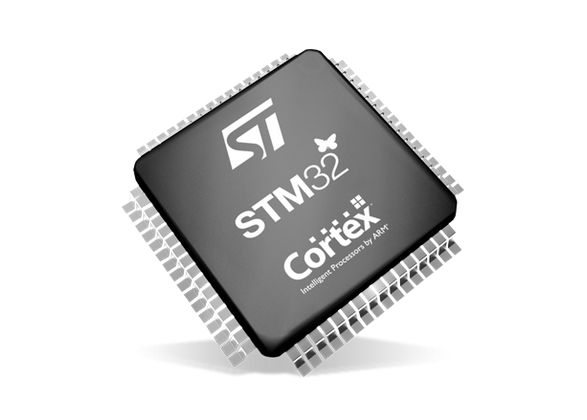
The ADCs found in STM32 MCUs have a resolution between 12 to 16 bits, with the former being the most common type. An ADC can be configured to reduce this resolution, set a specific sampling speed, and set up a multi-mode configuration depending on the exact ADC peripheral. STM32 MCUs feature at least a single ADC peripheral, while some have multiple. In this article we will take a look at how to configure and use the basic features of the ADCs in STM32 MCUs, specifically the ADCs found in F0 and the ADC5_V1_1 type as found in most F3-family MCUs.

Continue reading “Bare-Metal STM32: Adding An Analog Touch With ADCs” →

3D Printed Cartilage Ushers In Ear-a Of Custom Body Parts

When it comes to repairing human bodies, there’s one major difficulty: spare parts are hard to come by. It’s simply not possible to buy a knee joint or a new lung off the shelf.

At best, doctors and surgeons have made do with transplants from donors where possible. However, these are always in short supply, and come with a risk of rejection by the patient’s body.

If we could 3D print new custom body par/ts to suit the individual, it would solve a lot of problems. A new ear implant pioneered by 3DBio Therapeutics has achieved just that.

Continue reading “3D Printed Cartilage Ushers In Ear-a Of Custom Body Parts” →

2022 Hackaday Prize: Reuse, Recycle, Revamp Finalists

The 2022 Hackaday Prize is focused on taking care of the planet. The theme of our second challenge round, “Reduce, Recycle, Revamp” is all about tailoring your projects to make use of existing resources and keeping material out of the landfill rather than contributing to it. Our judges have scrutinized the entries and handed me the sealed envelope. All of these ten projects will receive $500 right now and are eligible for the Grand Prize of $50,000, to be announced in November.

We were looking for two broad types of recycling projects in this round, either projects that incorporate a significant recycled component in their build, or projects that facilitate recycling themselves, and frankly we got a good mix of both!
Continue reading “2022 Hackaday Prize: Reuse, Recycle, Revamp Finalists” →

Lenses: From Fire Starters To Smart Phones And VR

In antiquity, we see examples of magnifying crystals formed into a biconvex shape as early as the 7th century BC. Whether the people of that period used them either for fire-starting purposes or vision is unclear. Still, it is famously said that Emperor Nero of Rome watched gladiator games through an emerald.

Needless to say, the views we get through modern lenses are a lot more realistic. So how did we get from simple magnifying systems to the complex lens systems we see today? We start with a quick journey through the history of the camera and the lens, and we’ll end up with the cutting edge in lens design for smartphone cameras and VR headsets.

Continue reading “Lenses: From Fire Starters To Smart Phones And VR” →

Teardown: KC Bearifone Could Talk Circles Around Teddy Ruxpin

At the risk of dating myself, I will tell you that grew up in the 80s — that decade of excess that was half drab and half brightly colored, depending on where you looked, and how much money you had for stuff like Memphis design. Technology seemed to move quickly in almost every aspect of life as the people of the Me decade demanded convenience, variety, and style in everything from their toilet paper (remember the colors?) to their telephones. Even though long distance cost a fortune back then, we were encouraged to ‘reach out and touch someone’.

A Healthy Fear of Bears

Looking back, it’s easy to see how all that advanced technology and excess filtered down to children. I may be biased, but the 80s were a pretty awesome time for toys, and for children’s entertainment in general. Not only were the toys mostly still well-made, even those that came in quarter machines — many of them were technologically amazing.

Take Teddy Ruxpin, which debuted in 1985. Teddy was the world’s first animatronic children’s toy, a bear that would read stories aloud from special cassette tapes, which moved his eyes and mouth along with the words. One track contained the audio, and the other controlled three servos in his face.

I remember watching the commercials and imagining Teddy suddenly switching from some boring bedtime story over to a rockin’ musical number a là the animatronic Rock-afire Explosion band at ShowBiz Pizza (a Chuck E. Cheese competitor). That’s the kind of night I wanted to be having.

The current lineup of the Rock-afire Explosion. Image via Servo Magazine

Although I went to ShowBiz a fair number of times to play Skee-Ball and stare at the Rock-afire Explosion animals and their cool set pieces, I never did have a Teddy Ruxpin. I remember being torn between wanting one and thinking they were kind of scary, which in turn made me a bit tangentially afraid of the Snuggle bear. When it came down to it, Teddy simply cost too much — $69.99 for the bear alone, and another $20 for a single cassette with storybook. And that’s 1985 dollars — according to my favorite inflation calculator, that’s $250 in today’s money for a talking bear and one lousy story.

Which brings us to KC Bearifone, an animatronic teddy bear telephone. Honestly, part of the reason I bought the Bearifone was some sort of false nostalgia for Teddy. The main reason is that I wanted to own a Teleconcepts unit of some kind, and this one seemed like the most fun to mess around with. A robot teddy bear that only does speakerphone? Yes, please.

Continue reading “Teardown: KC Bearifone Could Talk Circles Around Teddy Ruxpin” →

Hackaday Podcast 174: Breaking Into The Nest, The Cheapest 3D Printer, A Spy In Your HDMI, And AI All Over The Place

Fresh from vacation, Editor-in-Chief Elliot Williams makes his triumphant return to the Hackaday Podcast! He’s joined this week by Managing Editor Tom Nardi, who’s just happy he didn’t have to do the whole thing by himself again. In this episode we’ll talk about tackling BGA components in your custom PCBs, a particularly well executed hack against Google’s Nest Hub, and why you probably don’t really want the world’s cheapest 3D printer. We’ll also take a look at an incredible project to turn the Nokia 1680 into a Linux-powered handheld computer, a first of its kind HDMI firewall, and a robot that’s pretty good at making tacos. Listeners who are into artificial intelligence will be in for quite a treat as well, as is anyone who dreams of elevating the lowly automotive alternator to a more prominent position in the hacker world.

By the way, it seems nobody has figured out the hidden message in last week’s podcast yet. What are you waiting for? One of you out there has to be bored enough to give it a shot.

Direct download, and play it offline. You don’t need no stinkin’ cloud.

Check out the links below if you want to follow along, and as always, tell us what you think about this episode in the comments!

Continue reading “Hackaday Podcast 174: Breaking Into The Nest, The Cheapest 3D Printer, A Spy In Your HDMI, And AI All Over The Place” →