Wind Turbines And Ice: How They’re Tailored For Specific Climates

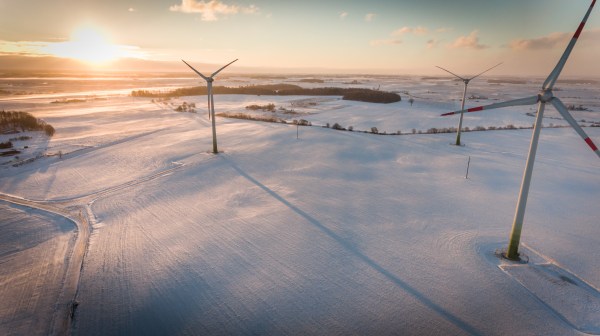
Wind turbines are incredible pieces of technology, able to harvest wind energy and deliver it to the power grid without carbon emissions. Their constant development since the first one came online in 1939 mean that the number of megawatts produced per turbine continues to rise as price per megawatt-hour of wind energy continues to fall. Additionally, they can operate in almost any climate to reliably generate energy almost anywhere in the world from Canada to the North Atlantic to parts beyond. While the cold snap that plowed through the American South recently might seem to contradict this fact, in reality the loss of wind power during this weather event is partially a result of tradeoffs made during the design of these specific wind farms (and, of course, the specifics of how Texas operates its power grid, but that’s outside the scope of this article) rather than a failure of the technology itself.
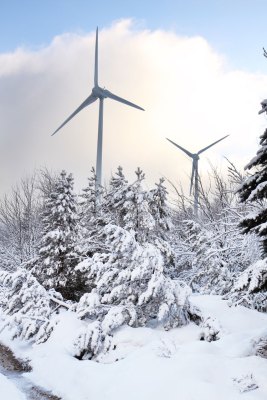
First, building wind turbines on the scale of megawatts isn’t a one-size-fits-all solution. Purchasing a large turbine from a company like GE, Siemens, or Vestas is a lot like buying a car. A make and model are selected first, and then options are selected for these base models. For example, low but consistent wind speeds demand a larger blade that will rotate at a lower speed whereas areas with higher average wind speeds may be able to get by with smaller and less expensive blades for the same amount of energy production. Another common option for turbines is cold weather packages, which include things like heaters for the control systems, hydraulics, and power electronics, additional insulation in certain areas, and de-icing solutions especially for the turbine blades.

In a location like Texas that rarely sees cold temperatures for very long, it’s understandable that the cold weather packages might be omitted to save money during construction (although some smaller heaters are often included in critical areas to reduce condensation or humidity) but also to save on maintenance as well: every part in a wind turbine has to be maintained. Continuing the car analogy, it’s comparable to someone purchasing a vehicle in a cold climate that didn’t come equipped with air conditioning to save money up front, but also to avoid repair costs when the air conditioning eventually breaks. However, there are other side effects beyond cost to be considered when installing equipment that’s designed to improve a turbine’s operation in cold weather.

Let’s dig into the specifics of how wind turbine equipment is selected for a given wind farm.

Continue reading “Wind Turbines And Ice: How They’re Tailored For Specific Climates”

This Week In Security: Mysterious Mac Malware, An Elegant VMware RCE, And A JSON Mess

There’s a new malware strain targeting MacOS, Silver Sparrow, and it’s unusual for a couple reasons. First, it’s one of the few pieces of malware that targets the new M1 ARM64 processors. Just a reminder, that is Apple’s new in-house silicon design. It’s unusual for a second reason — it’s not doing anything. More precisely, while researchers have been watching, the command and control infrastructure didn’t provide a payload. Silver Sparrow has been positively found on nearly 30,000 machines.

The malware also has an intentional kill switch, where the presence of a particular file triggers a complete removal of the malware package. Researchers at Red Canary point out that this package behaves very much like a legitimate program, difficult to pick out as malware. Ars Technica got an off-the-record statement from Apple, indicating that they are tracking the situation, and have revoked the developer’s certificate used to sign the malware. It’s not entirely clear whether this prevents the malware running on already compromised machines, or just stops new infections.

So who’s behind Silver Sparrow? The observed stealth mode and other complexities suggest that this is more than a simple adware or ransomware campaign. Since it was discovered before the payload was delivered, we may never know what the purpose is. It may have been a government created campaign, targeting something specific. Continue reading “This Week In Security: Mysterious Mac Malware, An Elegant VMware RCE, And A JSON Mess”

Should I Use Wheels Or Tracks?

When it comes to dominating offroad performance, many people’s first thought is of tracked vehicles. Bulldozers, tanks and excavators all use treads, and manage to get around in difficult terrain without breaking a sweat. Today, we’re exploring just what makes tracked vehicles so capable, as well as their weaknesses.

It’s All About Ground Pressure

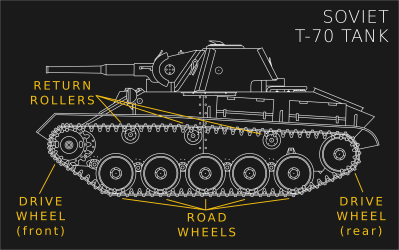
The various parts of a tank’s propulsion system.

Let’s first look at how tank tracks work. There are a huge variety of designs, with differences depending on application. Different trends have been followed over time, and designs for military use in combat differ from those used for low-speed construction machines, for example. But by looking at a basic tank track design, we can understand the basic theory. On tanks, the track or tread itself is usually made up of individual steel links that are connected together with hinges, though other machines may use rubber tracks instead. The tracks are wrapped around one or more drive wheels, often cogged, which directly pull on the track. On the bottom of the vehicle are the road wheels, which ride on top of the track where it lies on the ground.  The weight of the vehicle is carried through the road wheels and passed on to the tread, spreading out the load across a broader area. Outside of this, the track system may also have one or more idler wheels used to keep the track taught, as well as return rollers to guide the track back around without touching the road wheels.

Continue reading “Should I Use Wheels Or Tracks?”

Art of 3D printer in the middle of printing a Hackaday Jolly Wrencher logo

3D Printering: To Print Stainless, You Do Half The Work

Everyone wants to print using metal. It is possible, but the machines to do the work are usually quite expensive. So it caught our eye when MakerBot announced a printer — armed with an experimental extruder — that can print stainless steel parts. Then we read a bit more and realized that it can only sort of do the job. It needs a lot of help. And with some reasonable, if not trivial, modifications, your printer can probably print metal as well.

The key part of the system is BASF Ultrafuse 316L Stainless Steel filament, something that’s been around for a few years. This is a polymer with metal incorporated into it. This explains the special extruder, since metal-bearing filament is hell on typical 3D printer nozzles. However, what comes out isn’t really steel — not yet. For that, you have to send the part to a post-processing facility where it is baked at 1380 °C in a pure hydrogen atmosphere using special equipment. This debinding and sintering produces a part that the company claims can be up to 96% pure metal.

Continue reading “3D Printering: To Print Stainless, You Do Half The Work”

What If I Never Make Version Two?

When you make something, what does version one look like? What I mean is, how much thought do you put into the design? Do you try to make it look nice as you go along, or do you just build something that functions and say screw the presentation? Do you try to solve for everything upfront, or just plow through it and promise to fix your mistakes in version two? What if you never make version two?

No matter what you like to make, there’s a first time for everything. And it doesn’t seem to matter if you need the thing you’re making or just want to have it around: it’s a given that version one will probably be a bit rough around the edges. That’s just how it goes. Even if you’re well-versed in a skill, when you try a new type of project or a new pattern, it will be a new experience. For example, I’ve sewn a dozen different purses, but when I took on a new challenge I found I was only somewhat prepared to make my first backpack.

Great is the enemy of good, and perfection is the enemy of progress. Shooting for a pristine prototype on the first go steep and rocky path that never leads to finishing the build. So our goal here is to decide what makes rev1 good enough that we still love it, even if rev2 never happens.

Continue reading “What If I Never Make Version Two?”

Free RTOS

Real-Time OS Basics: Picking The Right RTOS When You Need One

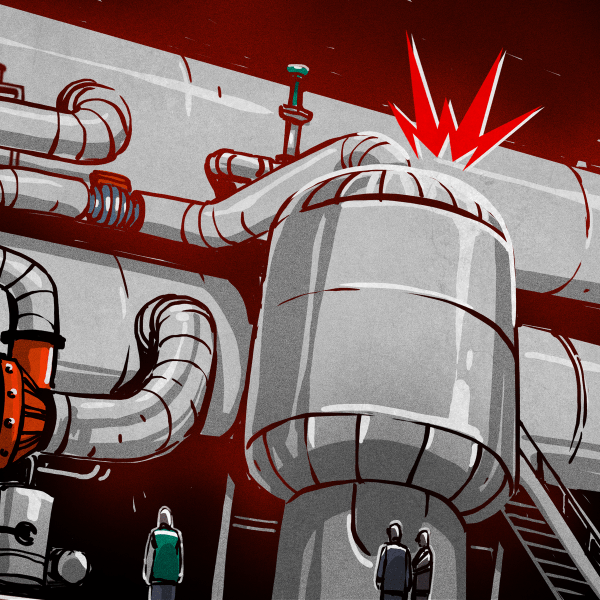
When do you need to use a real-time operating system (RTOS) for an embedded project? What does it bring to the table, and what are the costs? Fortunately there are strict technical definitions, which can also help one figure out whether an RTOS is the right choice for a project.

The “real-time” part of the name namely covers the basic premise of an RTOS: the guarantee that certain types of operations will complete within a predefined, deterministic time span. Within “real time” we find distinct categories: hard, firm, and soft real-time, with increasingly less severe penalties for missing the deadline. As an example of a hard real-time scenario, imagine a system where the embedded controller has to respond to incoming sensor data within a specific timespan. If the consequence of missing such a deadline will break downstream components of the system, figuratively or literally, the deadline is hard.

In comparison soft real-time would be the kind of operation where it would be great if the controller responded within this timespan, but if it takes a bit longer, it would be totally fine, too. Some operating systems are capable of hard real-time, whereas others are not. This is mostly a factor of their fundamental design, especially the scheduler.

In this article we’ll take a look at a variety of operating systems, to see where they fit into these definitions, and when you’d want to use them in a project. Continue reading “Real-Time OS Basics: Picking The Right RTOS When You Need One”

Increasing The Resolution Of The Electrical Grid

As a society in the USA and other parts of the world, we don’t give much thought to the twisting vines of civilization that entangle our skies and snake beneath our streets. The humming electrical lines on long poles that string our nations together are simply just there. Ever-present and immutable. We expect to flick the switch and power to come on. We only notice the electrical grid when something goes wrong and there is a seemingly myriad number of ways for things to go wrong. Lighting strikes, trees falling on lines, fires, or even too many people trying to crank on the A/C can all cause rolling blackouts. Or as we found out this month, cold weather can take down generation systems that have not been weatherized.

We often hear the electrical grid described as aging and strained. As we look to the future and at the ever-growing pressure on the infrastructure we take for granted, what does the future of the electrical grid look like? Can we move past blackouts and high voltage lines that criss-cross the country?

Continue reading “Increasing The Resolution Of The Electrical Grid”