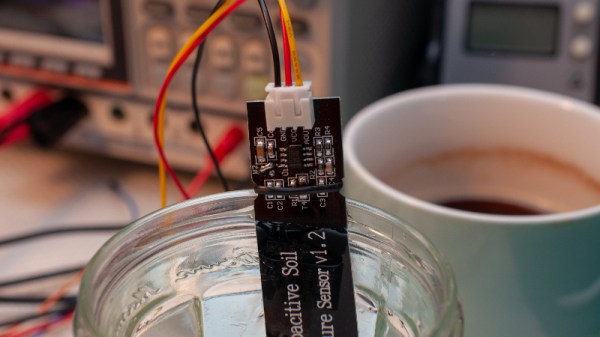
A frequent beginner project involves measuring soil moisture levels by measuring its resistance with a couple of electrodes. These electrodes are available ready-made as PCBs, but suffer badly from corrosion. Happily there is a solution in the form of capacitive sensor probes, and it is these that [Electrobob] is incorporating in to a home automation system. Unfortunately the commercial capacitive probes are designed to run from a 3.3 V supply and [Bob]’s project is using a pair of AA cells, so a quick hack was needed to enable them to be run from the lower voltage.
The explanation of the probe’s operation is an interesting part of the write-up, unexpectedly it uses a 555 configured as an astable oscillator. This feeds an RC low pass filter of which the capacitor is formed by the soil probe, which in turn feeds a rectifier to create a DC output. This can be measured to gain a reading of the soil moisture level.
The probe is fitted with a 3.3 V LDO regulator, which is simply bypassed. Measurements show its output to be linear, so if the supply voltage is also measured an accurate reading can be gleaned. These probes are still a slightly unknown quantity to many who might find a use for them, so it’s extremely useful to be given this insight into them.
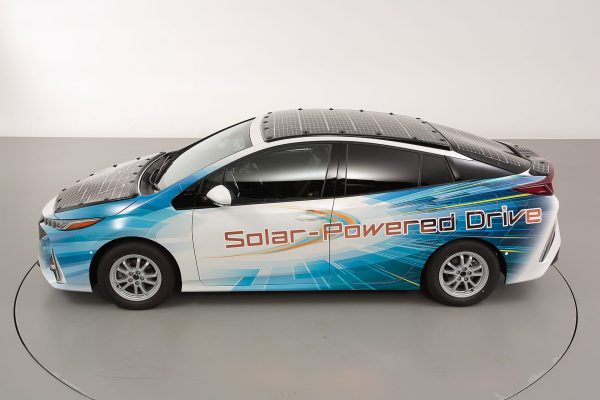
Who hasn’t thought of sticking a couple of solar panels onto an electric car’s roof to keep its battery at 100% charge while it’s parked out in the sun? While usually deemed impossible due to the large number and weight of PV solar cells required to get the necessary amount of energy, this hasn’t kept Toyota’s engineers from covering one of their Prius carswith 34+% efficient solar cells.
Some may remember the solar roof option which Toyota previously offered years ago. That system produced a mere 50 W and was only used for things like running the AC fans, indirectly extending the battery charge. In 2016 Toyota brought back this system, in a much improved version. This upped the power output to 180 W, allowing it to power all secondary electronics in the Prius, even allowing it to add a few extra kilometers (roughly 6.1 km/day) to the Prius’ range if one were so inclined.
This newest prototype pretty much goes for broke, reminding us of the cars used in the World Solar Challenge, such as the Dutch Stella and Stella Lux positive-energy solar cars by the team at the University of Eindhoven. Who coincidentally have done a spin-off, setting up a company to produce the Lightyear One, which at least on paper sounds amazing, and potentially may never have to plug it in.
At first glance, adding solar power to your project might seem easy. Get a photovoltaic panel, point it towards the big ball of burning gas in the sky, and off you go. But in reality, there’s a bit more to it than that. Especially when you’re trying to do something on a small scale. Without a rooftop full of panels pumping out power, you’ve got to take what you can get.
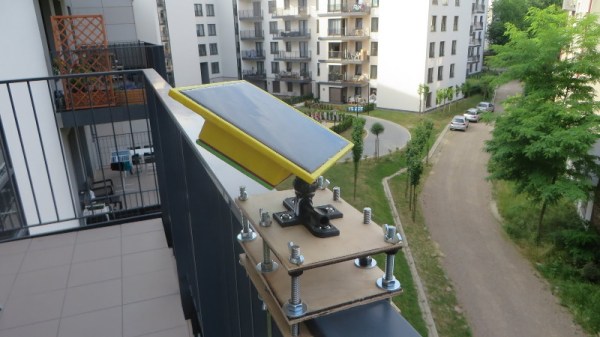
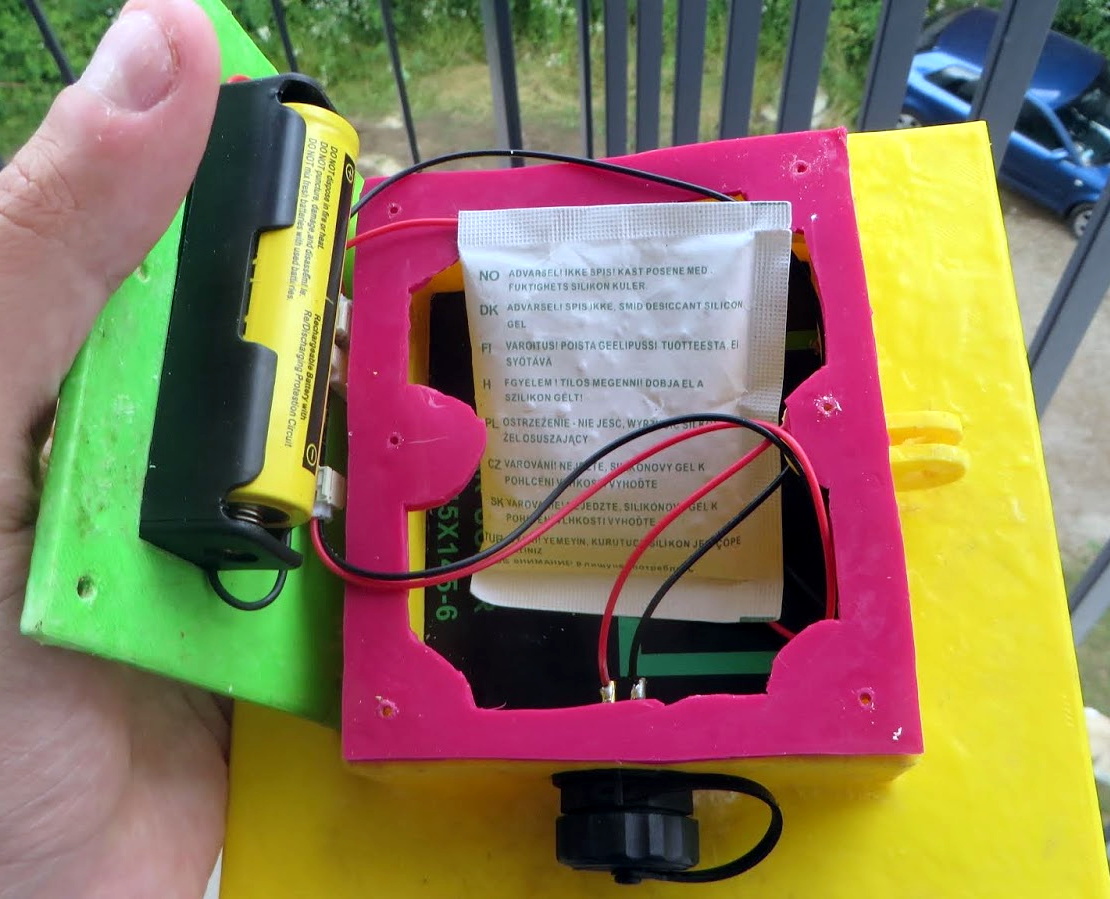
If you’re looking to power small electronic devices such as sensors with a single solar panel, [Vadim Panov] has put together a very concise write-up and video on building a low-cost solar harvester. It combines a relatively small photovoltaic panel, a charging circuit, and a battery for energy storage into a easily mountable package. He’s provided all the details necessary to create your own version, all you have to do now is come up with the application for it.
As far as the electronics go, this project is about as straightforward as it gets. The three watt panel is connected up to a simplistic charging circuit, which in turn feeds into a single 18650 cell. You might be wondering why a charge controller is even necessary in such a simple set up. One problem is that the output voltage of the panel is higher than that of the battery. You also need a blocking diode that will prevent the battery from discharging into the cell during the night or in cloudy conditions.
While the electronics might seem elementary to some readers, we think the 3D printed case alone is worth taking a look at. Not only has [Vadim] come up with a design that perfectly encloses the fragile solar panel and associated electronics, but in the video after the break, he also explains how the entire thing can be made waterproof with an epoxy coating. As 3D prints can have a tendency to be porous, this technique is definitely something you should file away mentally if you’ve been thinking of deploying a printed enclosure outdoors.
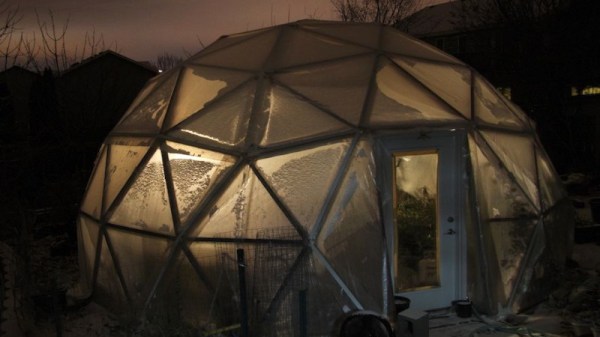
Greenhouses are a great way to improve conditions for your plants, and are an absolute necessity for any serious gardening in colder climates. When the time came for [gentleworks] to build a new greenhouse, rather than going with a conventional design, they decided to go with a geodesic dome instead.
The greenhouse uses a few techniques that will be unfamiliar to those used to run-of-the-mill carpentry. The individual cedar struts meet at a series of hubs, constructed out of short lengths of Schedule 80 PVC pipe. The struts are attached to the pipe with steel straps, screwed into place. This doesn’t give the strongest of holds, but as most of the loads on the struts are compressive in nature, it works well in practice. Plastic sheeting is used as a covering to help let in plenty of light while keeping the cold out. The greenhouse is also heated, and can maintain a 40 deg F temperature differential with 14,000 BTUs.
Like many mechanically inclined parents, [Tony Goacher] prefers building over buying. So when his son wanted an electric scooter, his first stop wasn’t to the toy store, but to AliExpress for a 48V hub motor kit. Little did he know that the journey to getting that scooter road-ready would be a bit more involved than he originally bargained for.
She cannae take anymore, Captain
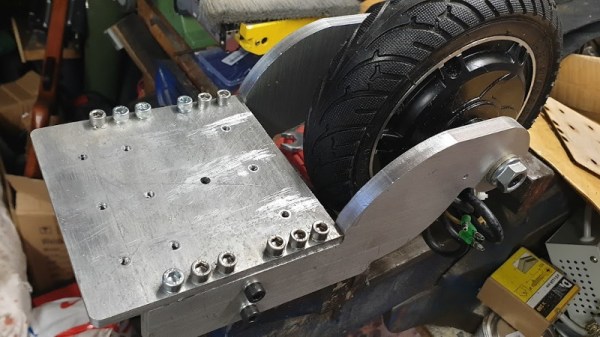
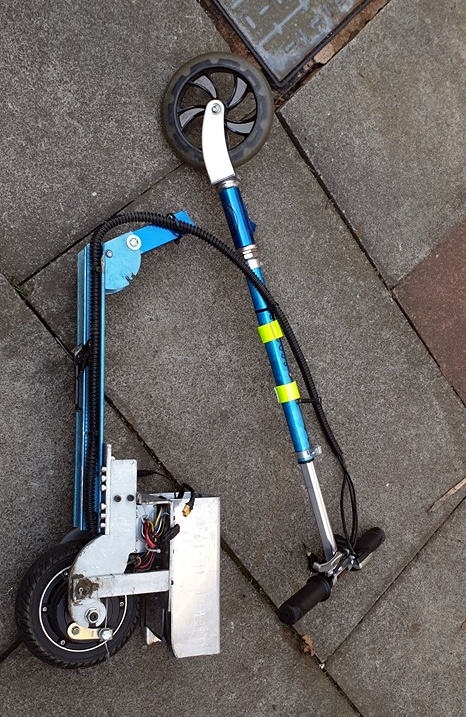
Of course, to build a motorized scooter you need a scooter to begin with. So in addition to the imported motor, [Tony] picked up a cheap kick scooter on eBay. Rather than worrying about the intricacies of cleanly integrating the two halves of the equation, he decided to build a stand-alone module that contained all of the electronics. To attach it to the scooter, he’d cut off the rear wheel and literally bolt his module to the deck.
[Tony] goes into considerable detail on how he designed and manufactured his power unit, from prototyping with laser cut MDF to the final assembly of the aluminum parts that he produced on a CNC of his own design. It’s really a fantastic look at how to go from idea to functional device, with all the highs and lows in between. When the first attempt at mounting the battery ended up cutting into the 8 Ah LiPo pack for example, and treated his son to a bit of a light show.
With all the bugs worked out and his son happily motoring around the neighborhood, [Tony] thought his job was done. Unfortunately, it was not to be. It turned out that his bolt-on power unit had so much kick that it sheared the front wheel right off. Realizing the little fellow didn’t have the fortitude for such electrified exploits, he went to a local shop and got a much better (and naturally much more expensive) donor for the project.
It’s here that his modular approach to the problem really paid off. Rather than having to redesign a whole new motor mount for the different scooter, he just lopped the back wheel off and bolted it on just as he did with the cheapo model. What could easily have been a ground-up redesign turned out to be a few minutes worth of work. Ultimately he did end up machining a new front axle for the scooter so he could fit a better wheel, but that’s another story.
Commuting through the urban sprawl of a 21st century city brings exposure to significant quantities of pollution. For a Medway Makers member that meant the Isle of Dogs, London, and a drive through the Blackwall Tunnel under the Thames. When you can taste the pollution in the air it’s evident that this isn’t the best environment to be in, but just how bad is it? Time to put together an environmental monitoring and recording rig.
Into the build went an ESP32 module, an SPS30 particulate sensor, an MH-Z19 CO₂ sensor, an HTU21D temperature and humidity sensor, and a uBlox NEO 6M GPS module. The eventual plan is to add an SD card for data logging, but in the absence of that it connects to a Raspberry Pi running Grafana over InfluxDB for data analysis. The result provides a surprising insight into the environmental quality of not just a commute but of indoor life. We’re sorry to say that they don’t seem to have posted any of the code involved onto the Medway Makers writeup, though we hope that’s an oversight they’ll rectify by the time this has gone live.
There are birthday presents, and then there are birthday presents. You know, the amazing ones that are the polar opposite of phoning it in. This is one of those presents.
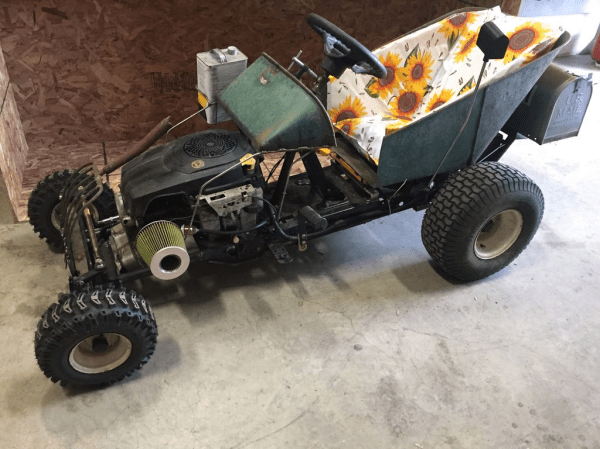
This glorious conversion required a lot of frame work, but it’s obvious this wasn’t [peterbrazil]’s first rodeo. He got some tires and tie rods from a friend who used to race lawnmowers (yeah, really) and went from there. He wanted this rat rod to be totally slammed (lowered as far as possible), but that would prohibit [Mrs. peterbrazil] from riding it ’round the farm after her parade dust settles. Instead, he went for the raked look, which means the front is lower than the back.
We love all of the reuse here, which includes a wheelbarrow cleverly cut into a seat and a dashboard, an old mailbox for a bed/cargo box, and a pitchfork grill. There are some modern touches as well, like a 3D printed mailbox shift knob with a working door, printed ignition switch box for the dash, and an adapter that makes room for a huge cone air filter. The seat cushion is a nice touch, too—the sunflower fabric adds both femininity and farm flavor to the build.

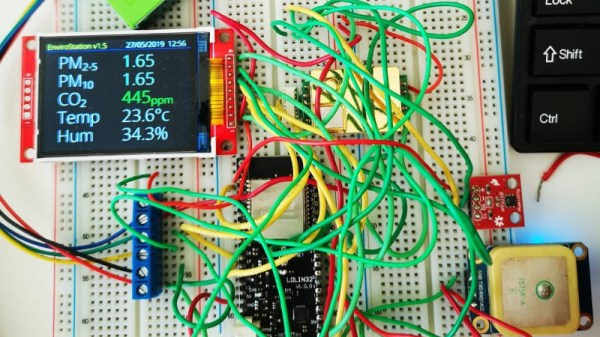
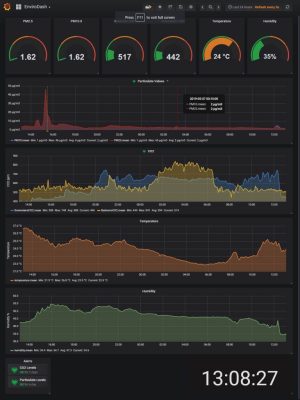 Commuting through the urban sprawl of a 21st century city brings exposure to significant quantities of pollution. For a Medway Makers member that meant the Isle of Dogs, London, and a drive through the Blackwall Tunnel under the Thames. When you can taste the pollution in the air it’s evident that this isn’t the best environment to be in, but just how bad is it? Time to put together