All The Badges Of DEF CON 26 (vol 2)

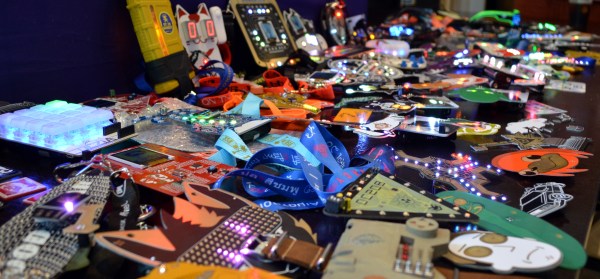
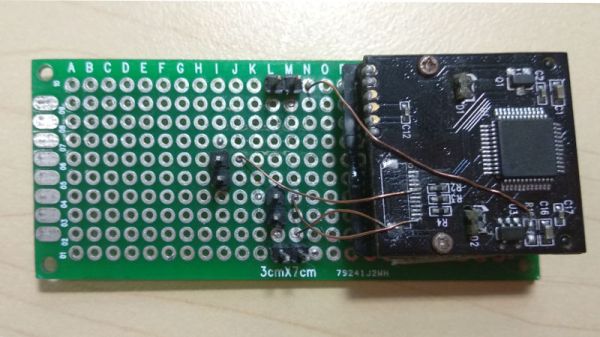
There were so many amazing unofficial badges at DEF CON this year that I can’t possibly cover them all in one shot. I tried to see every badge and speak with every badge maker — like a hardware safari. Join me after the jump for about fourteen more badges that I saw at DEF CON 26!

If you missed the first batch, check those badges out too — there’s even a Badgelife Documentary that you need to add to your watch list. Okay, let’s dig in.

Continue reading “All The Badges Of DEF CON 26 (vol 2)”

The Forgotten Art Of Riveted Structures

If you are in the habit of seeking out abandoned railways, you may have stood in the shadow of more than one Victorian iron bridge. Massive in construction, these structures have proved to be extremely robust, with many of them still in excellent condition even after years of neglect.

A handsome riveted railway bridge, over the River Avon near Stratford-upon-Avon, UK.

When you examine them closely, an immediate difference emerges between them and any modern counterparts, unlike almost all similar metalwork created today they contain no welded joints. Arc welders like reliable electrical supplies were many decades away when they were constructed, so instead they are held together with hundreds of massive rivets. They would have been prefabricated in sections and transported to the site, where they would have been assembled by a riveting gang with a portable forge.


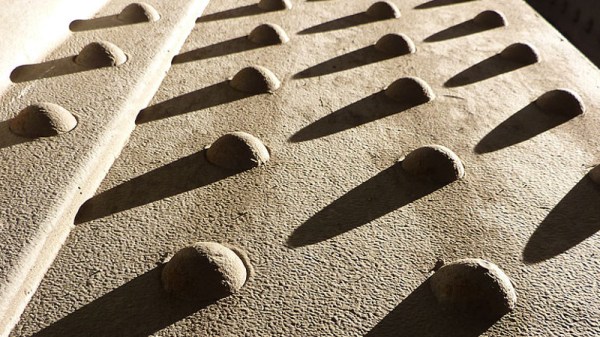
So for an audience in 2018, what is a rivet? If you’ve immediately thought of a pop rivet then it shares the function of joining two sheets of material by pulling them tightly together, but differs completely in its construction. These rivets start life as pieces of steel bar formed into pins with one end formed into a mushroom-style dome, probably in a hot drop-forging process.

A rivet is heated to red-hot, then placed through pre-aligned holes in the sheets to be joined, and its straight end is hammered to a mushroom shape to match the domed end. The rivet then cools down and contracts, putting it under tension and drawing the two sheets together very tightly. Tightly enough in fact that it can form a seal against water or high-pressure steam, as shown by iron rivets being used in the construction of ships, or high-pressure boilers. How is this possible? Let’s take a look!

Continue reading “The Forgotten Art Of Riveted Structures”

Hackaday Links Column Banner

Hackaday Links: August 19, 2018

If you want to creep everyone out, [Hunter Irving] has your back. He found a weird, creepy knock-off Thomas the Tank Engine toy and mounted a servo to it. This animatronic face is really, really creepy and has the aesthetic of a pastel plastic hell of the forgotten toys destroyed in a day care in 1991. It probably smells like a thrift shop. This rosy-cheeked locomotive shall derail your soul. It sings karaoke.

Like badges? Sure you do. Ph0xx is the badge for the upcoming Fri3d Camp, a family hacker, maker, and DIY camp in Belgium with 600 attendees. The badge features an ESP-32, two 5×7 LED arrays, accelerometer, an 18650 battery with protection and a charger, expansion headers, and this badge is compatible with Lego Technic. Oh yes, they went there.

We’re filing this under ‘but why’. It’s a custom Mercedes-Benz motorcycle, with a sidecar, that looks like an early 80s Benz convertible. [Maarten] stumbled upon a few pics of this, but the google-fu is weak in trying to get some information about this build. Who built it? Why? Does it run?

Here’s something near and dear to my heart: my greatest contribution to humanity so far. The Shitty Add-On spec for this year’s batch of Def Con badges is the reason badges now have their own badges. Now it’s time for a slight upgrade to the standard, and I need your help. The SAO standard 1.1bis will retain the VCC/GND/SDA/SCL layout of the first revision, but to increase mechanical stability and decrease the complexity of populating the headers, we’re adding two pins. Here’s the question: what should these two extra pins do? The current options are adding TX and RX to the standard, or two GPIOs that are undefined, but able to be utilized by each badge team for their own purposes. Those are the two options, but I’m looking for your input in the comments. Hurry up, because we have Superconference badges to build.

You should know the Primitive Technology channel on YouTube. This week he made another step towards the iron age. The basic idea behind this channel is a guy in Australia playing Minecraft in real life, building everything he can, starting with the technology of punching trees. The latest video shows his process for smelting iron. The iron comes from iron-bearing bacterial sludge found in a creek. The geologic disadvantages of northeastern Australia notwithstanding, he’s doing everything else right. He’s making charcoal, and turning that sludge into something that could be a bloom of iron.

Getting Kitted To Teach Your First Hardware Workshop

I was always a sucker for art classes in my early days. There was something special about getting personal instruction while having those raw materials in your hands at the same time. Maybe it was the patient voice of the teacher or the taste of the crayons that finally got to my head. Either way, I started thinking: “I want to do this; I want to teach this stuff.”

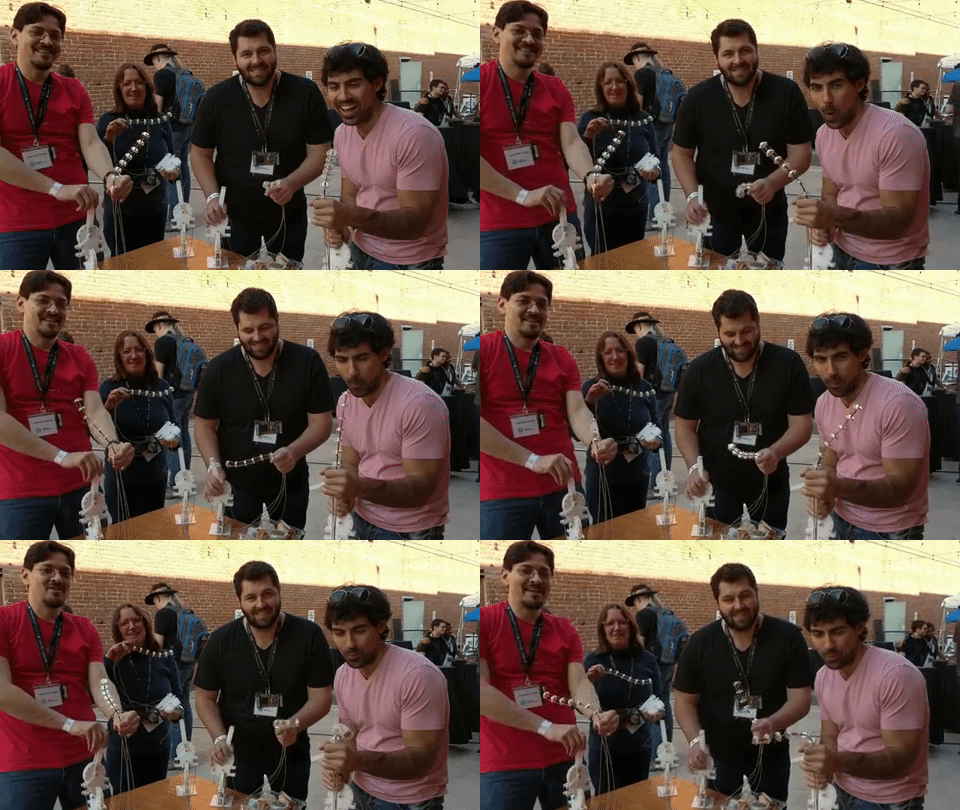
Last year at Hackaday Superconference I got my chance. Hardware workshops with real hardware were so rare; I just had to bring one to the table! What follows is my tale of joys and woes bringing together a crew to take their first few steps into the world of cable-driven animatronics. If you’re thinking about getting your feet wet with teaching your own hardware workshop, read on. I’ve packed this story with as much of my own learnings as I could to set you on a path to success.

The good news is that Supercon returns every year. I you want to take part in some epic workshops like this one, grab a ticket for this year’s conference now. If you want to host a hardware workshop, the Call for Proposals is still open! Okay, let’s dive in.

Continue reading “Getting Kitted To Teach Your First Hardware Workshop”

Breakfast At DEF CON — The Greatest Illicit Meetup Of All

Every year we host Breakfast at DEF CON on the Sunday morning of the largest hacker conference in the United States. I think it’s a brilliant time to have a meetup — almost nobody is out partying on Sunday morning, and coffee and donuts is a perfect way to get your system running again after too much excess from Saturday evening.

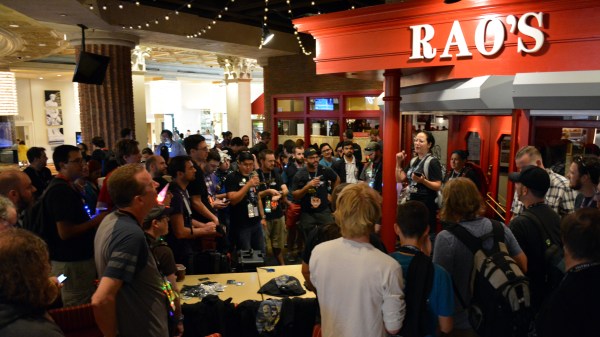
This year marks our fourth Breakfast and we thought this time it would be completely legit. Before we’ve just picked a random coffee shop and showed up unannounced. But this year we synced up with some of our friends running the Hardware Hacking Village and they were cool with us using the space. Where we ran afoul was trying to wheel in coffee and pastries for 100+ people. The casino was having none it.

But to their credit, we were forbidden from bringing the food into the conference center, not into the greater casino. We ended up squatting in a restaurant seating area that wasn’t open until 5pm. The awesome Hackaday Community rolled with the venue change, and a fantastic time was had by all! For what it’s worth, this ended up being the best space for a Breakfast yet! There was plenty of room with many tables, and we had no problem filling all of the space.

Tindie and Hackaday were sponsors of the SMD Challenge this year (a timed soldering challenge going all the way down to 0201 packages that was also judged for quality). Jasmine announced the winner live at the meetup, that’s the image at the top of this article. I thought the award the Solder Skills Village made for the Most Dropped Parts was pretty epic. It’s a round pendant with a piece of carpet and a bunch of components that was on display during the meetup.

The number one piece of hardware people brought with them was badges. Since we’re doing in-depth badge coverage I won’t go into that here. But I’d like to mention that for the second year in a row, Brian McEvoy brought some epic hardware. Last year it was an OpenSCAD controller demo, this year it’s a custom mechanical keyboard design system.

Taking wide shots of crowds is frowned upon at DEF CON so what follows are posed shots. I made sure to ask all involved before snapping the image. DC27 is a long way away, I’m hoping to see many of these awesome folks much sooner than that when Supercon gets going this November.

Track Everything, Everywhere With An IoT Barcode Scanner

I’ve always considered barcodes to be one of those invisible innovations that profoundly changed the world. What we might recognize as modern barcodes were originally designed as a labor-saving device in the rail and retail industries, but were quickly adopted by factories for automation, hospitals to help prevent medication errors, and a wide variety of other industries to track the movements of goods.

Medication errors in hospitals are serious and scary: enter the humble barcode to save lives. Source: The State and Trends of Barcode, RFID, Biometric and Pharmacy Automation Technologies in US Hospitals

The technology is accessible, since all you really need is a printer to make barcodes. If you’re already printing packaging for a product, it only costs you ink, or perhaps a small sticker. Barcodes are so ubiquitous that we’ve ceased noticing them; as an experiment I took a moment to count all of them on my (cluttered) desk – I found 43 and probably didn’t find them all.

Despite that, I’ve only used them in exactly one project: a consultant and friend of mine asked me to build a reference database out of his fairly extensive library. I had a tablet with a camera in 2011, and used it to scan the ISBN barcodes to a list. That list was used to get the information needed to automatically enter the reference to a simple database, all I had to do was quickly verify that it was correct.

While this saved me a lot of time, I learned that using tablet or smartphone cameras to scan barcodes was actually very cumbersome when you have a lot of them to process. And so I looked into what it takes to hack together a robust barcode system without breaking the bank.

Continue reading “Track Everything, Everywhere With An IoT Barcode Scanner”

Friday Hack Chat: LED Diffusion

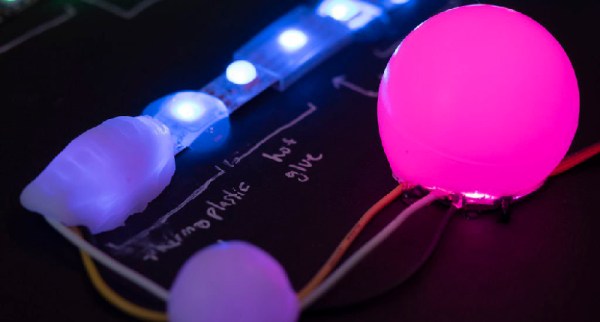
A decade ago, the first Arduino projects featuring addressable RGB LEDs came on the scene, and the world hasn’t been the same since. Now we have full wall video displays with WS2812s and APA102s, wearable blinky, and entire suits of armor made of LEDs. The future is bright, and in RGB.
For this week’s Hack Chat, we’re going to be talking all about how to maintain the blinky without eye-searing brightness. It’s the LED Diffusion Hack Chat, full of tips and tricks on how to get the glowey without it being imprinted on your retina.

Our guest for this week’s Hack Chat is the incredible Becky Stern. Becky is one of the most prolific makers around and has a long history of fabricating some really, really cool stuff. She’s published hundreds of tutorials on everything from microcontrollers to computerized knitting machines, and has been featured by dozens of media outlets including the BBC, CNN, The Late Show with Colbert, VICE, and Forbes. Right now, she’s working at Autodesk with Instructables.

During this Hack Chat, we’re going to be talking all about diffusing LEDs, with topics including:

  • Taking some sandpaper to LEDs
  • Light pipes
  • 3D printed LED enclosures
  • Looking into a bright blue LED with your remaining eye

You are, of course, encouraged to add your own questions to the discussion. You can do that by leaving a comment on the Hack Chat Event Page and we’ll put that in the queue for the Hack Chat discussion.join-hack-chat

Our Hack Chats are live community events on the Hackaday.io Hack Chat group messaging. This week is just like any other, and we’ll be gathering ’round our video terminals at noon, Pacific, on Friday, August 17th. Need a countdown timer? Here ‘ya go.

Click that speech bubble to the right, and you’ll be taken directly to the Hack Chat group on Hackaday.io.

You don’t have to wait until Friday; join whenever you want and you can see what the community is talking about.