MRRF: Launching An Adorable Printer For Fun

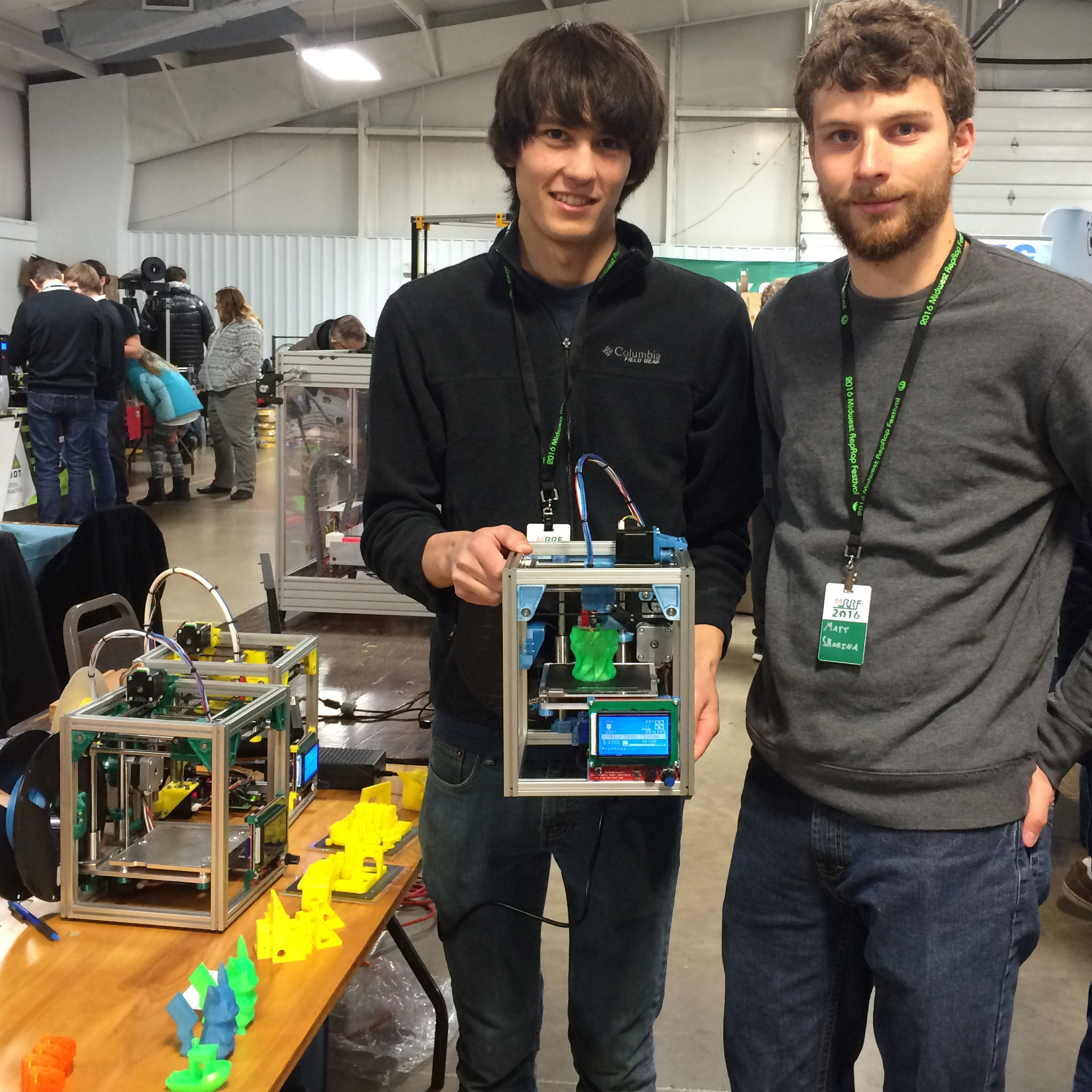
Patrick and Matt hold a running Kitten Printer. The frame is stiff enough that the printer can be held or turned upside down and it can keep printing.
Patrick and Matt hold a running Kitten Printer. The frame is stiff enough that the printer can be held or turned upside down and it can keep printing without visible defects in the print.

[Patrick] and [Matt] have been coming to the Midwest RepRap Festival from Minneapolis for the past few years and bringing their trusty Tantillus printers with them. However, sometime between this year and the last [Patrick] decided that it would be really fun to make his own 3D printer, and liking the size and accuracy of the Tantillus, started there.

The adorably sized printer is adorably named too: Kitten 3D printer. The printer is certainly an enthusiast’s choice. It’s expensive at 1200 and small, but very well made. Its one big advantage?  It prints really accurate parts.

The Tantillus also printed well, but the extruder left a lot to be desired, and the low stretch fishing line movement was very difficult to get tensioned just right. The secret behind the Tantillus and Kitten’s great print quality, aside from good design, is the small xy movement and low weight of the extruder set-ups. By having a movement over a very small range, cumulative errors in construction never get to add up. Also vibrations are less likely to show and smaller moments on the joints mean less flex at the extremes of the movements.

Really stunning print quality almost entirely free of ringing and z-wobble.
Really stunning print quality almost entirely free of ringing and z-wobble. 100mm x 100mm tray. These are very small parts.

[Patrick] is a mechanical engineer for his day job, and since this was a just for fun printer, he cut no corners. The frame is made with Misumi extrusions and linear movements. The build plate sits on a machined aluminum plate. It’s not flexing or going anywhere.

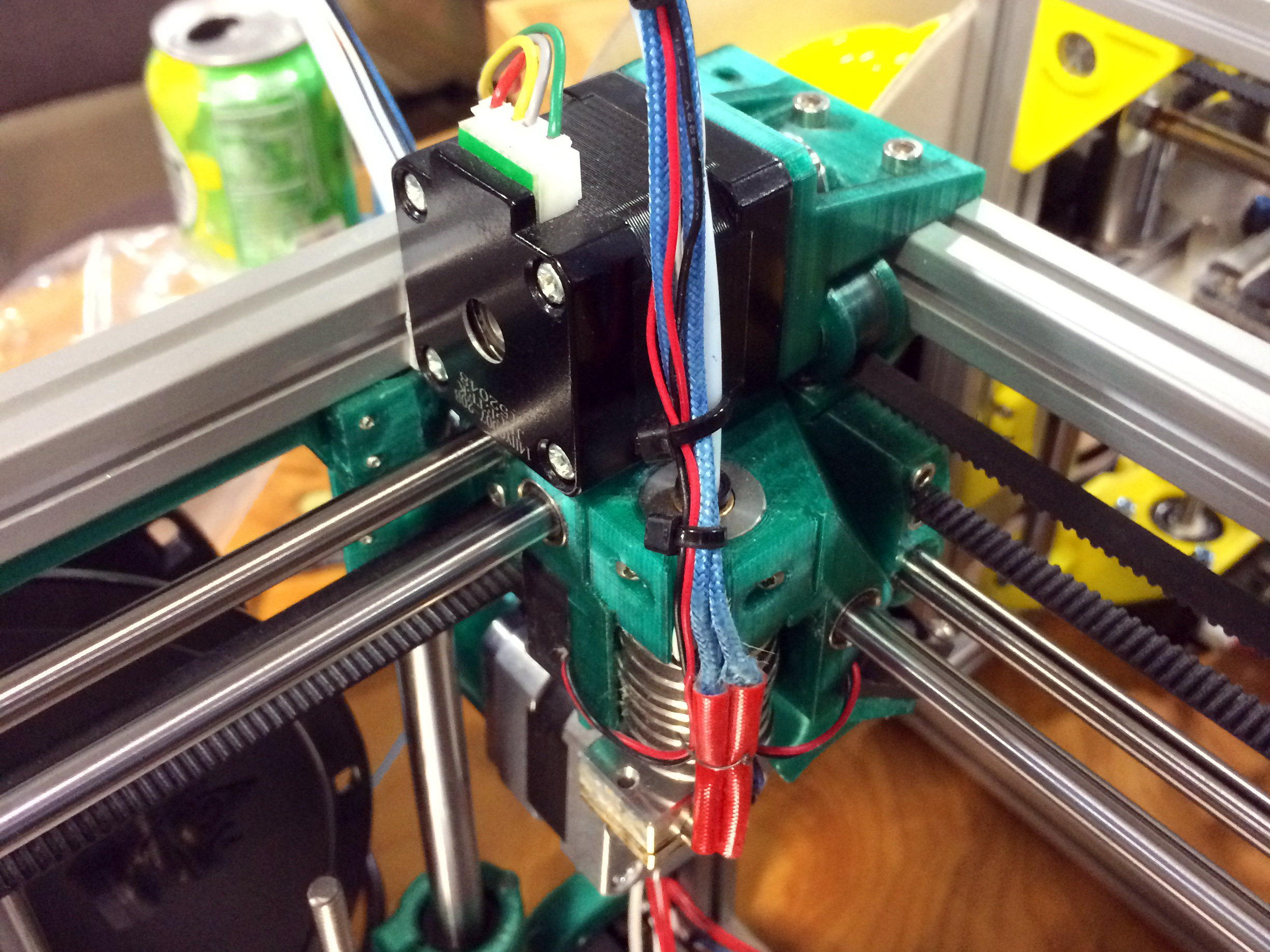
Part of what really stood out to me about the printer are a lot of neat little features which show careful thought. For example, the extruder movement sits neatly under one of the motors. All the parts except for one can be printed inside its build envelope without support. It uses around 200g of plastic. Every axis is constrained just enough, rather than the common tendency to over constrain that plagues 3D printer design. The spec sheet reads like my printer part wishlist: Bondtech extruder, Rambo board, E3d nozzle, heated bed, flat borosilicate build plate, name brand linear movements, and a well designed Z.
cleverdetails
The entire extruder assembly tucks under one of the XY motors at the corner of its movement. Compare its size to the size of a NEMA14 stepper motor.

Another interesting aspect of the design is the extremely light extruder assembly. The lighter an extruder can get, the less ringing will show in your parts at speed. This is one of the most compact designs I’ve witnessed. It consists of two fans, an E3d v6 lite nozzle, and two small linear bearings. The cold end is handled by a bowden set-up and a Bondtech extruder at the back of the printer. The only way to get it lighter would be a different nozzle, such as the upcoming insanely light 13g Pico from B3 unveiled at the festival. I was also interested to see that the bearings on the supporting rails were printed bushings to keep the weight even lower. [nop head] has tested these extensively, they should be fine as long as the rods have a good finish.

I’ve mentioned the size before, but it’s hard to grasp just how adorable this printer is without seeing it. The build envelope is 100mm x 100mm x 100mm, the printer itself is 200mm x 200mm x 240mm. That’s only 50mm wider than the build footprint. It’s a really fun design just to look at and see how they fit it all in there. There are lots of neat little tricks with belt routing and part design to get it all right.

For the enthusiast this would make a good small parts printer and travel printer. However, for me, it was neat to see people still setting out to try designing their own printer. In some ways the 3d printer movement has become crowded with Chinese knock-offs, and I was excited to see something new at the festival. It wasn’t the only new printer design there, but it stood out to me the most. I like the uncompromising nature of it, many people try to design for the lowest BOM and not the nicer print. There are still lots of low-hanging fruit in the 3d printer world and many of them are just getting the mechanics right.

[Patrick] and [Matt] came to the festival with their printer to see if people would like it. They didn’t have grand dreams of selling tons of printers and making millions. They were quite aware that their price point and the small size made it not for everyone. However, their table always had a small crowd. They just really like 3D printers, and that honesty resonated. They didn’t even have a website up at the start of the convention, but by the end they had gotten so many requests they had to oblige. They expect to have 3 kit options available by the end of April. If you’re interested there’s a mailing list sign up on their website. Let’s hope we see them at MRRF again next year with another cool design to look over.


Hackaday Teams With Vintage Computer Festival For Retro Hackathon

For the last few years, we’ve been going to the Vintage Computer Festival East in New Jersey. This is one of the best cons we go to every year; there are dozens of interesting exhibitors, awesome talks, a great venue, and a small consignment area filled with the weirdest stuff you can imagine. This year proves to be no different, and we’ll be there cataloging the weirdness and spectacular hacks of computer systems old enough to vote, plus something new.

Hackaday’s 8-bit game programming contest is happening for the first time at VCF East, April 15-17 in Wall, New Jersey. Competitors are given two and a half hours and an old 8-bit system (Apple II, C64, Atari 800, etc.). The goal is to create a game using only what is currently in memory, be that in the ROM or between the ears. There are two sessions on the Friday of the event, starting at 10am and 2:30pm.

You can call the 8-bit game programming contest a hackathon. That’s basically what it is; getting a small team together to whip up an application quickly with a number of constraints. The term ‘hackathon’ has been bastardized as of late, with companies requiring the use of a particular API or other nonsense. The 8-bit programming contest doesn’t have these limitations. All you need to do is create the coolest game in two and a half hours, and get the most applause from the audience. The best game wins a prize.

Of course, we’re not going to VCF East just to promote a retro hackathon. We’re only obliged to mention that first because we’re sponsoring it. VCF East is a fantastic event, with more retro goodies to satiate even the most curmudgeonly retro aficionado. The show is enormous with keynotes from [John Blankenbaker], inventor of the Kenbak-1 personal computer and [Stewart Cheifet], host of Computer Chronicles. Dr. Dr. Ted Nelson, author of Computer Lib and creator of Xanadu, the underlying software for computers that won’t be built for 100 years, will also be there. The weekend is, as always, packed with great exhibits of ancient tech, classes, and workshops.

Each Vintage Computer Festival is different, but if you’d like a sample of what it’s all about, check out these posts:

Apart from an announcement for the festival in New Jersey, there are a lot of changes in the organization of the various vintage computer festivals held around the country. The Vintage Computer Festival East was formerly organized by MARCH, the Mid-Atlantic Retro Computing Hobbyists. Late last year, MARCH was dissolved, and reformed as a 501(c)3 called the Vintage Computer Federation. The VCF (see what they did there?) also has the rights to hold VCF West, which last happened in 2007. The VCF Midwest, Southwest, Europe, and UK will remain independent.

If it isn’t already extremely obvious, this is one of the top-tier events we go to every year. No, it’s not DEF CON, it’s not HOPE, and it’s certainly not a big con. It’s just a bunch of nerds nerding out, which is the critical ingredient for the best events we attend all year.

Lazy Bluetooth: Build With BLE, Don’t Reinvent It

It is a good bet that you have at least one Bluetooth device hanging around. Headsets, mice, keyboards, and speakers have become increasingly common. Bluetooth forms a short range wireless network and can also perform file transfers and create virtual serial ports.

If you have ever had to stop listening to music to recharge a Bluetooth headphone, you know Bluetooth won’t run long on batteries. In 2006, Nokia introduced Wibree, which would later become Bluetooth Low Energy (or BLE). These days it’s used in everything and it’s well worth your time to gather a basic understanding of this technology.

Continue reading “Lazy Bluetooth: Build With BLE, Don’t Reinvent It”

Retrotechtacular: Hallicrafters Goes To War

When the USA entered World War Two, they lacked a powerful mobile communications unit. To plug this gap they engaged Hallicrafters, prewar manufacturers of amateur radio transmitters and receivers, who adapted and ruggedized one of their existing products for the application.

The resulting transmitter was something of a success, with production running into many thousands of units. Hallicrafters were justifiably proud of it, so commissioned a short two-part film on its development which is the subject of this article.

The transmitter itself was a very high quality device for the era, but even with the film’s brief insight into operating back in the AM era the radio aspect is not what should capture your interest. Instead of the radio it is the in-depth tour of an electronics manufacturing plant in the war years that makes this film, from the development process of a military product from a civilian one through all the stages of production to the units finally being fitted to Chevrolet K-51 panel vans and shipped to the front. Chassis-based electronics requiring electric hoists to move from bench to bench are a world away from today’s surface-mount micro-circuitry.

So sit back and enjoy the film, both parts are below the break.

Continue reading “Retrotechtacular: Hallicrafters Goes To War”

Tindie Is Hiring A Writer

Tindie is the best place to find unique hardware. It’s hardware sold by it’s creators; you can’t just go out and buy it anywhere. The ideas for those creations, the design and engineering that went into them, and the background on both sellers making and buyers building is the story that makes Tindie special. It’s time to make that story a lot easier to discover.

Tindie has a Blog (which you should be following) and is now looking for its scribe to fill those pages. As a writer for Tindie you share the excitement of trying out the newest sensors, making things move, or even just the magic of that first simple blink. You will seek out amazing parts and people to highlight. In a few articles each week you’ll engage and energize the Tindie audience, highlight the cutting-edge new arrivals, and lead in brainstorming new builds.

Have I just described you? Then please apply to be a writer for Tindie. Email Tindie’s jobs line with the following:

  • Tell us about you. How did you get into building hardware? What are your educational, hobby, and professional backgrounds.
  • What direction do you think the Tindie blog should take?
  • Please choose one item offered by a seller on Tindie and write a sample article about it.

The position pays per article written. This is the first time Tindie is hiring a dedicated writer; it’s an opportunity for you to shape something new and amazing.

Remote Sensing Bombs Could Stem Terrorism

If you understand technology, there were a lot of things hard to explain on Star Trek. Transporters, doors that were smart enough to open unless you hit them during a fight, and the universal translator all defy easy explanation. But one of the hardest things to explain were Mr. Spock’s sensors. From the ship or with a tricorder, Spock could sense at a distance just about anything from chemical compositions, to energy, and even the presence of life (which, today, at least, is difficult to determine even what that means).

Remote sensing would have a very distinct use in today’s world: finding terrorist bombs earlier. A recent article published on New Scientist by [Debora MacKenzie] points out that stopping attacks like the recent one in Brussels is difficult without increasing congestion. For example, putting checkpoints at doors instead of inside transit stations is common in Asia, but causes lines and delays.

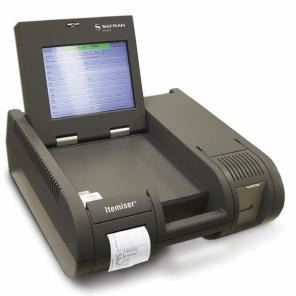
detecThe United States has used ion mobility spectrometry (IMS) to detect explosive traces on swabs (using machines like the one on the left). However in the early 2000’s they experimented with a version of the device that used puffs of air to determine if people had explosives while they passed by the machine. By 2010, officials decided the machines broke down too often and stopped using them.

Remote Sensing in Practice

According to an expert at Rand Corporation, remote sensing is likely to employ imaging or sniffers. However, imaging solutions are easy to fool since a bomb can take the shape of an ordinary object. Sniffers, including biological sniffers (known as dogs), are harder to fool. The problem is that deploying thousands of dogs to cover the world’s airports is difficult.

Continue reading “Remote Sensing Bombs Could Stem Terrorism”

Hackaday Links: March 28, 2016

[Tom] sent this in to be filed under the ‘not a hack’ category, but it’s actually very interesting. It’s the User’s Guide for the Falcon 9 rocket. It includes all the data necessary to put your payload on a Falcon 9 and send it into space. It’s a freakin’ datasheet for a rocket.

A year ago in Japan (and last week worldwide), Nintendo released Pokkén Tournament, a Pokemon fighting game. This game has a new controller, the Pokkén Tournament Pro Pad. There were a few cost-cutting measures in the production of this game pad, and it looks like this controller was supposed to have force feedback and LEDs. If any Pokemon fans want to take this controller apart and install some LEDs and motors just to see what happens, there’s a Hackaday write up in it for you.

There are a lot of options for slicing 3D objects for filament-based 3D printers. Cura, Slic3r, and MatterControl are easily capable of handing all the slicing needs you’ll ever have for a filament 3D printer. For sterolithography (resin) printers, the options for slicing are limited. [skarab] just put together a new slicer for SLA that runs entirely in JavaScript. If anyone wants to turn a Raspi or BeagleBone into a network controller for a resin printer, here’s your starting point. [skarab] will be working on smoothieboard integration soon.

The STM32F4 is an extremely capable ARM microcontroller. It can do VGA at relatively high resolutions, emulate a Game Boy cartridge, and can serve as the engine control unit in a 1996 Ford Aspire. There’s a lot of computing power here, but only one true litmus test: the STM32F4 can run Doom. [floppes] built this implementation of Doom on the STM32F429 Discovery board to run off of an external USB memory stick. The frame rate is at least as good as what it was back in 1993.

The Oculus Rift has just come to pass, but one lucky consumer got his early. The first person to preorder the Rift, [Ross Martin] of Anchorage, Alaska, got his facehugger directly from [Palmer Luckey] in a PR stunt on Saturday afternoon. Guess what [Ross] is doing with his Rift?

rift