Hackaday Dictionary: The Global Positioning System (GPS)

One of the fundamental technologies of modern gadgets is the Global Positioning System (GPS). Using signals from satellites orbiting the earth, a GPS receiver can pin down its location with remarkable accuracy: the latest generation of Civilian Navigation Signals (CNAV) sent by the US GPS system has an accuracy of less than half a meter (about 3 feet). These signals also contain the time, accurate to within milliseconds, which makes it perfect for off-line dataloggers and systems that require very accurate timing. That’s a powerful combination that has made GPS one of the main technologies behind the mobile revolution, because it lets gadgets know where (and when) they are.

Continue reading “Hackaday Dictionary: The Global Positioning System (GPS)”

What Do Bertlmann’s Socks Mean To The Nature Of Reality?

One can be reasonably certain that when the title of an article includes the phrase “The Nature of Reality”, thought provoking words must surely lie ahead.  But when that same title seems to inquire about a gentleman’s socks,  coupled with an image of said gentleman’s socks which happen to be mismatched and reflect very loud colors , one might be moved in a direction which suggests the article is not of a serious nature. Perhaps even some sort of parody.

It is my hope that you will be pleasantly surprised with the subtle genius of Irish physicist [John Bell] and his use of socks, washing machines, and a little math to show how we can test one of quantum physic’s most fundamental properties. A property that does indeed reside in the very nature of the reality we are a part of. Few people can say they understand the Bell Inequality down to its most fundamental level. Give me a little of your time, and you will be counted among these few.

Continue reading “What Do Bertlmann’s Socks Mean To The Nature Of Reality?”

Who Is Responsible When Machines Kill?

This morning I want you to join me in thinking a few paces into the future. This mechanism let’s us discuss some hard questions about automation technology. I’m not talking about thermostats, porch lights, and coffee makers. The things that we really need to think about are the machines that can cause harm. Like self-driving cars. Recently we looked at the ethics behind decisions made by those cars, but this is really just the tip of the iceberg.

A large chunk of technology is driven by military research (the Internet, the space race, bipedal robotics, even autonomous vehicles through the DARPA Grand Challenge). It’s easy to imagine that some of the first sticky ethical questions will come from military autonomy and unfortunate accidents.

Continue reading “Who Is Responsible When Machines Kill?”

Hackaday Links: November 8, 2015

[Burt Rutan] is someone who needs no introduction. Apparently, he likes the look of the Icon A5 and is working on his own version.

Earlier this week, the US Air Force lost a few satellites a minute after launch from Barking Sands in Hawaii. This was the first launch of the three stage, solid fueled SPARK rocket, although earlier versions were used to launch nuclear warheads into space. There are some great Army videos for these nuclear explosions in space, by the way.

[Alexandre] is working on an Arduino compatible board that has an integrated GSM module and WiFi chip. It’s called the Red Dragon, and that means he needs some really good board art. The finished product looks good in Eagle, and something we can’t wait to see back from the board house.

The Chippocolypse! Or however you spell it! TI is declaring a lot of chips EOL, and although this includes a lot of op-amps and other analog ephemera (PDF), the hi-fi community is reeling and a lot of people are stocking up on their favorite amplifiers.

[Jeremy] got tired of plugging jumper wires into a breadboard when programming his ATMega8 (including the ‘168 and ‘328) microcontrollers. The solution? A breadboard backpack that fits right over the IC. All the files are available, and the PCB can be found on Upverter.

In case you haven’t heard, we’re having a Super Conference in San Francisco later this week. Adafruit was kind enough to plug our plug for the con on Ask an Engineer last week.

Code Craft – Embedding C++: Classes

For many embedded C developers the most predominate and questionable feature of C++ is the class. The concern is that classes are complex and therefore will introduce code bloat and increase runtimes in systems where timing is critical. Those concerns implicate C++ as not suitable for embedded systems. I’ll bravely assert up front that these concerns are unfounded.

When [Bjarne Stroustrup] created C++ he built it upon C to continue that language’s heritage of performance. Additionally, he added features in a way that if you don’t use them, you don’t pay for them.

Continue reading “Code Craft – Embedding C++: Classes”

Retrotechtacular: Cold War-Era Hardware Keyloggers

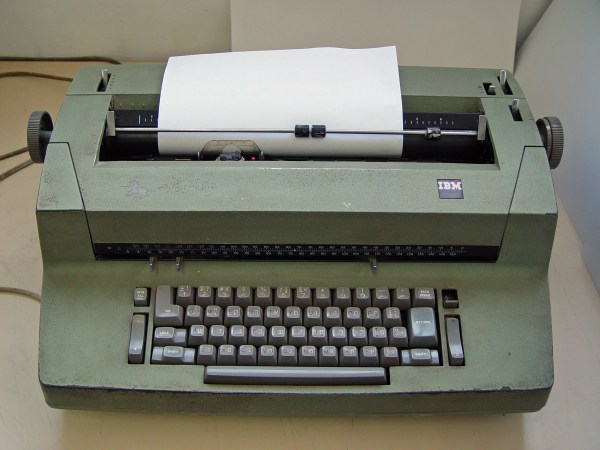
As Cold War tensions increased throughout the 1970s, the Soviets pulled out all the stops when it came to digging up information from US diplomats. This NSA memo from 2012 explains how several IBM Selectric typewriters used in the Moscow and Leningrad offices were successfully bugged with electromechanical devices that could possibly have been the world’s first keyloggers.

The Selectric prints with a ball that is spun and tilted to select the desired character. Two mechanical arms control the ball’s spin and tilt, and the keylogger read out the position of those arms. Thus, each character on the Selectric’s type element ball has its own signature. The sensing part of the keylogging mechanism was buried in part of the typewriter chassis, a metal bar that spans the width of the machine, and were so well hidden that they could only have been detected by complete dissassembly or x-ray.

Continue reading “Retrotechtacular: Cold War-Era Hardware Keyloggers”

Fail Of The Week: OpenMV Kickstarter Project Hits Manufacturing Snag

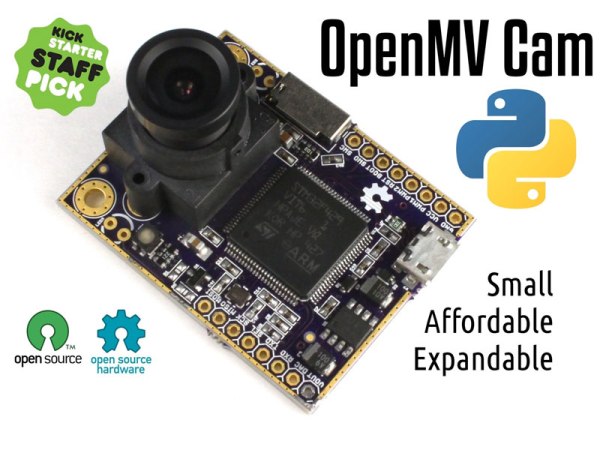
Making stuff is hard, especially when you are making lots of stuff. The OpenMV Cam project knows this, because it has hit a problem while putting together their cheap machine vision module. The problem is with the BGA solder balls that connect the image sensor to the main board.

openmv-thumbWe’ve covered this intriguing project before: the aim is to build a small, cheap module that can run image processing algorithms to easily give robots sight. The sensor is a Ball Grid Array (BGA) package, which means there are a grid of small solder balls on the back that form the electrical connections. It seems that some of these solder balls are oxidized, preventing them from melting and fusing properly with the board. This is called a head-in-pillow defect, because the ball behaves like your head when you lie down in bed. Your head squishes the pillow, but doesn’t merge into it. There are 38 balls on the OV26040 image sensor and even a single bad link means a failure.
The makers of the project have tried a number of solutions, but it seems that they may have to remake the ball links on the back of each sensor. That’s an expensive process: they say it will cost $7 for each, more than the actual sensor cost initially.

A few people have been posting suggestions in the comments for the project, including using solvents and changing the way the sensors are processed before mounting. We’d like to see them overcome this hurdle. Anybody have any suggestions to quickly and cost effectively move the manufacturing process forward?

Continue reading “Fail Of The Week: OpenMV Kickstarter Project Hits Manufacturing Snag”