Der Wafflemeister 3000

der_wafflemeister3000

When people think about robots, a few different things come to mind. We like robots because they take care of tedious work. Robots are great for accomplishing tasks in hazardous environments too. When the [Chalmers Robotics Society] thinks about robots however, they think, “Breakfast!”

The CRS constructed a sweet automatic waffle cooking machine known as the Wafflemeister3000. It can produce up to 5 waffles at a time, cooking them to a nice golden brown in a little over 3 minutes. Think about that for a second – that’s about 90 waffles an hour!

This project isn’t exactly new, with the second iteration having been completed in 2007. However, since the third version features a 400% increase in production volume, we thought it was worth a mention.

Be sure to check out the video below of the Wafflemeister3000 doing its thing.

[via Neatorama]
Continue reading “Der Wafflemeister 3000”

555 Timer-based Charge Controller

555_charging_controller_circuit

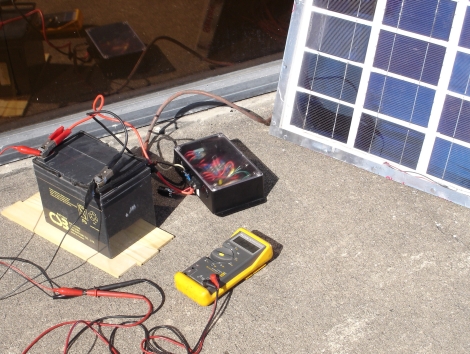
Several years ago [Michael Davis] built a charge controller for his wind turbine and published his construction plans online. This build became quite popular, especially among people that live in remote regions. He states that he is flooded with email each day with questions about his charge controller from people trying to troubleshoot its construction or from people who are unable to source the proper parts.

In order to make things easier for people, he decided to revisit his controller design to see what could be improved, and more importantly, what could be removed. The revision was shelved for awhile, but while in the process of working on another project, he realized that most of his original circuit could be easily replaced with a 555 timer. Since the 555 chip is so ubiquitous, he figured it was a fantastic way to simplify his charger, even if he wasn’t using the chip in the manner for which it was originally designed.

He continued revising his charger, sourcing very basic components and simplifying the circuitry enough that even he was able to build it correctly the first time around. Needless to say, this charging circuit will be his entry in the 555 Design Contest.

Be sure to keep reading for a quick video of his charger in action.

Continue reading “555 Timer-based Charge Controller”

Self-regulating Water Heater

netduino_controlled_energy_saving_water_heater

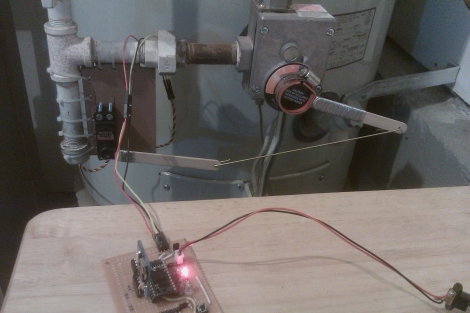
Most everyone is looking to live a little greener these days, with motivating factors typically being the preservation of the environment or financial considerations. [Fabien] fit into the latter category after realizing that about 25% of his monthly gas bill went to heating the water he and his family use each day. After a few calculations, he found that they only required hot water 68 of the 168 hours per week that the water heater was typically running. He figured the best way to save a few dollars was to rig the water heater to turn itself down when it wasn’t being used.

He connected a servo to the temperature control knob on his water heater, allowing it to be adjusted by a microcontroller. Having a rough idea as to the schedule his family keeps during an average week, he wrote an application for his Netduino that would actuate the servo when needed. A DS1307 real-time clock was wired to the Netduino for accurate timekeeping, so as to ensure [Fabien’s] wife never had to endure a cold shower.

It’s a shame that most water heaters don’t ship with some sort of programmable thermostat like you see with newer HVAC systems, but this hack is definitely a step in the right direction.

Continue reading to see his power-saving water heater in action.

Continue reading “Self-regulating Water Heater”

Building A Dead Mouse’s Switch

building_a_better_mousetrap

[Ned] had a mouse problem in a very uncomfortable place.

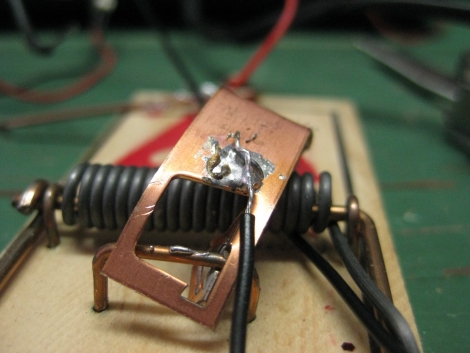
No, not like the back of a Volkswagen, in his ceiling. He wanted to put a mouse trap up there to take care of the critter, but knowing how nasty a tripped trap can be after a few days, he was hesitant. He recalled a project he saw online where a mouse trap was wired like a dead man’s switch and he got to work putting together a trap of his own.

He scavenged some parts from around the house and wired up the mouse trap so that a pair of LEDs were lit so long as the trap had not been sprung on an unsuspecting mouse. Once a mouse is caught in the trap, his circuit is broken, and the LEDs go off, letting [Ned] know it’s time to poke his head back up into the ceiling and clean things up.

While his trap is decidedly low-tech, we always enjoy seeing a cheap and easy solution to annoying, everyday problems.

Thermostat Controlled Plug Box

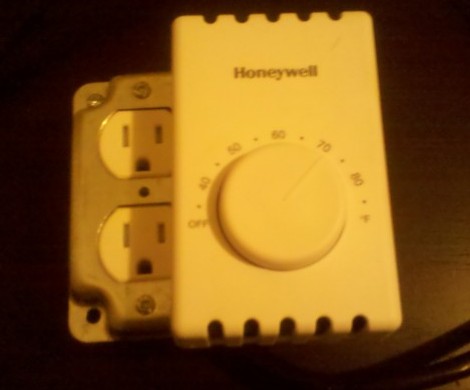
[Eric] has a problem with his new house, there was no heat in the attic space that had been converted into a loft. Facing no way to tap into the ductwork and wanting to use the space as a bedroom he did what most of us would, and just got a little space heater. Anyone who has lived with a space heater knows you have to be around to turn them on, and they usually dont have decent temperature control. These problems were quickly fixed by making a thermostat controlled plug box.

A quick trip to the hardware store resulted in a 2 gang metal junction box, faceplate with GFCI cutout, receptacle and a Honeywell baseboard heater thermostat. The thermostat is then wired to mains and its output connects to the receptacle.

He gives instructions on wiring which focuses on his parts, but you should follow the instructions to your specific thermostat, and error on the side of caution if working with mains current. The end story is a bedroom with a more constant temperature and doesn’t need a 3 hour burn to get there.

Amazing Backyard Rocket Ship Tree House

Ravenna_Ultra-Low-Altitude_Vehicle

If you thought you had a cool tree house as a kid, think again. Tasked with landscaping his back yard and building a tree house for his son, [Jon] decided to go all out and build him a rocket ship instead.

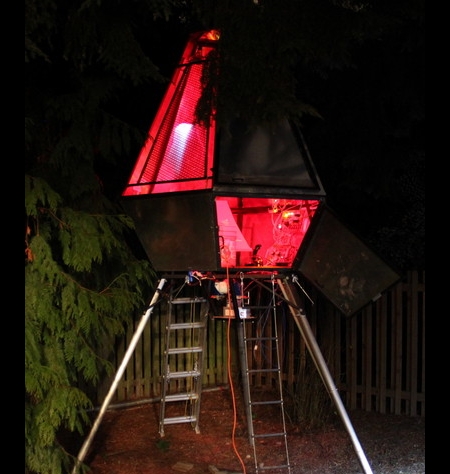
Rising 15 feet into the Seattle skyline, the tree house known as the Ravenna Ultra-Low-Altitude Vehicle (RULAV), is sure to be the envy of every kid in the neighborhood. [Jon] and a friend worked for well over a year on their creation, welding, grinding, painting, and riveting their way along. After the structure was built, they fabricated some custom PCBs, using them to build the ship’s 14 control panels. The entire operation is controlled by a custom OS built to run on the three ATmega MCUs that manage operations.

Not content with just a handful of knobs and switches, the ship contains over 800 LEDs among its laundry list of electronics goodies. Compressed air is used to shoot water from positioning “thrusters”, while a paint mixer spins under the ship to simulate the rough and bumpy nature of space travel. The simulated launches are capped off with plenty of authentic NASA-style audio and a sub woofer that gives everything a deep, resonating rumble.

The project is truly amazing, and a ton of work went into every little detail in order to make this the most spectacular tree house ever seen. [Jon] definitely takes the award for “Coolest Dad Ever” for this build, even we’re jealous!

The pictures certainly don’t do it justice, so be sure to check out the video below for a quick introduction and demo of this awesome project.

Thanks to [Jeremy Elson] for the tip.

Continue reading “Amazing Backyard Rocket Ship Tree House”

NES Game Pad Wireless Light Commander

NES_wireless_light_switch

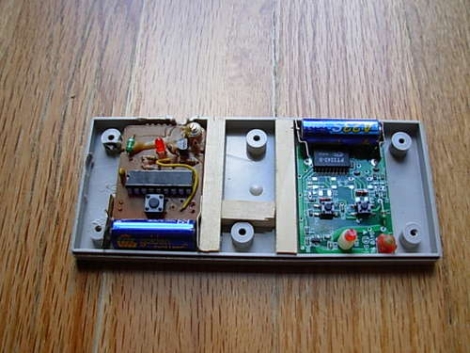
Annoyed that the new lights he bought for his apartment lacked power switches, Instructables user [p.arry.drew] decided to install a pair of wireless light switches. Not content to use the remotes separately, he decided to see if he could cram them both into an old NES controller, making for a nice all-in-one wireless light commander.

He disassembled the light switch remotes, cutting off a bit of the battery contacts to ensure they fit in the game pad. He then pulled apart his NES controller, removing the cord and adding some foam padding to ensure that the buttons fully contacted the wireless switches when pressed. A few bits of wooden dowel were added to keep everything in place, then the controller was reassembled.

His creation makes for a very convenient method of controlling several light switches from once source, plus the packaging is pretty handsome as well. These remote light switching solutions seem to be all the rage lately, so keep them coming!

Read on for a quick video of his remote light switches in action.

Continue reading “NES Game Pad Wireless Light Commander”