There’s Now A New MIDI Spec, And Drones

MIDI, the Musical Instrument Digital Interface, was released in 1983 in a truly bizarre association between musical instrument manufacturers. At no other time, before or since, has there been such cooperation between different manufacturers to define a standard. Since then, the MIDI spec has been expanded with SysEx messages, the ability to dump samples via MIDI, redefining the tuning of instruments via MIDI to support non-Western music, and somewhere deep in the spec, karaoke machines.

Now there’s a new update to the MIDI spec (Gearnews link, here’s the official midi.org announcement but their website requires registration and is a hot garbage fire). At this year’s NAMM, the place where MIDI was first demonstrated decades ago,  the MIDI Manufacturers Association announced an update to MIDI that makes instruments and controllers smarter, and almost self-learning.

There are three new bits to the new update to the MIDI spec. The first is Profile Configuration, a way to auto-configure complex controller mappings, described as, ‘MIDI Learn on steroids’. The second update is Property Exchange, and allows MIDI devices to set device properties like, ‘product name, configuration settings, controller names, and patch data’. This is effectively setting metadata in controllers and devices. The third new bit is Protocol Negotiation, a way to automatically push future, next-gen protocols over a DIN-5 connector.

What does this all mean? Drones. No, I’m serious. The MIDI association is tinkering around with some Tiny Whoops and Phantoms, and posted a video of drones being controlled by a MIDI controller. Play a glissando up, and the drone goes up. You can check out a video of that below.
Continue reading “There’s Now A New MIDI Spec, And Drones”

Particle Introduces New Hardware, Adds Mesh Support

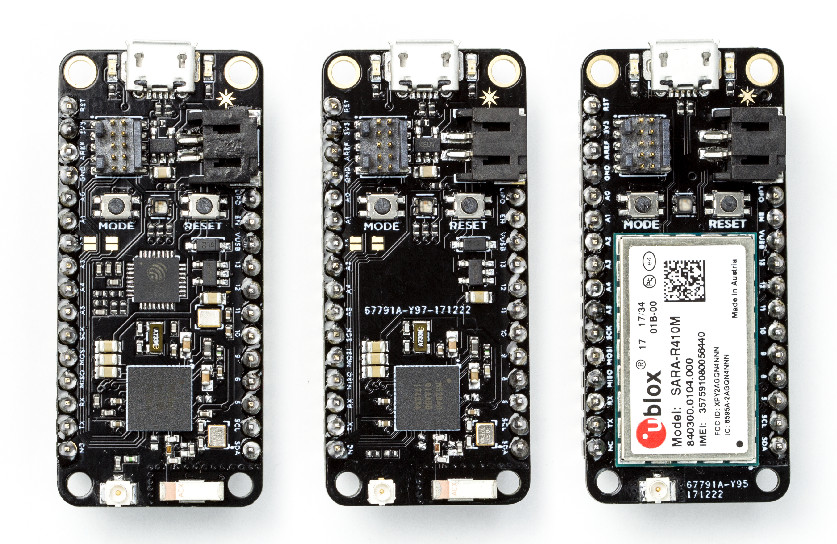
Particle, makers of the WiFi and Cellular IoT modules everyone loves, is introducing their third generation of hardware. The Particle Argon, Boron, and Xenon are Particle’s latest offering in the world of IoT dev boards, and this time they’re adding something amazing: mesh networking.

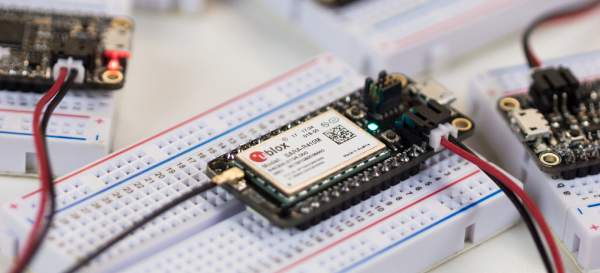
New Particle boards named Argon, Boron, and XenonThe three new boards are all built around the Nordic nRF52840 SoC and include an ARM Cortex-M4F with 1MB of Flash and 256k of RAM. This chip supports Bluetooth 5 and NFC. Breaking the new lineup down further, the Argon adds WiFi with an ESP32 from Espressif, the Boron brings LTE to the table with a ublox SARA-U260 module, and the Xenon ditches WiFi and Cellular, relying only on Bluetooth, but still retaining mesh networking. This segmentation makes sense; Particle wants you to buy a ton of the Xenon modules to build out your network, and use either the Argon or Boron module to connect to the outside world.

The form factor of the boards conforms to Adafruit Feather standard, a standard that’s good enough, and much better than gigantic Arduino shields with offset pins.

Of particular interest is the support for mesh networks. For IoT solutions (whatever they may be), mesh networking is nearly a necessity if you have a sufficient number of nodes or are covering a large enough area. The technology going into this mesh networking is called Particle Mesh, and is built on OpenThread. While it’s a little early to see Particle’s mesh networking in action, we’re really looking forward to a real-world implementation.

Preorder pricing for these boards sets the Argon module at $15, the Boron at $29, and the Xenon at $9. Shipping is due in July.

Returning A Lost Sheep To The NASA Fold

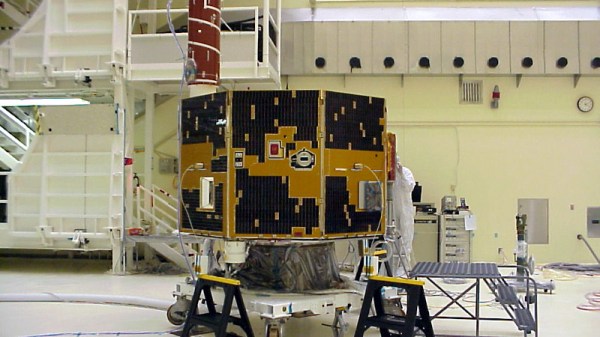
About three weeks ago, we reported that a satellite enthusiast in Canada found an unexpected signal among his listening data. It was a satellite, and upon investigation it turned out to be NASA’s IMAGE satellite, presumed dead since a power failure in 2005 interrupted its mission to survey the Earth’s magnetosphere.

This story is old news then, they’ve found IMAGE, now move on. And indeed the initial excitement is past, and you might expect that to be it from the news cycle perspective. But this isn’t the Daily Mail, it’s Hackaday. And because we are interested in the details of stories like these it’s a fascinating read to take a look at NASA’s detailed timeline of the satellite’s discovery and subsequent recovery.

In it we read about the detective work that went into not simply identifying the probable source of the signals, but verifying that it was indeed IMAGE. Then we follow the various NASA personnel as they track the craft and receive telemetry from it. It seems they have a fully functional spacecraft with a fully charged battery reporting for duty, the lost sheep has well and truly returned to the fold!

At the time of writing they are preparing to issue commands to the craft, so with luck by the time you read this they will have resumed full control of it and there will be fresh exciting installments of the saga. Meanwhile you can read our report of the discovery here, and read about a previous satellite brought back from the dead.

Picture of IMAGE satellite: NASA public domain.

Will John Deere Finally Get Their DMCA Comeuppance?

When it comes to activism, there are many different grades of activist aside from the few who you may encounter quietly and effectively working for change in their field. There are the self-proclaimed activists who sit in their armchairs and froth online about whatever their Cause is, but ultimately aside from making a lot of noise are pretty ineffectual. Then there are the Rebels With A Cause, involved in every radical movement of the moment and always out on the streets about something or other, but often doing those causes more harm than good. Activists can be hard work, at times.

If you are within whatever Establishment that has aroused the collective ire it is not the screamers and banner-wavers that should worry you, instead it is the people who are normally quiet. When people who spend their lives getting things done rather than complaining turn round en masse and rebel, it’s time to sit up and take notice. If people like the farmers or the squaddies are on the streets, the probability of your ending up on the wrong side of history has just increased exponentially and maybe it’s time to have a little think about where you’re going with all this.

The video below the break follows a group of Nebraska farmers fighting for the right to maintain their farm machinery, in particular the products of John Deere. Since all functions of a modern Deere are tied into the machine’s software, the manufacturer has used the DMCA to lock all maintenance into their dealer network. As one farmer points out, to load his combine harvester on a truck and take it on a 100-mile round trip to the dealer costs him $1000 every time a minor fault appears, and he and other farmers simply can’t afford that kind of loss. We’re taken to the Nebraska State Legislature and shown the progress of a bill that will enshrine the right to repair in Nebraskan law, and along the way we see the attempts by lobbyists to derail it.

We normally write Hackaday stories in the third person, but it’s worth saying that this is being written from a small farming community in Southern England, and that there is a green and yellow tractor parked outside somewhere. Thus it’s from first-hand experience that you can be told that Deere is in danger of becoming a damaged brand among its staunchest supporters. They still make damn fine tractors, but who wants to be caught with brief weather window to get on the land, and a machine that’s bricked itself? It’s hardly as though Deere are the only manufacturer of agricultural machinery after all.

This video is quite important, because it is a step towards the wider story becoming more than just a concern to a few farmers, hardware hackers, and right-to-repair enthusiasts. The last word should go to one of the farmers featured, when he points out that all his older tractors are just as capable of going out and doing the same day’s work without the benefit of all the computerized technology on their modern siblings.

Continue reading “Will John Deere Finally Get Their DMCA Comeuppance?”

What’s Coming In KiCad Version 5

Way back in the day, at least five years ago, if you wanted to design a printed circuit board your best option was Eagle. Now, Eagle is an Autodesk property, the licensing model has changed (although there’s still a free version, people) and the Open Source EDA suite KiCad is getting better and better. New developers are contributing to the project, and by some measures, KiCad is now the most popular tool to develop Open Source hardware.

At FOSDEM last week, [Wayne Stambaugh], project lead of KiCad laid out what features are due in the upcoming release of version 5. KiCad just keeps improving, and these new features are really killer features that will make everyone (unjustly) annoyed with Eagle’s new licensing very happy.

Although recent versions of KiCad have made improvements to the way part and footprint libraries are handled, the big upcoming change is that footprint libraries will be installed locally. The Github plugin for library management — a good idea in theory — is no longer the default. Spice simulation is also coming to KiCad. The best demo of the upcoming Spice integration is this relatively old video demonstrating how KiCad turns a schematic into graphs of voltage and current.

The biggest news, however, is the new ability to import Eagle projects. [Wayne] demoed this live on stage, importing an Eagle board and schematic of an Arduino Mega and turning it into a KiCad board and schematic in a matter of seconds. It’s not quite perfect yet, but it’s close and very, very good.

There are, of course, other fancy features that make designing schematics and PCBs easier. Eeschema is getting a better configuration dialog, improved bus and wire dragging, and improved junction handling. Pcbnew is getting rounded rectangle and complex pad shape support, direct export to STEP files, and you’ll soon be able to update the board from the schematic without updating the netlist file. Read that last feature again, slowly. It’s the best news we’ve ever heard.

Additionally, this is one of the rare times you get to hear [Wayne] speak. This means the argument over the pronunciation of KiCad is over. It’s ‘Key-CAD‘ not ‘Kai-CAD‘. You can check out the entirety of [Wayne]’s State of the KiCad talk below.

Continue reading “What’s Coming In KiCad Version 5”

SiFive Introduces RISC-V Linux-Capable Multicore Processor

Slowly but surely, RISC-V, the Open Source architecture for everything from microcontrollers to server CPUs is making inroads in the community. Now SiFive, the major company behind putting RISC-V chips into actual silicon, is releasing a chip that’s even more powerful. At FOSDEM this weekend, SiFive announced the release of a Linux-capable Single Board Computer built around the RISC-V ISA. It’s called the HiFive Unleashed, and it’s the first piece of silicon capable or running Linux on a RISC-V core.

SiFive’s HiFive Unleashed

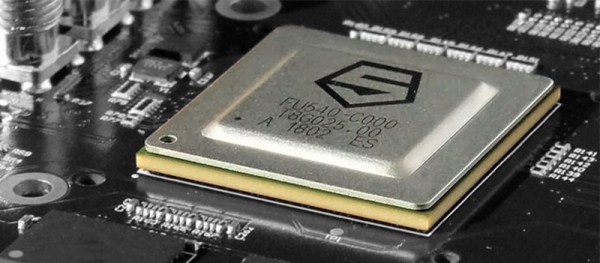
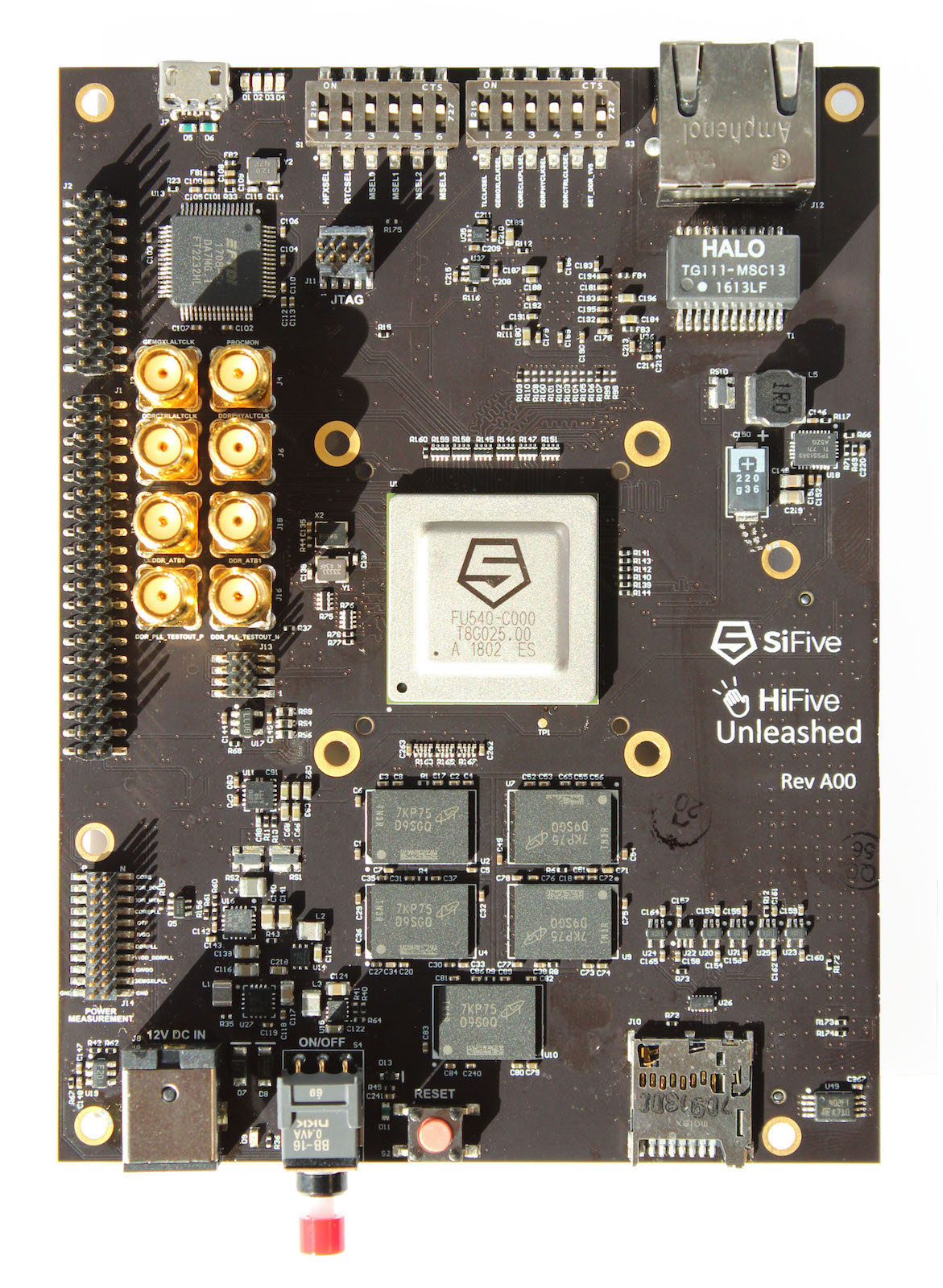
The HiFive Unleashed is built around the Freedom U540 SOC, a quad-core processor built on a 28nm process. The chip itself boasts four U54 RV64GC cores with an additional E51 RV64IMAC management core. This chip has support for 64-bit DDR4 with ECC and a single Gigabit Ethernet port. Those specs are just the chip though, and you’ll really need a complete system for a single board computer. This is the HiFive Unleashed, a board sporting the Freedom U540, 8GB of DDR4 with ECC, 32MB of Quad SPI Flash, Gigabit Ethernet, and a microSD card slot for storage. If you don’t mind being slightly inaccurate while describing this to a technological youngling, you could say this is comparable to a Raspberry Pi but with a completely Open Source architecture.

News of this caliber can’t come without some disappointment though, and in this case it’s that the HiFive Unleashed will ship this summer and cost $999. Yes, compared to a Raspberry Pi or BeagleBone that is an extremely high price, but it has to be borne in mind that this is a custom chip and low-volume silicon on a 28nm process. Until a router or phone manufacturer picks up a RISC-V chip for some commodity equipment, this architecture will be expensive.

This announcement of a full Single Board Computer comes just months after the announcement of the SOC itself. Already, GCC support works, Linux stuff is going upstream, and the entire Open Source community seems reasonably enthusiastic about RISC-V. It’ll be great to see where this goes in the coming years, and when we can get Linux-capable RISC-V chips for less than a kilobuck.

Global Resistor Shortage, Economics, And Consumer Behavior

The passive component industry — the manufacturers who make the boring but vital resistors, capacitors, and diodes found in every single electronic device — is on the cusp of a shortage. You’ll always be able to buy a 220 Ω, 0805 resistor, but instead of buying two for a penny like you can today, you may only get one in the very near future.

Yageo, one of the largest manufacturers of surface mount (SMD) resistors and multilayer ceramic capacitors, announced in December they were not taking new chip resistor orders. Yageo was cutting production of cheap chip resistors to focus on higher-margin niche-market components for automotive, IoT, and other industrial uses, as reported by Digitimes. Earlier this month, Yaego resumed taking orders for chip resistors, but with 15-20% higher quotes (article behind paywall, try clicking through via this Tweet).

As a result, there are rumors of runs on passive components at the Shenzhen electronics market, and several tweets from members of the electronics community have said the price of some components have doubled. Because every electronic device uses these ‘jellybean’ parts, a decrease in supply or increase in price means some products won’t ship on time, margins will be lower, or prices on the newest electronic gadget will increase.

The question remains: are we on the brink of a resistor shortage, and what are the implications of manufacturers that don’t have the parts they need?

Continue reading “Global Resistor Shortage, Economics, And Consumer Behavior”