Boxee Available For Ubuntu


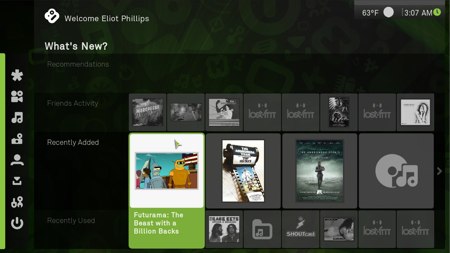
The Boxee blog has recently announced that they have finally released a Linux version. So far, only Ubuntu 7.10 through 8.04 support is available. We covered Boxee when they released their alpha version a few months ago. One of the unique things we found about it was the added social layer that allows the user to share their viewing and listening information on various social networking sites.

This XBMC based media streamer has won a lot of praise lately and we are excited to finally see it step into the Linux platform. Up until now, Boxee was strictly run on OSX 10.5 and thus bound to Apple’s hardware configurations. Once they get a stable version running, it will be extremely easy for anyone to build a media streamer from an old PC with various hardware configurations.


Surveillance As Art


The Target Project is a graduate project from the Royal College of Arts in London. It is designed to make us question our relationship with surveillance technology and CCTV. This is a particularly meaningful demonstration for a country like Britain which is said to contain up to 4.2 million CCTV cameras or roughly 1 for every 14 people.

This project has two demonstrations on their site. The first is dubbed the RTS-2 (Racial Targeting System). This system is essentially a camera which follows faces and is able to analyze and interpret the person’s race. The second is SOLA. This system is able to quickly scan someone and calculate their body mass index then publish this information to the web. Both systems achieve their goal by blatantly pointing out a line in which more surveillance does not equate to more security. They also show the wealth of personal data that can be obtained about a person by a simple camera.

[via we make money not art]

Predictive Blacklisting With DShield


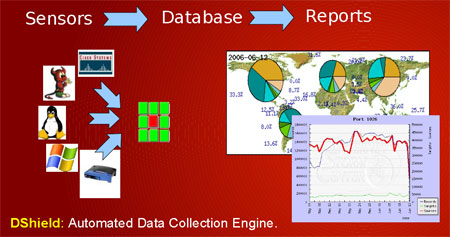
The DShield project is hoping to change how we protect our networks from malware with predictive blacklisting. Using a method similar to Google’s PageRank, DShield collects logs from network administrators to help develop a score based on maliciousness. They combine this score with information about where the malware has already hit to determine an overall threat level.

Similar to antivirus programs, the system still relies on networks being attacked to rate the threat level. They have shown though, that the predictive method is consistently more effective than manual blacklisting. The system has been available for free for the past year. Those utilizing the system have been reporting positive results. They do note that there are a few people whose network infrastructure doesn’t match up with the predictions very well. If you would like to participate, go to their site and sign up.

HOPE 2008: YouTomb, A Free Culture Hack


YouTomb is a research project designed by the MIT Free Culture group to track video take downs on YouTube. To succeed, the team needed to track every single video on YouTube… which is close to impossible. Instead, they built several “explorer” scripts to track what videos were interesting. One explorer tracks all of YouTube’s lists: recommended, featured, most active, and more. Another explorer picks up every video submitted to YouTube, and a third crawls Technorati.

The explorers just find the videos; a separate group of scanner scripts checks the current status of videos. It checks both the new videos and ones that have been killed to see if they return. YouTomb archives every video it finds. They display the thumbnail of the video under fair use, but they’re still determining whether they can display each video in full.

Continue reading “HOPE 2008: YouTomb, A Free Culture Hack”

DNS Cache Poisoning Webcast


UPDATE: Full audio of the webcast is now available

Today Black Hat held a preview webcast with [Dan Kaminsky] about the massive DNS bug he discovered. On July 8th, multiple vendors announced a patch for an undisclosed DNS vulnerability. [Dan Kaminisky] did not release the details of the vulnerability at that time, but encouraged security researchers to not release their work, if they did happen to discover the bug. On the 21st, the full description of the vulnerability was leaked.

In today’s webcast, [Dan] covered how he felt about the handling of the vulnerability and answered a few questions about it. He started out by talking about how he stumbled across the bug; he was working on how to make content distribution faster by using DNS to find the server closest to the client. The new attack works because DNS servers not using port randomization make it easy for the attacker to forge a response. You can read the specifics of the attack here.

Continue reading “DNS Cache Poisoning Webcast”

DNS Exploit In The Wild


We’ve been tracking Metasploit commits since Matasano’s premature publication of [Dan Kaminsky]’s DNS cache poisoning flaw on Monday knowing full well that a functional exploit would be coming soon. Only two hours ago [HD Moore] and [I)ruid] added a module to the Metasploit Project that will let anyone test the vulnerability (with comment: “ZOMG. What is this? >:-)“). [HD] told Threat Level that it doesn’t work yet for domains that are already cached by the DNS server, but it will automatically wait for the cached entry to expire and then complete the attack. You can read more about the bailiwicked_host.rb module in CAU’s advisory. For a more detailed description of how the attack works, see this mirror of Matason’s post. You can check if the DNS server you are using is vulnerable by using the tool on [Dan]’s site.

[photo: mattdork]