Making Intel Mad, Retrocomputing Edition

Intel has had a deathgrip on the PC world since the standardization around the software and hardware available on IBM boxes in the 90s. And if you think you’re free of them because you have an AMD chip, that’s just Intel’s instruction set with a different badge on the silicon. At least AMD licenses it, though — in the 80s there was another game in town that didn’t exactly ask for permission before implementing, and improving upon, the Intel chips available at the time.

The NEC V20 CPU was a chip that was a drop-in replacement for the Intel 8088 and made some performance improvements to it as well. Even though the 186 and 286 were available at the time of its release, this was an era before planned obsolescence as a business model was king so there were plenty of 8088 systems still working and relevant that could take advantage of this upgrade. In fact, the V20 was able to implement some of the improved instructions from these more modern chips. And this wasn’t an expensive upgrade either, with kits starting around $16 at the time which is about $50 today, adjusting for inflation.

This deep dive into the V20 isn’t limited to a history lesson and technological discussion, though. There’s also a project based on Arduino which makes use of the 8088 with some upgrades to support the NEC V20 and a test suite for a V20 emulator as well.

If you had an original IBM with one of these chips, though, things weren’t all smooth sailing for this straightforward upgrade at the time. A years-long legal battle ensued over the contents of the V20 microcode and whether or not it constituted copyright infringement. Intel was able to drag the process out long enough that by the time the lawsuit settled, the chips were relatively obsolete, leaving the NEC V20 to sit firmly in retrocomputing (and legal) history.

The MXM card with the 3dfx chip in the center, black silkscreen, mounted on the MXM to PCIe adapter, green silkscreen

An MXM Take On The 3dfx Voodoo

[sdz] of Vogons forum brings us an unexpected device for the 21st century – a 3dfx Voodoo 4 card in MXM format, equipped with 64MB of RAM. This isn’t just a showpiece – this card actually, properly works when installed into our hacker’s Dell Precision M4800, and [sdz] tells us more on how the card came to be.

Structure diagram of the cardEquipped with a VSA-100 GPU, this card has a whole lot of support components for adapting old interfaces to modern ones. There’s a PCIe-PCI bridge IC, an FPGA, HDMI muxes, and a Realtek scaler for video conversion. Handling all the MXM interfaces would’ve been downright impossible, so the card also holds an LVDS header for the M4800’s panel. Plus, for testing all of it, [sdz] has developed a PCIe to MXM adapter board with minimal circuitry needed to have the card work – this is a seriously involved hack and it’s executed remarkably well.

The forum post shows a whole lot of the journey, from receiving the PCBs to code and FPGA gateware bringup, as well as videos of VGA and HDMI operation. In the end, our hacker shows us a fully working setup, the 3dfx card inserted into M4800 and driving its display, as well as overclocking experiments; the author has promised to open-source the card files in due time, too. It’s seriously nice to see DIY MXM cards in the wild, and if you ever wanted to build one, we’ve got an article tells you everything you could want to know about the MXM standard.

We thank [Misel] for sharing this with us!

Continue reading “An MXM Take On The 3dfx Voodoo”

The IBM PC: Brainchild Of A Misfit

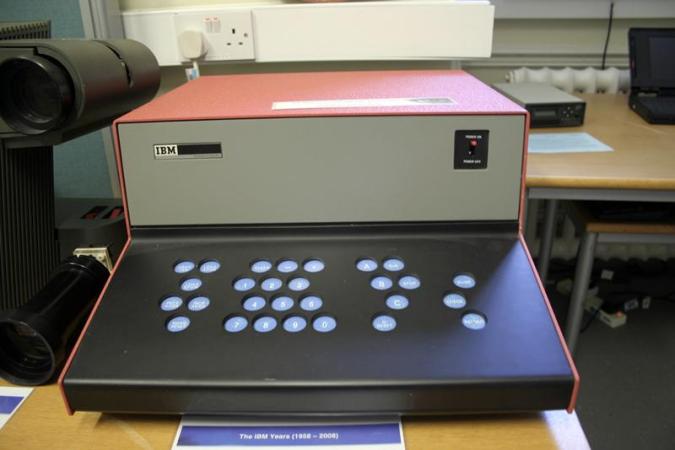
We’ve read a number of histories of the IBM PC and lived through that time, too. But we enjoyed [Gareth Edwards’] perspective in a post entitled The Misfit who Built the IBM PC. The titular character is Don Estridge, a decidedly atypical IBM employee who was instrumental in creating the personal computer market as we know it.

It’s not that IBM invented the personal computer — far from it. But the birth of the PC brought personal computers to the mainstream, especially in offices, and — much to IBM’s chagrin — opened up the market for people to make add-on cards for printers, videos, and other accessories.

IBM was a computer juggernaut in the late 1970s. Its divisions were the size of other companies, and some have compared it to a collection of mafia families. The company was heavily invested in big computers, and management was convinced that personal computing was, at most, an avenue to video games and most likely a fad.

Known as a conservative company, the PC project drew from a number of corporate misfits who had been technically successful but often punished for coloring outside the lines. They developed a prototype. The post quotes one of the people involved as saying, “The system would do two things. It would draw an absolutely beautiful picture of a nude lady, and it would show a picture of a rocket ship blasting off the screen. We decided to show the Management Committee the rocket ship.” Wise choice.

That’s just the kind of tidbit in this post, and if you have any interest in computer history of the 1980s, you’ll definitely want to check it out. Estridge died in 1985, so he didn’t get to see much of the result of the market he opened up. Of course, there were many other players who appear in this story. The PC has many parents, as you might expect.

We’ve done our own recounting of this story. However, we tend to obsess more over the internals.

Comparing X86 And 68000 In An FPGA

[Michael Kohn] started programming on the Motorola 68000 architecture and then, for work reasons, moved over to the Intel x86 and was not exactly pleased by the latter chip’s perceived shortcomings. In the ’80s, the 68000 was a very popular chip, powering everything from personal computers to arcade machines, and looking at its architecture and ease of programming, you can see why this was.

Fast-forward a few years, and [Michael] decided to implement both cores in an FPGA to compare real applications, you know, for science. As an extra bonus, he also compares the performance of a minimal RISC-V implementation on the same hardware, taken from an earlier RISC-V project (which you should also check out !)

Utilizing their ‘Java Grinder’ application (also pretty awesome, especially the retro console support), a simple Mandelbrot fractal generator was used as a non-trivial workload to produce binaries for each architecture, and the result was timed. Unsurprisingly, for CISC architectures, the 68000 and x86 code sizes were practically identical and significantly smaller than the equivalent RISC-V. Still, looking at the execution times, the 68000 beat the x86 hands down, with the newer RISC-V speeding along to take pole position. [Michael] admits that these implementations are minimal, with no pipelining, so they could be sped up a little.

Also, it’s not a totally fair race. As you’ll note from the RISC-V implementation, there was a custom RISC-V instruction implemented to perform the Mandelbrot generator’s iterator. This computes the complex operation Z = Z2 + C, which, as fellow fractal nerds will know, is where a Mandelbrot generator spends nearly all the compute time. We suspect that’s the real reason RISC-V came out on top.

If actual hardware is more your cup of tea, you could build a minimal 68k system pretty easily, provided you can find the chips. The current ubiquitous x86 architecture, as odd as it started out, is here to stay for the foreseeable future, so you’d just better get comfortable with it!

Continue reading “Comparing X86 And 68000 In An FPGA”

Using Kick Assembler And VS Code To Write C64 Assembler

YouTuber [My Developer Thoughts], a self-confessed middle-aged Software Developer, clearly has a real soft spot for the 6502-based 8-bit era machines such as the Commodore 64 and the VIC-20, for which he has created several video tutorials while travelling through retro-computing. This latest instalment concerns bringing up the toolchain for using the Kick Assembler with VS Code to target the C64, initially via the VICE emulator.

The video offers a comprehensive tutorial on setting up the toolchain on Windows from scratch with minimal knowledge. While some may consider this level of guidance unnecessary, it is extremely helpful for those who wish to get started with a few examples quickly and don’t have the time to go through multiple manuals and Wikis. In that regard, the video does an excellent job.

VS Code is a great tool with a large user base, so it’s not surprising that there’s a plugin for using the Kick Assembler directly from the IDE. You can also easily launch the application onto the emulator with just a push of a button, allowing you to focus on learning and working on your application. Once it runs under emulation, there’s a learning curve for running it on native hardware, but there are plenty of tutorials available for that. While you could code directly on the C64 itself, it’s much more pleasant to use modern tools, revision control, and all the conveniences and not have to endure the challenges.

Once you’ve mastered assembly, it may be time to move on to C or even C++. The Oscar64 compiler is a good choice for that. Next, you may want to show off your new skills on the retro demo scene. Here’s a neat C64 demo with a twist. There is no C64.

Continue reading “Using Kick Assembler And VS Code To Write C64 Assembler”

The Amiga We All Wanted In 1993

To be an Amiga fan during the dying days of the hardware platform back in the mid 1990s was to have a bleak existence indeed. Commodore had squandered what was to us the best computer ever with dismal marketing and a series of machines that were essentially just repackaged versions of the original. Where was a PCI Amiga with fast processors, we cried!

Now, thirty years too late, here’s [Jason Neus] with just the machine we wanted, in the shape of an ATX form factor Amiga motherboard with those all-important PCI slots and USB for keyboard and mouse.

What would have been unthinkable in the ’90s comes courtesy of an original or ECS Amiga chipset for the Amiga functions, and an FPGA and microcontroller for PCI and USB respectively. Meanwhile there’s also a PC floppy drive controller, based on work from [Ian Steadman]. The processor and RAM lives on a daughter card, and both 68040 and 68060 processors are supported.

Here in 2024 of course this is still a 1990s spec board, and misty-eyed speculation about what might have happened aside, it’s unlikely to become your daily driver. But that may not be the point, instead we should evaluate it for what it is. Implementing a PCI bus, even a 1990s one, is not without its challenges, and we’re impressed with the achievement.

If you’re interested in Amiga post-mortems, here’s a slightly different take.

Inside A Mystery Aerospace Computer With [Ken Shirriff]

When life hands you a mysterious bit of vintage avionics, your best bet to identifying it might just be to get it in front of the biggest bunch of hardware hounds on the planet. After doing a teardown and some of your own investigation first, of course.

The literal black box in question came into [Ken Shirriff]’s custody courtesy of [David] from Usagi Electric, better known for his vacuum tube computer builds and his loving restoration of a Centurion minicomputer. The unit bears little in the way of identifying markings, but [Ken] was able to glean a little by inspecting the exterior. The keypad is a big giveaway; its chunky buttons seem optimized for use with the gloved hands of a pressure suit, and the ordinal compass points hint at a navigational function. The layout of the keypad is similar to the Apollo DSKY, which might make it a NASA artifact. Possibly contradicting all of that is the oddball but very cool electromechanical display, which uses reels of digits and a stepper-like motor to drive them.

Inside, more mysteries — and more clues — await. Unlike a recent flight computer [Ken] looked at, most of the guts are strictly electronic. The instrument is absolutely stuffed with PCBs, most of which are four-layer boards. Date codes on the hundreds of chips all seem to be in the 1967 range, dating the unit to the late 60s or early 70s. The weirdest bit is the core memory buried deep inside the stacks of logic and analog boards. [Ken] found 20 planes with the core, hinting at a 20-bit processor.

In the end, [Ken] was unable to come to any firm conclusion as to what this thing is, who made it, or what its purpose was. We doubt that his analysis will end there, though, and we look forward to the reverse engineering effort on this piece of retro magic.