3D Printing Computer Space

The first computer game available as a commercial arcade cabinet is unsurprisingly, a rare sight here in 2024. Nolan Bushnel and Ted Dabney’s 1971 Computer Space was a flowing fiberglass cabinet containing a version of the minicomputer game Spacewar! running on dedicated game hardware. The pair would of course go on to found the wildly successful Atari, leaving their first outing with its meager 1500 units almost a footnote in their history.

Unsurprisingly with so relatively few produced, few made it out of the United States, so in the UK there are none to be found. [Arcade Archive] report on a fresh build of a Computer Space cabinet, this time not in fiberglass but via 3D printed plastic.

The build itself is the work of [Richard Horne], and in the video he takes us through the design process before printing the parts and then sticking them all together to make the cabinet. Without a real machine to scan or measure he’s working from photographs of real machines, working out dimensions by reference to other cabinets such as PONG that appear alongside them. The result is about as faithful a model of the cabinet as could be made, and it’s cut into the many pieces required for 3D printing before careful assembly.

This is the first in a series, so keep following them to see a complete and working Computer Space take shape.

Continue reading “3D Printing Computer Space

Retrotechtacular: The IBM 7070

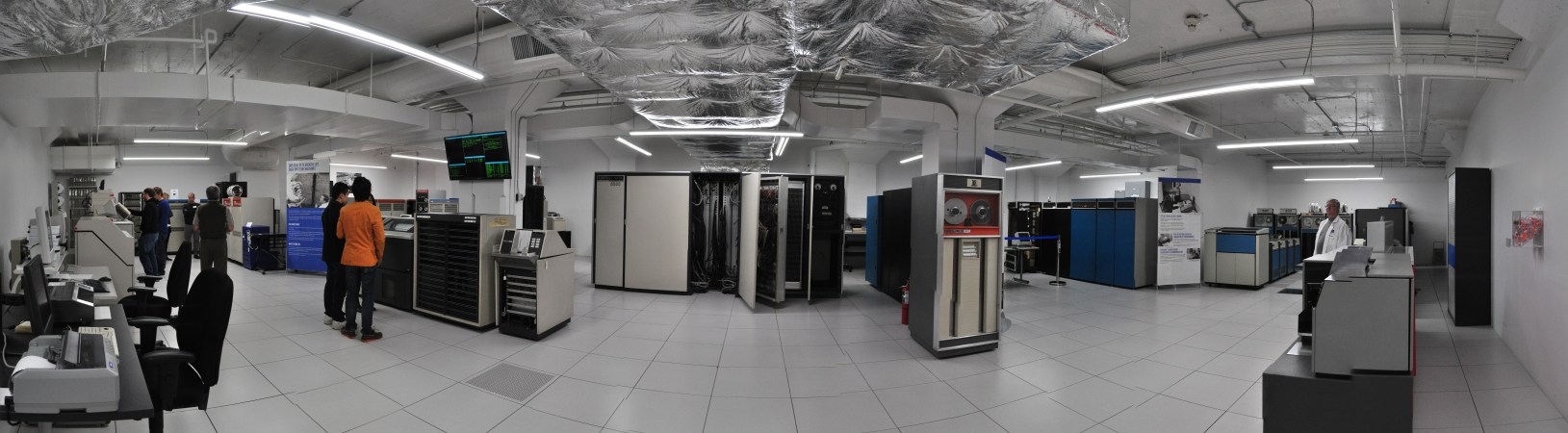
If you think of IBM mainframe computers, you most likely are thinking of the iconic S/360 or the slightly newer S/370. But what about the 7070 from 1958? It had transistors! It didn’t, however, use binary. Instead, it was a decimal-architecture machine. You can see a lost video of the machine below.

It was originally slated to upgrade the older IBM 650 and 705 computers. However, it wasn’t compatible with either, so IBM had to roll out the IBM7080, which was compatible, at least, with the 705. Both machines could run 650 code via emulation.

Continue reading “Retrotechtacular: The IBM 7070”

The Intel 8088 And 8086 Processor’s Instruction Prefetch Circuitry

The 8088 die under a microscope, with main functional blocks labeled. This photo shows the chip's single metal layer; the polysilicon and silicon are underneath. (Credit: Ken Shirriff)
The 8088 die under a microscope, with main functional blocks labeled. This photo shows the chip’s single metal layer; the polysilicon and silicon are underneath. (Credit: Ken Shirriff)

Cache prefetching is what allows processors to have data and/or instructions ready for use in a fast local cache rather than having to wait for a fetch request to trickle through to system RAM and back again. The Intel 8088  (and its big brother 8086) processor was among the first microprocessors to implement (instruction) prefetching in hardware, which [Ken Shirriff] has analyzed based on die images of this famous processor. This follows last year’s deep-dive into the 8086’s prefetching hardware, with (unsurprisingly) many similarities between these two microprocessors, as well as a few differences that are mostly due to the 8088’s cut-down 8-bit data bus.

While the 8086 has 3 16-bit slots in the instruction prefetcher the 8088 gets 4 slots, each 8-bit. The prefetching hardware is part of the Bus Interface Unit (BIU), which effectively decouples the actual processor (Execution Unit, or EU) from the system RAM. While previous MPUs would be fully deterministic, with instructions being loaded from RAM and subsequently executed, the 8086 and 8088’s prefetching meant that such assumptions no longer were true. The added features in the BIU also meant that the instruction pointer (IP) and related registers moved to the BIU, while the ringbuffer logic around the queue had to somehow keep the queueing and pointer offsets into RAM working correctly.

Even though these days CPUs have much more complicated, multi-level caches that are measured in kilobytes and megabytes, it’s fascinating to see where it all began, with just a few bytes and relatively straight-forward hardware logic that you easily follow under a microscope.

Retrotechtacular: TOPS Runs The 1970s British Railroad

How do you make the trains run on time? British Rail adopted TOPS, a computer system born of IBM’s SAGE defense project, along with work from Standford and Southern Pacific Railroad. Before TOPS, running the railroad took paper. Lots of paper, ranging from a train’s history, assignments, and all the other bits of data required to keep the trains moving. TOPS kept this data in real-time on computer screens all across the system. While British Rail wasn’t the only company to deploy TOPS, they were certainly proud of it and produced the video you can see below about how the system worked.

There are a lot of pictures of old big iron and the narrator says it has an “immense storage capacity.”  The actual computers in question were a pair of IBM System/370 mainframes that each had 4 MB of RAM. There were also banks of 3330 disk drives that used removable disk packs of — gasp — between 100 and 200 MB per pack.

As primitive and large as those disk drives were, they pioneered many familiar-sounding technologies. For example, they used voice coils, servo tracking, MFM encoding, and error-correcting encoding.

Continue reading “Retrotechtacular: TOPS Runs The 1970s British Railroad”

The Cryotron Remembered

[Sean Haas] is a “dangerous freelance historian,” and his recent talk at the Vintage Computer Festival in Southern California covers the cryotron — a strange detour on the road to computers circa 1956. The NSA wanted a computer to break codes, but in 1956, there wasn’t much to pick from, especially since they wanted a very fast computer.

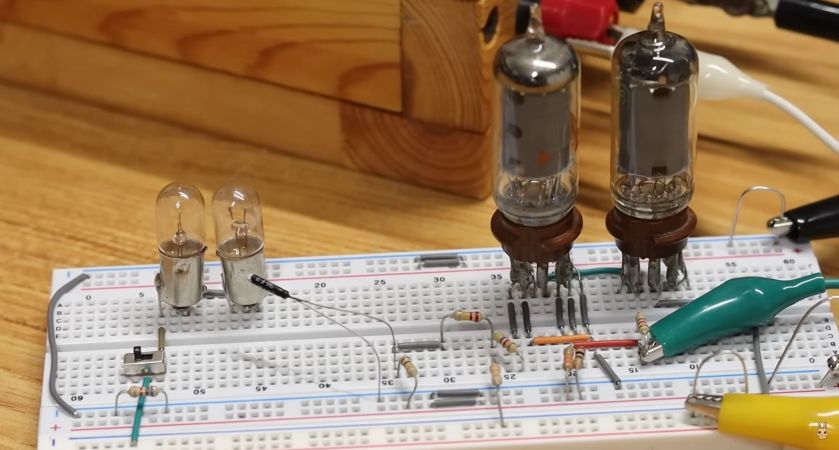
As you might expect from the name, a cryotron depends on superconductivity. The original device was a tantalum wire wrapped with a niobium wire coil. When the device is soaked in liquid helium, both wires become superconducting. The tantalum wire can carry way more current in that state unless the niobium coil generates a magnetic field, which kills the wire’s superconductivity. On the plus side, you have a relay-like switch that works with no moving parts. On the negative side, you need liquid helium.

Continue reading “The Cryotron Remembered”

A 65-in-1 The 2024 Way

If necessity is the mother of invention, nostalgia must be its stepmother, or its aunt at the very least. The desire to recreate long-obsolete devices simply because they existed while we were growing up is a curious trait, but one that’s powerful enough to drive entire categories of hardware hacking — looking at you, retrocomputing buffs.

Hardware nostalgia isn’t all about 6502s and Z80s, though. Even more basic were the electronic toys of the 1970s, such as the Radio Shack 65-in-1 kit that [Tom Thoen] is currently recreating. The 65-in-1 was a breadboarding kit aimed at the budding electrical engineer, with components mounted to colorful cardboard by spring terminals. The included “lab manual” had circuits that could be quickly assembled using a handful of jumper wires. It was an endlessly fascinating toy that undoubtedly launched many careers, present company included.

The original 65-in-1 was $21.95 in 1976, or about $120 today.

While the passage of time may not have dulled [Tom]’s memories of his original 65-in-1, technology has marched on, meaning that certain allowances had to be made to create a modern version. He wisely eschews the cardboard for PCBs, one for each of the major component blocks provided in the original, and uses female header connectors in place of the springs. Component choice is tailored for the times; gone are the ferrite rod antenna and variable capacitor of the original, as well as the incandescent lamp, which is replaced by an LED that would have been a significant fraction of the kit’s $21.95 price back in 1976. There’s no BOM yet, so we can’t say for sure if any of the transistors are germanium, but it’s clear that there aren’t any of the old TO-1 cans. But dismay not, originalists, for the meter, relay, CdS photocell, and “solar battery” all made the final cut.

[Tom] has done some beautiful work here, with more to come. We imagine that 3D printing could be used to recreate some details like the original Morse key and speaker grille. We love the laser-engraved backing board, too, as it captures some of the charm of the original’s wooden box. This isn’t the only love for the “Science Fair” brand we’ve seen lately, either; the nostalgia seems to be contagious.

Retro Hackintosh Made From Retro Parts

Apple as a company, has staked most of its future around being a “walled garden” where it controls everything from the hardware up through the user experience. In some ways this is good for users; the hardware is generally high quality and vetted by the company creating the software, making for a very uniform experience. This won’t stop some people from trying to get Apple’s operating systems and other software running on unapproved hardware though. These “Hackintosh” computers were much more common in the Intel era but this replica goes even further back to the Macintosh era.

Originally [Kevin] had ordered an authentic Macintosh with the intent of getting it working again, but a broken floppy disk drive and lack of replacement parts turned this project into a different beast. He used the Mac instead as a model for a new 3D-printed case, spending a ton of time sanding, filling, and finishing it to get it to look nearly indistinguishable from the original. The hardware going in this replica is an old Linux-based thin client machine running the Mini vMac operating system, with a modified floppy drive the computer uses to boot. A hidden SD card slot helps interface with modern computers. The display is a modern LCD, though a sheet of acrylic glued to the front panel replicates a bit of the CRT curve.

Click through to read on!

Continue reading “Retro Hackintosh Made From Retro Parts”