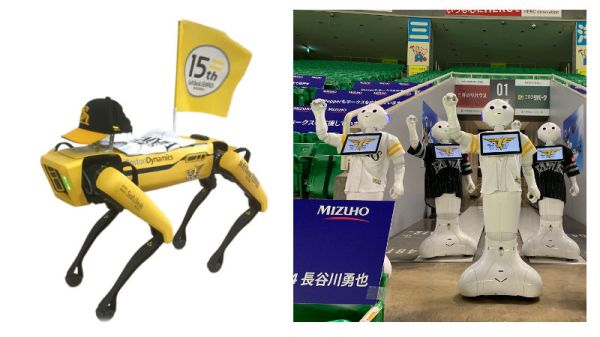
Grand venues of spectacle to entertain audiences has long been a part of history, but such tradition is highly problematic at the moment in the light of the pandemic. Some sports leagues are testing the waters with a soft restart by playing only to a broadcast audience, leaving the stadium empty. Many experiments are in progress trying to liven up an empty stadium and this is where SoftBank saw an opportunity: as a multinational conglomerate that has both a baseball team and a robotics division, they called a team of robots to cheer-leading duty.
Some clips of the cheerleading squad in action have started circulating. A few people may greet the sight with an indifferent shrug, but most tend to fall to an extreme: either finding them hilarious or react with horror. It is only natural to have a strong reaction to such a jarring sight.
「Spotさん」と「Pepperさん」によるおそらく宇宙史上初のいざゆけ若鷹軍団コラボレーションダンス(部) #sbhawks pic.twitter.com/MeGxUkmxo6
— パ・リーグ.com Lite / パーソル パ・リーグTV Lite (@PLcom_lite) July 7, 2020
Spot was only available for sale recently, and we admit this was not the type of task that came to our minds. Pepper has a longer track record and this is not Pepper’s first baseball game. The humanoid robot has been around long enough to raise questions about a robot’s role in society from unionization to sex work. We haven’t made much progress answering those questions, and now we have even more questions that the lightweight SoftBank Robotics press release (in Japanese) didn’t try to answer.
When people fret about “robots taking our jobs” the conversation doesn’t usually involve sports team cheerleaders, yet here we are. Welcome to the future.
Continue reading “SoftBank Robots Pinch Hit For Baseball Cheerleaders”