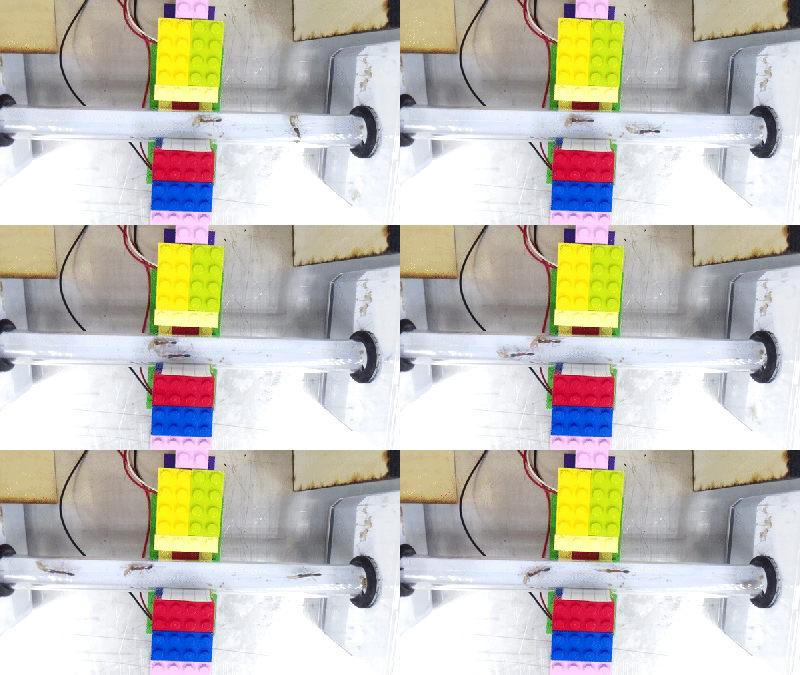
As apples travel down the conveyor belt, they are scanned using InGaAs and CMOS cameras. The InGaAs camera will show defects beginning to form under the skin that a human eye cannot see; the CMOS camera will show visible defects. (Credit: Hamamatsu)

Shining A Different Light On Reality With Short-Wave Infrared Radiation

As great as cameras that operate in the visual light spectrum are, they omit a lot of the information that can be gleaned from other wavelengths. There is also the minor issue that visibility is often impacted, such as when it’s raining, or foggy. When this happens, applications such as self-driving cars which rely on this, have a major issue. Through the use of sensors that are sensitive to other wavelengths, we can however avoid many of these issues.

Short-wave infrared radiation (SWIR) is roughly the part of the electromagnetic spectrum between 1.4 μm – 3 μm, or 100 THz – 214 THz. This places it between visible light and microwaves, and above long-wave IR at 20 THz – 37 THz. LWIR is what thermal cameras use, with LWIR also emitted by warm objects, such as the human body.

SWIR is largely unaffected by water in the atmosphere, while also passing through materials that are opaque to visible light. This allowing SWIR to be used for the analysis and inspection of everything from PCBs and fruit to works of art to capture details that are otherwise invisible or very hard to see.

Unfortunately, much like thermal camera sensors, SWIR sensors are rather expensive. Or they were, until quite recently, with the emergence of quantum-dot-based sensors that significantly decrease the costs of these sensors.

Continue reading “Shining A Different Light On Reality With Short-Wave Infrared Radiation”

How The Hunga Tonga Volcano Eruption Was Felt Around The World

On the 14th of January, 2022, the Hunga Tonga-Hunga Ha’apai volcano began a gigantic eruption that would go on to peak in ferocity the next day. The uninhabited island volcano would quickly make headlines as the country of Tonga was cut off the world and tsunamis bore out from the eurption zone.

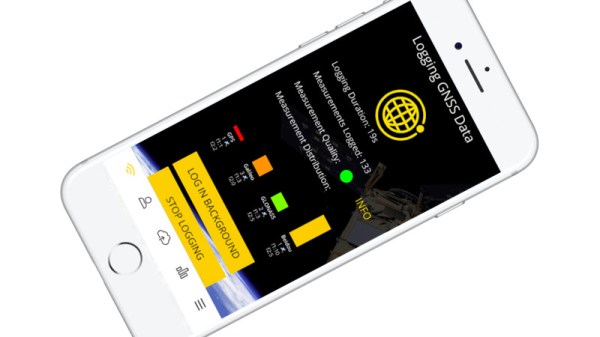
In a volcanic event of this size, the effects can be felt around the world. With modern instruments, they can be properly understood too. Let’s take a look at how the effects of the Hunga Tonga eruption were captured and measured across the globe.

Continue reading “How The Hunga Tonga Volcano Eruption Was Felt Around The World”

Radio Amateurs & Skywatchers Rejoice, Sat Operators Worry: Solar Storm Incoming

How do you look back over your life and divide it up? Maybe by decades, cultural moments, or geopolitical events. For radio amateurs with older callsigns there’s a temptation to do so by solar cycles, as the roughly 11-year period of the Sun’s activity had a huge effect on radio propagation through the charge it creates in the upper atmosphere. We’re now in solar cycle 25, numbered since the 18th century when the science of solar observation began, and as never before we’re surrounded by information from experts such as [Dr. Tamitha Skov], the so-called [Space Weather Woman]. When she says something is on the way we listen, so a recent Tweet predicting a direct hit from a solar storm with a good probability of auroras in lower latitudes is very much worth sharing.

We must extend our commiserations to readers in equatorial climes and ever through the lower half of the USA, southern Europe, the Middle East, India, Japan, and China. You won’t see the aurora we’ll catch in Europe along with our friends in New Zealand, Canada, Russia, and northern USA. But even then to those of us at moderate latitudes an aurora is a pretty rare event, so we’re hoping for clear skies on the 2nd of February and would advise you to look out too if you’re in the likely zone even if they won’t be quite as impressive as those in our header picture. Meanwhile radio amateurs everywhere don’t have to see pretty lights in the sky to reap the benefits in terms of propagation, so happy DX hunting! The Tweet is embedded below the break, so you can play the timeline for yourselves.

Continue reading “Radio Amateurs & Skywatchers Rejoice, Sat Operators Worry: Solar Storm Incoming”

Speed of motion test setup

Simple Setup Answers Complex Question On The Physics Of Solids

Thought experiments can be extremely powerful; after all, pretty much everything that [Einstein] came up with was based on thought experiments. But when a thought experiment turns into a real experiment, that’s when things can get really interesting, and where unexpected insights crop up.

Take [AlphaPhoenix]’s simple question: “Are solid objects really solid?” On the face of it, this seems like a silly and trivial question, but the thought experiment he presents reveals more. He posits that pushing on one end of a solid metal rod a meter or so in length will result in motion at the other end of the rod pretty much instantly. But what if we scale that rod up considerably — say, to one light-second in length. Is a displacement at one end of the rob instantly apparent at the other end? It’s a bit of a mind-boggler.

To answer the question, [AlphaPhoneix] set up a simple experiment with the aforementioned steel rod — the shorter one, of course. The test setup was pretty clever: a piezoelectric sensor at one end of the bar, and a hammer wired to a battery at the other end, to sense when the hammer made contact with the bar. Both sensors were connected to an oscilloscope to set up to capture the pulses and measure the time. It turned out that the test setup was quite a challenge to get right, and troubleshooting the rig took him down a rabbit hole that was just as interesting as answering the original question. We won’t spoil the ending, but suffice it to say we were pleased that our first instinct turned out to be correct, even if for the wrong reasons.

If you haven’t checked out [AlphaPhoenix] yet, you really should. With a doctorate in material science, he’s got an interesting outlook on things, like calculating pi using raindrops or keeping the “ultra” in ultra-high vacuum. Continue reading “Simple Setup Answers Complex Question On The Physics Of Solids”

That’s No Moon… It’s An Algae Robot

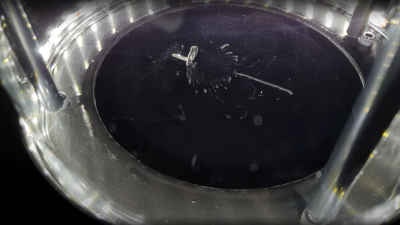
When you think of a robot, you probably don’t think of a ball of underwater algae. But a team of university researchers used a 3D-printed exoskeleton and a ball of marimo algae to produce a moving underwater sensor platform. It is really at a proof-of-concept stage, but it seems as though it would be possible to make practical use of the technology.

Marimo are relatively rare balls of algae that occur in some parts of the world. A robot powered by algae runs on sunlight and could be electromagnetically quiet.

Continue reading “That’s No Moon… It’s An Algae Robot”

SHERLOC And The Search For Life On Mars

Humanity has been wondering about whether life exists beyond our little backwater planet for so long that we’ve developed a kind of cultural bias as to how the answer to this central question will be revealed. Most of us probably imagine that NASA or some other space agency will schedule a press conference, an assembled panel of scientific luminaries will announce the findings, and newspapers around the world will blare “WE ARE NOT ALONE!” headlines. We’ve all seen that movie before, so that’s the way it has to be, right?

Probably not. Short of an improbable event like an alien spacecraft landing while a Google Street View car was driving by or receiving an unambiguously intelligent radio message from the stars, the conclusion that life exists now or once did outside our particular gravity well is likely to be reached in a piecewise process, an accretion of evidence built up over a long time until on balance, the only reasonable conclusion is that we are not alone. And that’s exactly what the announcement at the end of last year that the Mars rover Perseverance had discovered evidence of organic molecules in the rocks of Jezero crater was — another piece of the puzzle, and another step toward answering the fundamental question of the uniqueness of life.

Discovering organic molecules on Mars is far from proof that life once existed there. But it’s a step on the way, as well as a great excuse to look into the scientific principles and engineering of the instruments that made this discovery possible — the whimsically named SHERLOC and WATSON.

Continue reading “SHERLOC And The Search For Life On Mars”

Better Farming Through Electricity

Chinese researchers are reporting that applying an electric field to pea plants increased yields. This process — known as electroculture — has been tested multiple times, but in each case there are irregularities in the scientific process, so there is still an opportunity for controlled research to produce meaningful data.

This recent research used two plots of peas planted from the same pods. The plants were tended identically except one plot was stimulated by an electric field. The yield on the stimulated plot was about 20% more than the control plot.

The actual paper is paywalled in the journal Nature Food, but the idea seems simple enough. If you search for the topic, you’ll find there have been other studies with similar findings. There are also anecdotal reports of electrical plant stimulation going back to 1746.

Continue reading “Better Farming Through Electricity”