An image of a pigeon on the left and a breakdown of six of the different kind of feathers on the bird. The bird's right wing is white with black dots and has an arrow pointing to it saying, "Developing wing with feather buds." The left wing is grey with one feather highlighted in pink with the text "Adult wing with feathers" at the end of an arrow pointing to it. The six feather types on the right side of the image are flight feathers, illustrated in pink with the text "enable flight, support aerodynamic loads, morph depending on flying style, building blocks for wing planaform." In green, we have tail feathers and the text "Maneuverability and controlability." In blue are the contour feathers, accompanied by the text, "streamline, camouflage, and sexual display. Found above filoplumes and semiplumes." A black floofy branched structure shows us the downy feathers next to the text "thermal insulation." Filoplumes and semiplumes look to be both thin and bushy feathers in black with the text "Sense underlying feathers, found above downy feathers." Finally, we have a black, stick-like bristle feather with the text "Protect face and eyes, sense surroundings."

Feathers Are Fantastic, But Flummoxing For Engineers

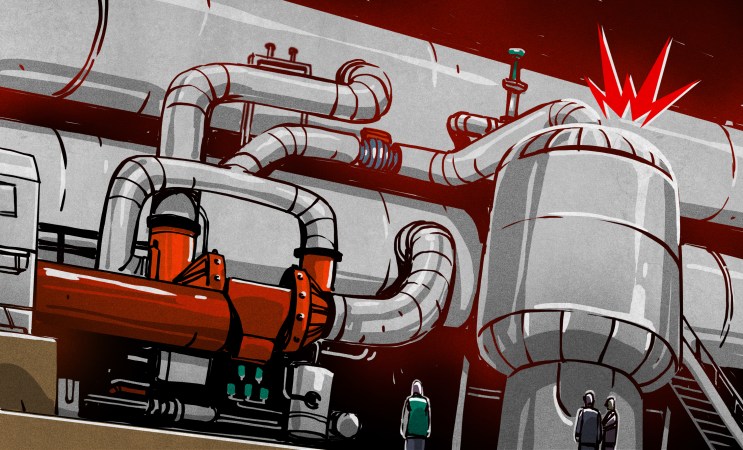
Birds are pretty amazing creatures, and one of the most amazing things about them and their non-avian predecessors are feathers. Engineers and scientists are finding inspiration from them in surprising ways.

The light weight and high strength of feathers has inspired those who look to soar the skies, dating back at least as far as Ancient Greece, but the multifunctional nature of these marvels has led to advancements in photonics, thermal regulation, and acoustics. The water repellency of feathers has also led to interesting new applications in both food safety and water desalination beyond the obvious water repellent clothing.

Sebastian Hendrickx-Rodriguez, the lead researcher on a new paper about the structure of bird feathers states, “Our first instinct as engineers is often to change the material chemistry,” but feathers are made in thousands of varieties to achieve different advantageous outcomes from a single material, keratin. Being biological in nature also means feathers have a degree of self repair that human-made materials can only dream of. For now, some researchers are building biohybrid devices with real bird feathers, but as we continue our march toward manufacturing at smaller and smaller scales, perhaps our robots will sprout wings of their own. Evolution has a several billion year head start, so we may need to be a little patient with researchers.

Some birds really don’t appreciate Big Brother any more than we do. If you’re looking for some feathery inspiration for your next flying machine, how about covert feathers. And we’d be remiss not to look back at the Take Flight With Feather Contest that focused on the Adafruit board with the same name.

One of the photo-detector spheres of ARCA (Credit: KM3NeT)

Confirmation Of Record 220 PeV Cosmic Neutrino Hit On Earth

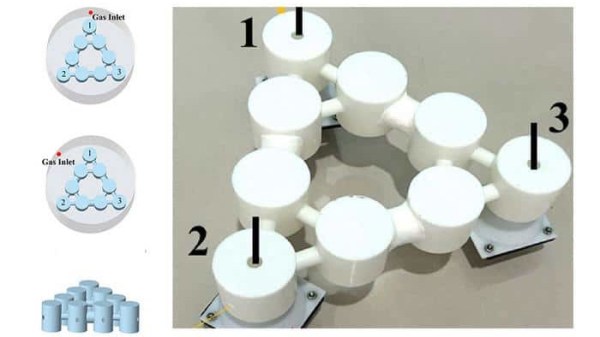
Neutrinos are exceedingly common in the Universe, with billions of them zipping around us throughout the day from a variety of sources. Due to their extremely low mass and no electric charge they barely ever interact with other particles, making these so-called ‘ghost particles’ very hard to detect. That said, when they do interact the result is rather spectacular as they impart significant kinetic energy. The resulting flash of energy is used by neutrino detectors, with most neutrinos generally pegging out at around 10 petaelectronvolt (PeV), except for a 2023 event.

This neutrino event which occurred on February 13th back in 2023 was detected by the KM3NeT/ARCA detector and has now been classified as an ultra-high energy neutrino event at 220 PeV, suggesting that it was likely a cosmogenic neutrinos. When we originally reported on this KM3-230213A event, the data was still being analyzed based on a detected muon from the neutrino interaction even, with the researchers also having to exclude the possibility of it being a sensor glitch.

By comparing the KM3-230213A event data with data from other events at other detectors, it was possible to deduce that the most likely explanation was one of these ultra-high energy neutrinos. Since these are relatively rare compared to neutrinos that originate within or near Earth’s solar system, it’ll likely take a while for more of these detection events. As the KM3NeT/ARCA detector grid is still being expanded, we may see many more of them in Earth’s oceans. After all, if a neutrino hits a particle but there’s no sensor around to detect it, we’d never know it happened.


Top image: One of the photo-detector spheres of ARCA (Credit: KM3NeT)

Food Irradiation Is Not As Bad As It Sounds

Radiation is a bad thing that we don’t want to be exposed to, or so the conventional wisdom goes. We’re most familiar with it in the context of industrial risks and the stories of nuclear disasters that threaten entire cities and contaminate local food chains. It’s certainly not something you’d want anywhere near your dinner, right?

You might then be surprised to find that a great deal of research has been conducted into the process of food irradiation. It’s actually intended to ensure food is safer for human consumption, and has become widely used around the world.

Continue reading “Food Irradiation Is Not As Bad As It Sounds”

Antiviral PPE For The Next Pandemic

In what sounds like the plot from a sci-fi movie, scientists have isolated an incredibly rare immune mutation to create a universal antiviral treatment.

Only present in a few dozen people worldwide, ISG15 immunodeficiency causes people to be more susceptible to certain bacterial illnesses, but it also grants the people with this condition immunity to known viruses. Researchers think that the constant, mild inflammation these individuals experience is at the root of the immunoresponse.

Where things get really interesting is how the researchers have found a way to stimulate protein production of the most beneficial 10 proteins of the 60 created by the natural mutation using 10 mRNA sequences inside a lipid nanoparticle. Lead researcher [Dusan Bogunovic] says “we have yet to find a virus that can break through the therapy’s defenses.” Researchers hope the treatment can be administered to first responders as a sort of biological Personal protective equipment (PPE) against the next pandemic since it would likely work against unknown viruses before new targeted vaccines could be developed.

Hamsters and mice were given this treatment via nasal drip, but how about intranasal vaccines when it comes time for human trials? If you want a short history of viruses or to learn how smartwatches could help flatten the curve for the next pandemic, we’ve got you covered.

Gentle Processing Makes Better Rubber That Cracks Less

Rubber! It starts out as a goopy material harvested from special trees, and is then processed into a resilient, flexible material used for innumerable important purposes. In the vast majority of applications, rubber is prized for its elasticity, which eventually goes away with repeated stress cycles, exposure to heat, and time. When a rubber part starts to show cracks, it’s generally time to replace it.

Researchers at Harvard have now found a way to potentially increase rubber’s ability to withstand cracking. The paper, published in Nature Sustainability, outlines how the material can be treated to provide far greater durability and toughness.

Continue reading “Gentle Processing Makes Better Rubber That Cracks Less”

How The Widget Revolutionized Canned Beer

Walk into any pub and order a pint of Guinness, and you’ll witness a mesmerizing ritual. The bartender pulls the tap, fills the glass two-thirds full, then sets it aside to settle before topping it off with that iconic creamy head. But crack open a can of Guinness at home, and something magical happens without any theatrical waiting period. Pour it out, and you get that same cascading foam effect that made the beer famous.

But how is it done? It’s all thanks to a tiny little device that is affectionately known as The Widget.

Continue reading “How The Widget Revolutionized Canned Beer”

Ore Formation: Introduction And Magmatic Processes

Hackaday has a long-running series on Mining and Refining, that tracks elements of interest on the human-made road from rocks to riches. What author Dan Maloney doesn’t address in that series is the natural history that comes before the mine. You can’t just plunk down a copper mine or start squeezing oil from any old stone, after all: first, you need ore. Ore has to come from somewhere. In this series, we’re going to get down and dirty into the geology of ore-forming processes to find out from wither come the rocks that hold our elements of interest.

What’s In an Ore?

Though we’re going to be talking about Planetary Science in this series, we should recognize the irony that “ore” is a word without any real scientific meaning. What distinguishes ore from other rock is its utility to human industry: it has elements or compounds, like gems, that we want, and that we think we can get out economically. That changes over time, and one generation’s “rock” can be another generation’s “ore deposits”. For example, these days prospectors are chasing copper in porphyry deposits at concentrations as low as 1000 ppm (0.1%) that simply were not economic in previous decades. The difference? Improvements in mining and refining, as well as a rise in the price of copper. Continue reading “Ore Formation: Introduction And Magmatic Processes”